
Industry Insights
Additive Manufacturing (AM), also known as 3D printing, is bringing about a profound manufacturing revolution in the aerospace industry.
I. What is Additive Manufacturing?
The core of additive manufacturing is "layer-by-layer fabrication and successive stacking". First, a three-dimensional model of the part is established through computer-aided design (CAD), then the model is "sliced" into thin layers of several micrometers in thickness, and finally, using high-energy heat sources such as laser beams or electron beams, the metal powder or wire is precisely melted and solidified according to the contour of each layer, layer by layer, eventually forming a three-dimensional part that is exactly the same as the model.
This manufacturing method is fundamentally different from traditional processes:
• Traditional subtractive manufacturing: casting, forging, milling, etc., removing excess parts from large blocks of material, resulting in significant material waste and difficulty in processing complex structures.
• Additive manufacturing: adding materials on demand, with almost no waste, and capable of manufacturing complex geometries that traditional processes cannot achieve.
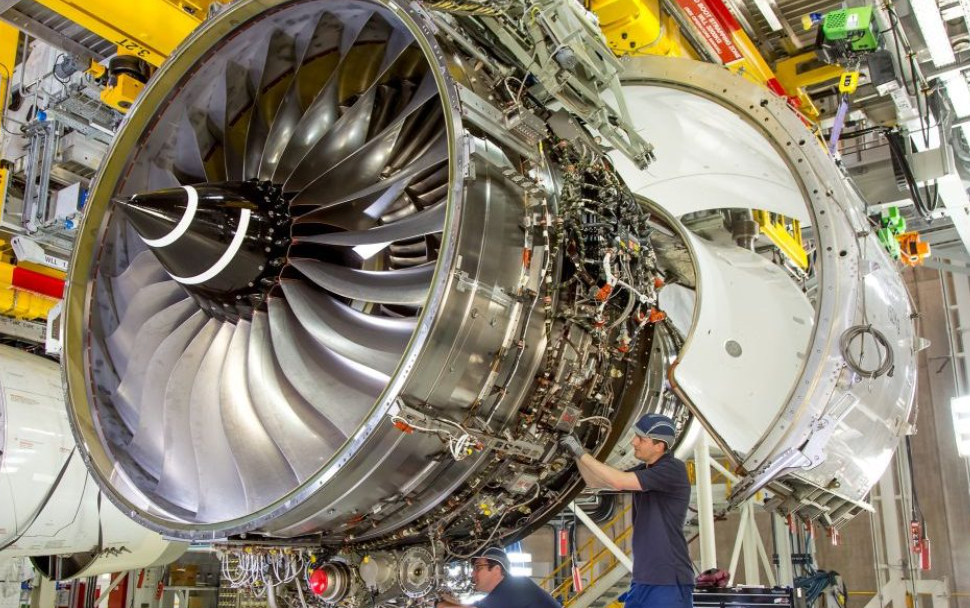
In the aerospace industry, additive manufacturing is mainly divided into three major material systems: high-performance metals (titanium alloys, nickel-based superalloys, etc.), special engineering plastics and composite materials, and ceramic materials. Among them, metal additive manufacturing is currently the most disruptive technological direction.
II.Actual cases
When the C919 large aircraft soared into the sky and the Long March rockets were frequently launched, this technology was quietly changing the rules of mold manufacturing.
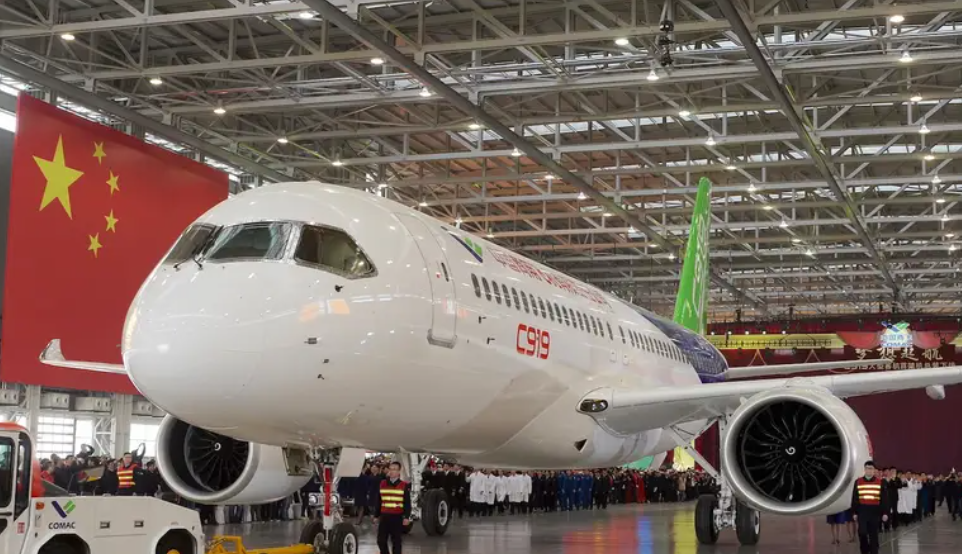
In the past, the production of aerospace parts was inseparable from metal molds. A complex composite material forming mold required several weeks to several months of traditional processing, which was not only costly but also meant that every modification required the mold to be rebuilt from scratch before the product design was finalized. For the aerospace industry that pursues ultimate efficiency and lightweighting, this was an unbearable burden.
Now, additive manufacturing offers an alternative solution.
Research at the Aviation Industry Composite Materials Technology Center of AVIC shows that 3D printing can directly manufacture composite material forming molds, compressing the traditional months-long cycle to just a few days and significantly reducing material costs. More importantly, design iterations are no longer a nightmare - modifying the CAD file and reprinting it is enough, which is of great value in the early stages of aircraft development.
In early 2026, China completed its first metal 3D printing experiment in space, marking that our country has mastered the ability to manufacture metal parts in the microgravity environment of space. This technological breakthrough means that in the future, the space station can "print" the required components in orbit, completely changing the traditional model of "bringing spare parts from the ground".
On the ground, Shanghai Cool Eagle Technology has launched an "additive and subtractive integration" solution for large aircraft skin molds - first 3D printing the mold blank, then using five-axis CNC to refine it to the required level, balancing both forming capacity and surface accuracy. The application of large carbon fiber reinforced thermoplastic molds is also becoming increasingly mature, with lighter weight and shorter manufacturing cycle compared to traditional metal molds, especially suitable for medium and low batch production.
For the mold industry, this is a clear signal: Aerospace is opening a new door for 3D-printed molds. Whoever masters this technology first will have the opportunity to stand at the starting point of this new track.

0086 0755 23170739
0086-0755-24325235
ciky@hainamould.com
Room 1605, 16th Floor, Hongyu Building, No. 495, Donghuan 2nd Road, Longhua Subdistrict, Longhua District, Shenzhen, Gongdong ,China 518109


Copyright 2026 Hainamould.com All rights reserved.
-
 0086 0755 23170739
-
 Facebook
-
 WhatsApp
-
 LinkedIn
-
 TOP
TOP