EDM
What is Electrical Discharge Machining (EDM)?
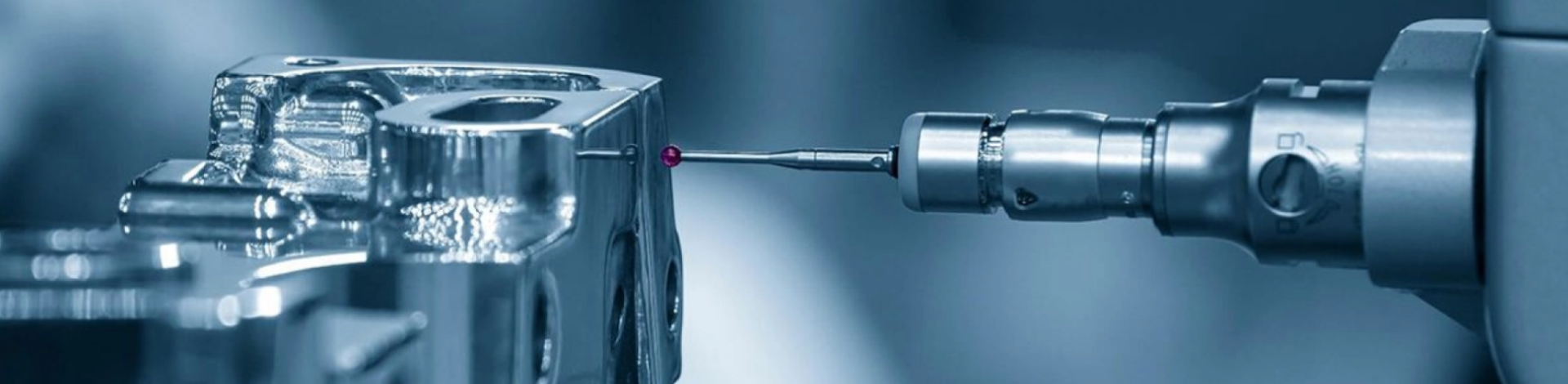
Electrical Discharge Machining (EDM) is a non-traditional manufacturing technology that uses electrical energy to machine parts. Its principle is to generate controlled pulse discharges between the tool electrode and the workpiece, utilizing the instantaneous high temperature of 8,000–12,000°C generated during the discharge to precisely erode material.
Key characteristic: The tool and workpiece do not need to be in direct contact. Therefore, there are no mechanical cutting forces, and no workpiece deformation is caused.
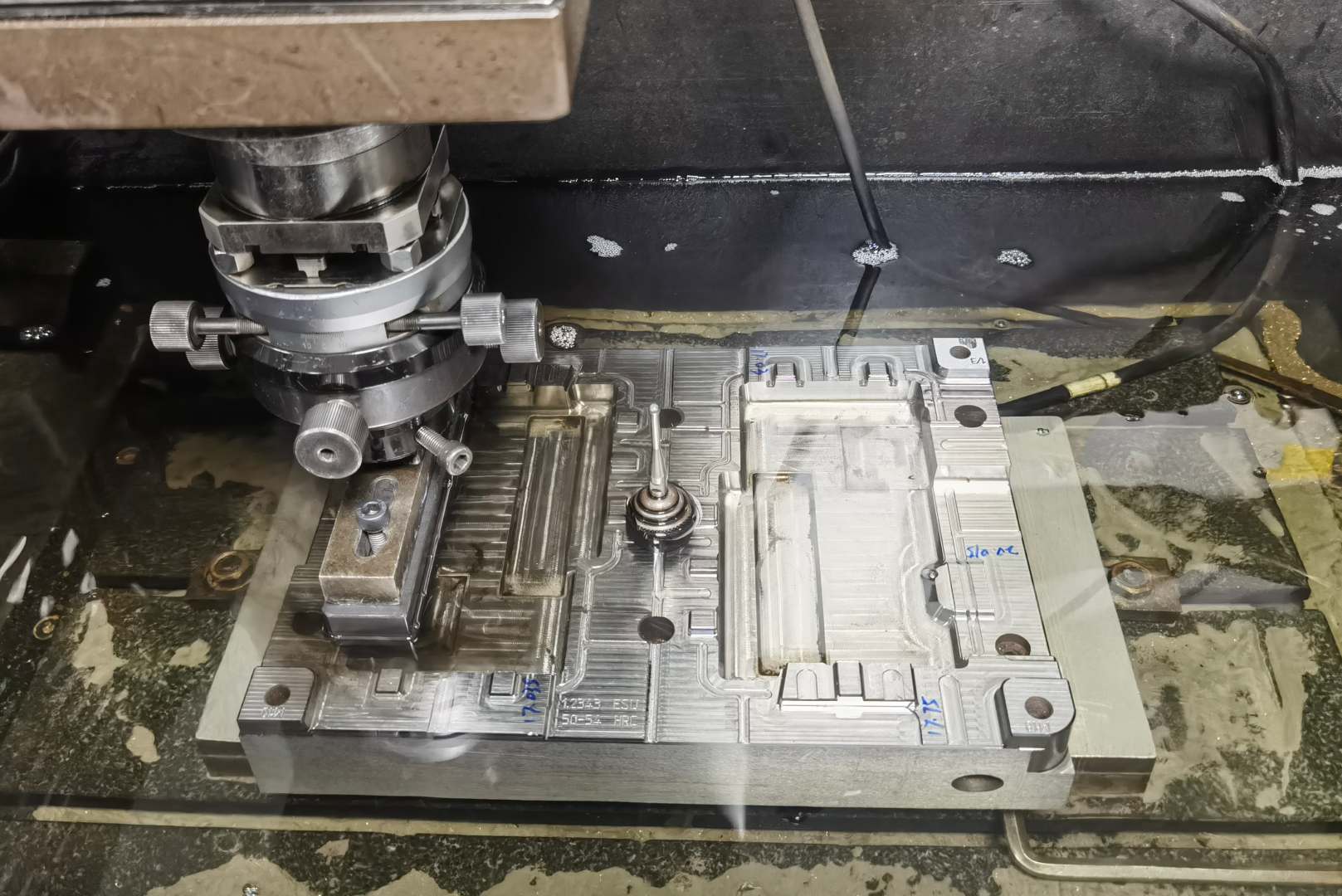
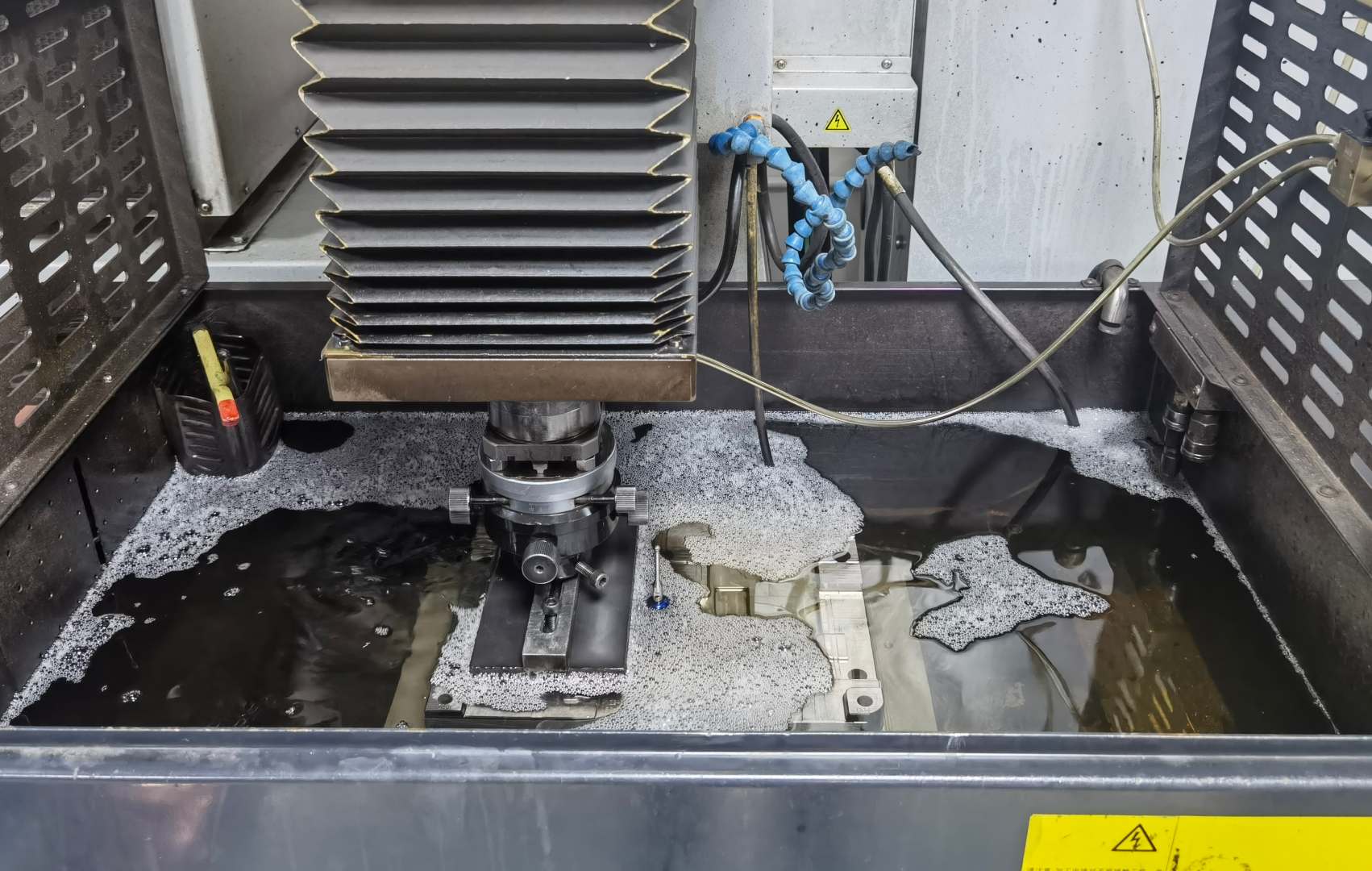
Actual production pictures taken at the factory
Three Main Types of EDM
Based on form and application, Electrical Discharge Machining is mainly divided into the following three types:
1. Sinker EDM (Ram EDM / Die Sinking)
This is the most classic form of EDM. It uses an electrode (typically made of copper or graphite) pre-machined into a specific shape to "copy" the corresponding cavity onto the workpiece. It is particularly adept at machining deep ribs, sharp corners, and complex 3D surfaces, making it a core method for manufacturing injection mold cavities.
2. Wire EDM (Wire Cutting)
This process uses a metal wire with a diameter of only 0.05–0.35 mm as the electrode to cut contours on the workpiece like a saw. It is suitable for the production of stamping dies, precision parts, and extrusion dies, and is capable of achieving micron-level cutting accuracy.
3. Hole Drilling EDM (Small Hole EDM)
This type is specifically used for machining tiny, deep holes. It can drill straight holes with a diameter as small as 0.02 mm and depths far exceeding traditional methods. It is commonly found in critical components such as turbine blade cooling holes and engine fuel injector nozzles.
Why is EDM a "Must-Have" for Mold Manufacturing?
For the injection molding industry, EDM offers irreplaceable value:
1. Conquering "Hard" Materials
Molds require quenching heat treatment during manufacturing to increase their service life. Conventional milling cutters struggle significantly when machining hardened steel (hardness > 60HRC), but material hardness has almost no effect on EDM. This means molds can undergo precision machining after quenching, avoiding the deformation risk associated with the "machine first, then quench" approach.
2. Achieving "Impossible" Geometries
Those sharp internal corners, deep narrow ribs, and fine textures on molded products all rely on EDM to be completed. It can machine areas that conventional cutting tools cannot reach.
3. Ensuring Quality of Thin-Walled and Precision Parts
Because there are no mechanical cutting forces, EDM can easily machine thin-walled, easily deformable parts without worrying about the workpiece bending or being damaged under stress.
Leading Equipment & Technology:
Haina Mold fully understands that precision equipment plays a decisive role in mold quality. Therefore, we have introduced industry-leading EDM equipment.
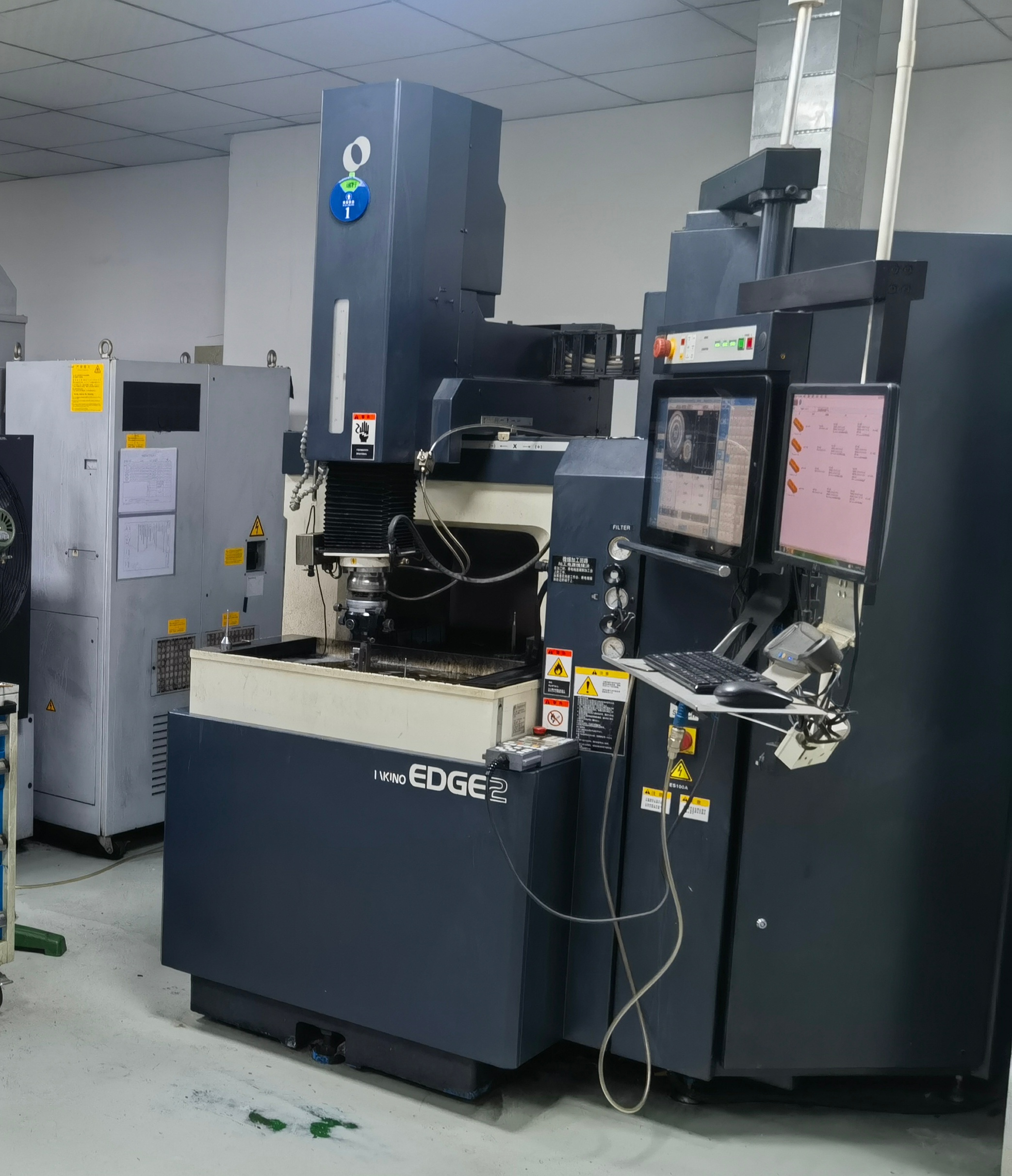
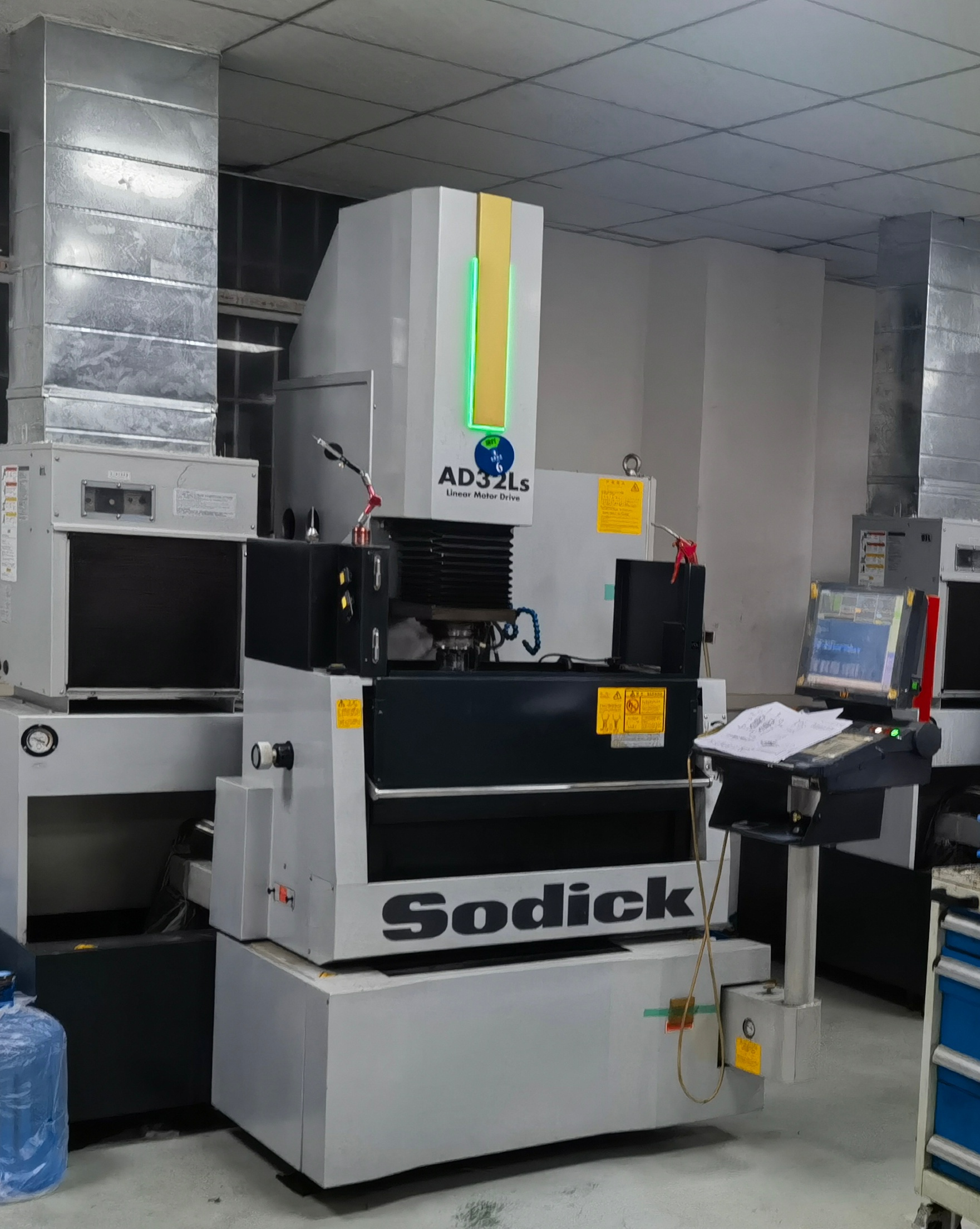
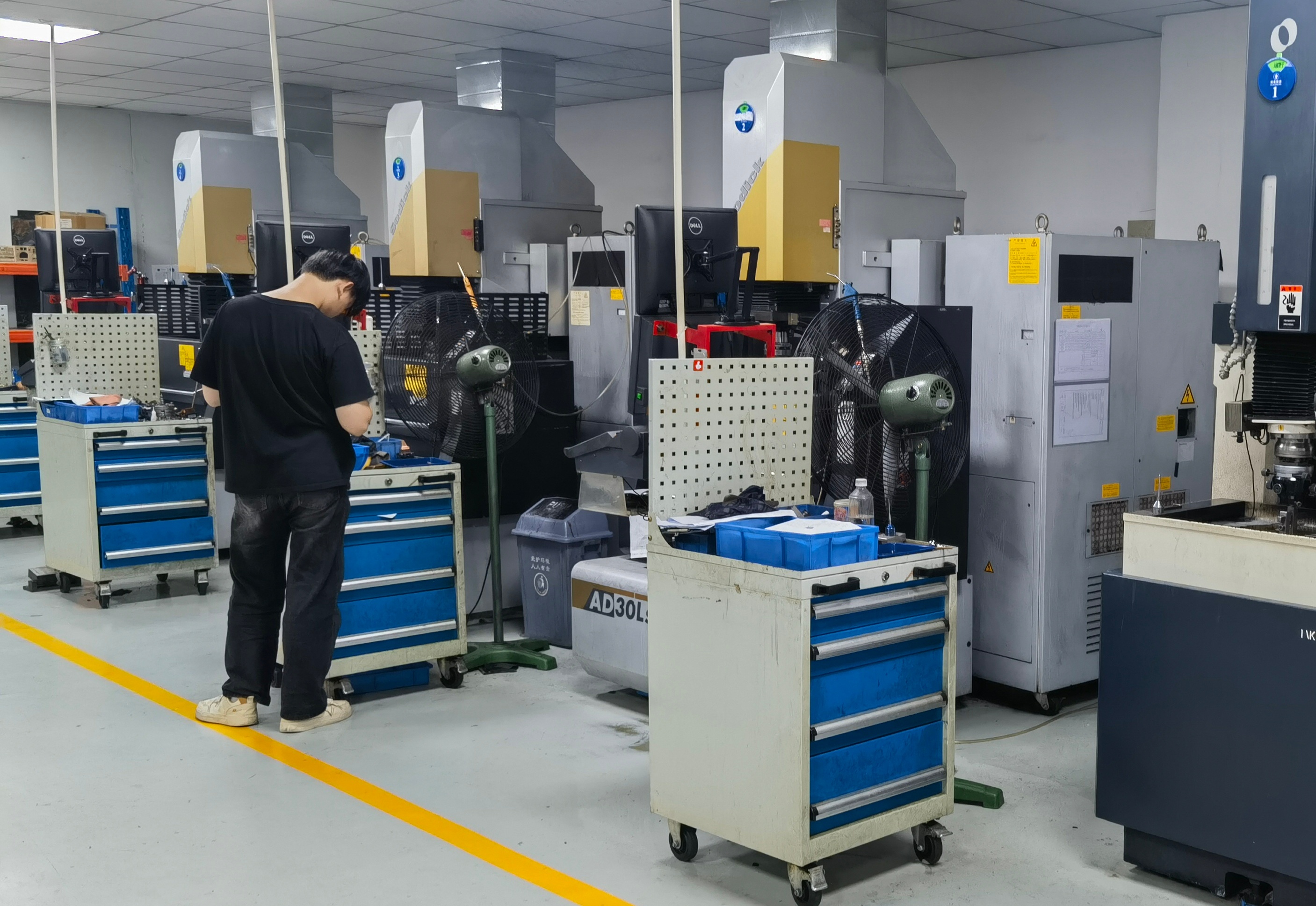
🔴Sodick AD30LS & AD32LS (Japan)
☉Mirror EDM machine: Suitable for high-precision, high-surface-finish machining, capable of achieving a "mirror-like" surface, reducing subsequent polishing processes.
☉High reliability: Sodick is a well-known Japanese brand, recognized for its discharge stability, servo control precision, and high-rigidity structure.
☉AD32LS vs. AD30LS: The AD32LS typically features a larger worktable or greater travel range (depending on configuration), making it suitable for larger workpieces.
🔵Makino EDGE2 (Japan)
☉High precision: Explicitly rated with an accuracy of 0–0.005mm, suitable for micro-level machining of molds, precision parts, etc.
☉High-speed machining capability: Makino's EDGE series is renowned for its high-response servo and high-speed discharge technology, offering excellent machining efficiency.
☉Good thermal stability: The machine's design suppresses thermal deformation, ensuring consistent precision over long machining cycles.
🟡Taiji / TYE 650 (Taiwan)
☉Sinker EDM (Oil-immersed type): Suitable for machining deep cavities, complex shapes, hard alloys, etc.
☉High cost-effectiveness: Taiwanese brands generally offer better value for money compared to Japanese brands, making them ideal for budget-conscious applications where reliable performance is still required.
☉Model 650: Features a large work travel (typically 650mm class), suitable for medium-sized mold machining.
Two units available: Allows for multi-task coordination or separation of rough and finish machining processes.
The Art of Balancing Precision and Efficiency
Although EDM offers extremely high precision, it has traditionally been considered inefficient. However, this situation is changing. An experimental study on injection mold manufacturing shows that by optimizing machining parameters, EDM productivity can be increased by up to 61%, while average dimensional deviation is reduced by 12%.
This means that modern EDM technology is no longer synonymous with "slow work yields fine results." Instead, it achieves the efficiency required for mass production while maintaining high precision.
Summary: The Unique Value of EDM
The core value of EDM can be summarized as follows: unrestricted by material hardness, no cutting force, and the ability to perfectly replicate complex shapes.
For mold companies pursuing high quality, EDM is not just a piece of equipment—it is a key enabler for achieving "what you design is what you get." Whether it's large molds for automotive bumpers or micro inserts for electronic connectors, EDM silently supports the precision limits of modern manufacturing.

0086 0755 23170739
0086-0755-24325235
ciky@hainamould.com
Room 1605, 16th Floor, Hongyu Building, No. 495, Donghuan 2nd Road, Longhua Subdistrict, Longhua District, Shenzhen, Gongdong ,China 518109


Copyright 2026 Hainamould.com All rights reserved.
-
 0086 0755 23170739
-
 Facebook
-
 WhatsApp
-
 LinkedIn
-
 TOP
TOP