Stamping Service
Precision metal stamping solutions
From key components of automobiles and medical devices to micro electronic components and precision aerospace parts, the demand for high-quality metal parts in various industries is continuously rising. Whether you are conducting prototype development or expanding production scale, metal stamping can provide an economically efficient manufacturing path. Haina is committed to helping you quickly, accurately, and at a low cost transform metal parts from design drawings into finished products.

What is precision metal stamping?
Metal stamping is a simple and widely applied cold forming process. The process is as follows: a flat metal strip is fed into a stamping machine equipped with a mold. The mold uses a huge compressive force to shape the metal material, thereby manufacturing parts with the desired shape and features.
Detailed explanation of the stamping process
Metal stamping is a technology that manufactures parts by stamping sheet metal or sheet materials into shape. It covers various forming methods such as blanking, punching, embossing, and continuous die stamping. Depending on the complexity of the part, these methods can be used alone or in combination. During the process, the sheet metal or sheet material is fed into the stamping machine, and the mold forms the desired features and surface. This process is highly suitable for mass production of various complex parts, ranging from electronic components in mobile phones and computers to car door panels and gears, and is widely used in the automotive, industrial, lighting, medical, and other fields.
Advantages of Metal Pressing
•Complex contour shapes can be processed
•Suitable for mass production (annual output ranging from thousands to millions of pieces)
•Processes such as precision punching can be used for thick metal sheets
•Highly low single-piece cost
Limitations of Metal Pressing
The initial investment in time and cost is relatively high, but after the mold is finalized, the production speed is fast and the unit price is low. The main limitations
include:
•The delivery cycle for the first piece is long (requiring time to make the mold)
•The molds, inspection fixtures, and non-reusable engineering designs are the main costs in the early stage
•To ensure the stability and compliance of the products, suppliers usually need to iterate the mold design multiple times before mass production
Haina Company - Precision Metal Stamping Solutions
We are a precision stamping component manufacturer that has obtained ISO 9001:2015 and 14001:2015 certifications. We excel in processing complex-shaped precision stamping components. Our production line can handle metal materials as thin as 0.003 inches (even thinner), and maintain a stable tolerance within ±0.0005 inches. For thick material requirements (such as copper busbars), our Diemasters department is equipped with a stamping machine with a maximum tonnage of 350 tons, capable of processing materials up to 0.19 inches thick.

Key Capabilities Overview
* Material thickness range: 0.003 inches to 0.19 inches
* Maximum material width: 13 inches
* Feed length: 6 inches
* Over 75 progressive metal stamping machines, tonnage range: 20 tons to 350 tons
* Servo stamping machines, tonnage range: 60 tons to 160 tons
* Stamp speed up to 1600 times per minute
* Online vision system supports key feature monitoring
* Online degreasing, suitable for roll-to-roll applications
* Automatic winding, suitable for roll-to-roll operations (multi-roll winding)
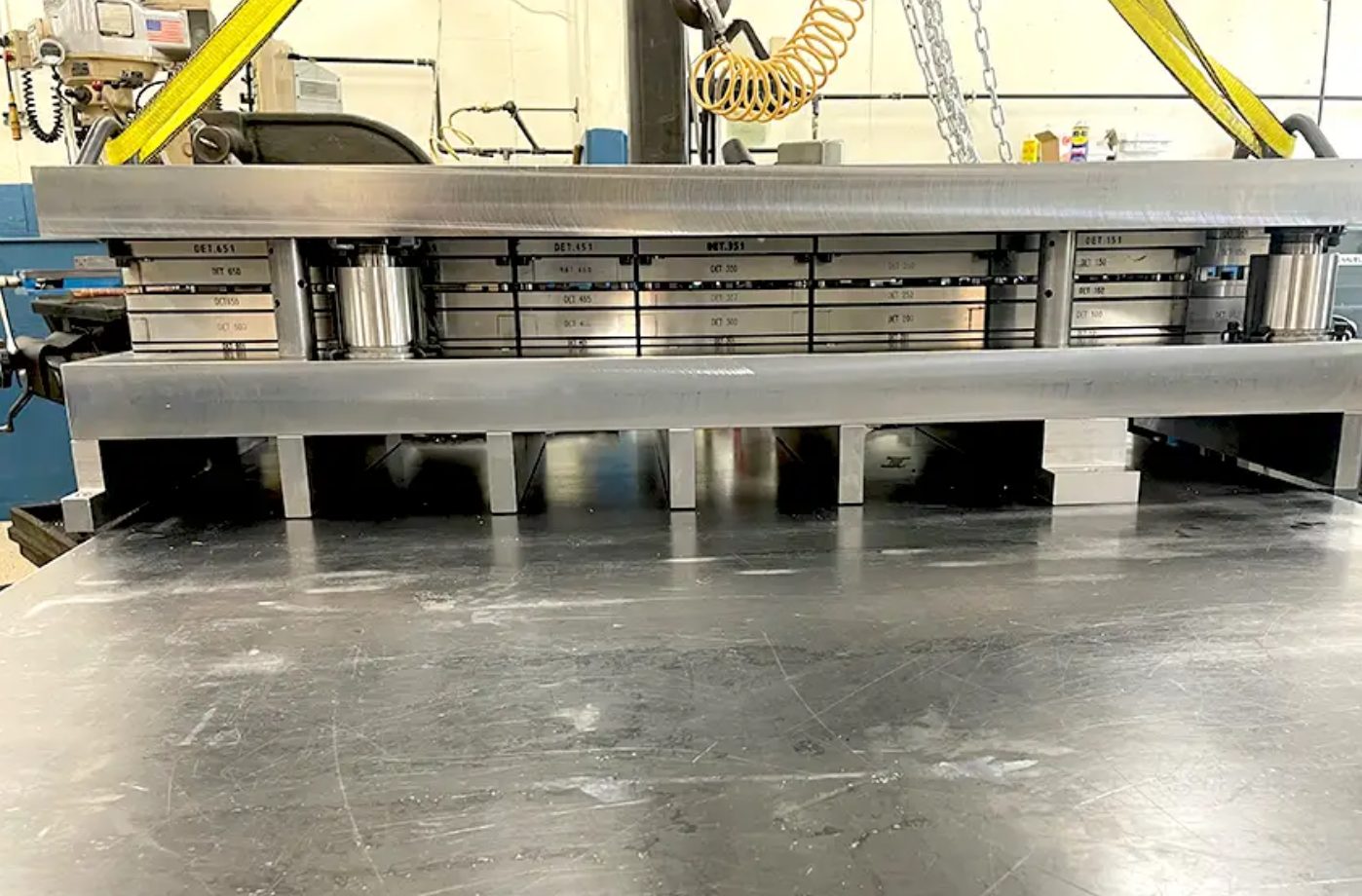
* Internal mold design and manufacturing
Independent mold research and manufacturing
We have the ability to independently manufacture hard alloy precision progressive molds, ensuring high precision output regardless of how complex the structure is.
Customized molds not only enhance the matching, reliability and durability of the parts, but also give us a significant advantage in competition with traditional machining, die-casting and metal injection molding.
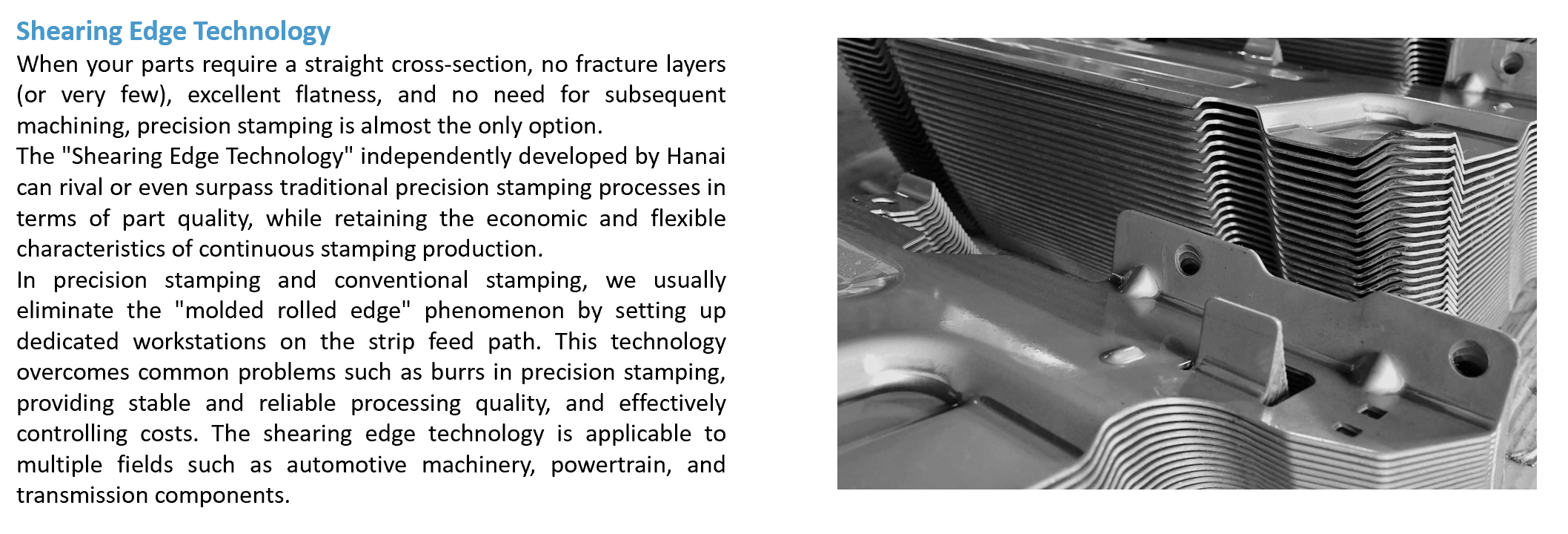
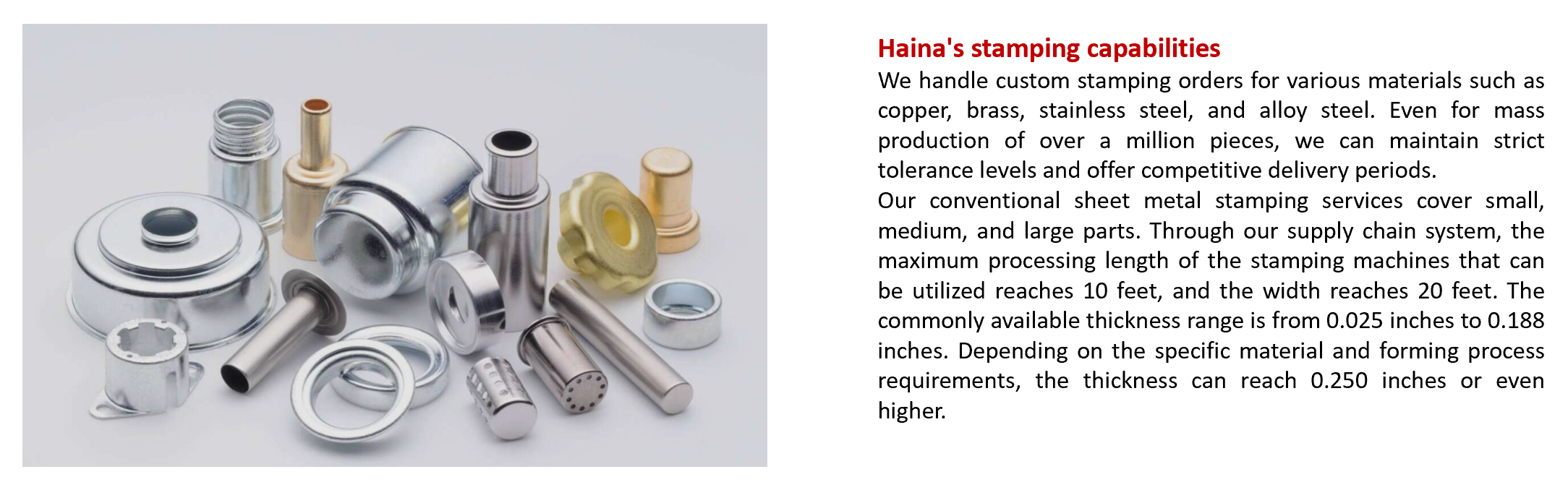
Quality First
Once the dimensions, shapes or functions of the parts deviate from the expected standards, the entire production line will come to a standstill. At Hanai, quality is the unbreakable bottom line.
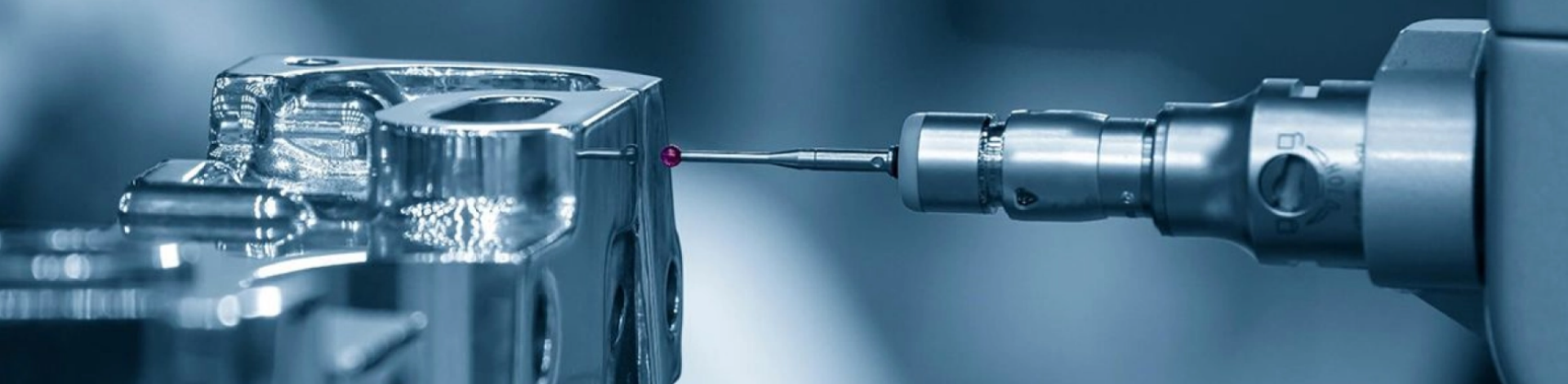
We deploy automated inspections and manual spot checks throughout the stamping process to ensure that problems are detected and addressed promptly. All products leaving the factory can undergo the following additional tests upon customer request:
• Sampling inspection
• Mechanical performance analysis
• Chemical composition analysis
• Continuity testing
• Non-destructive testing (NDE)
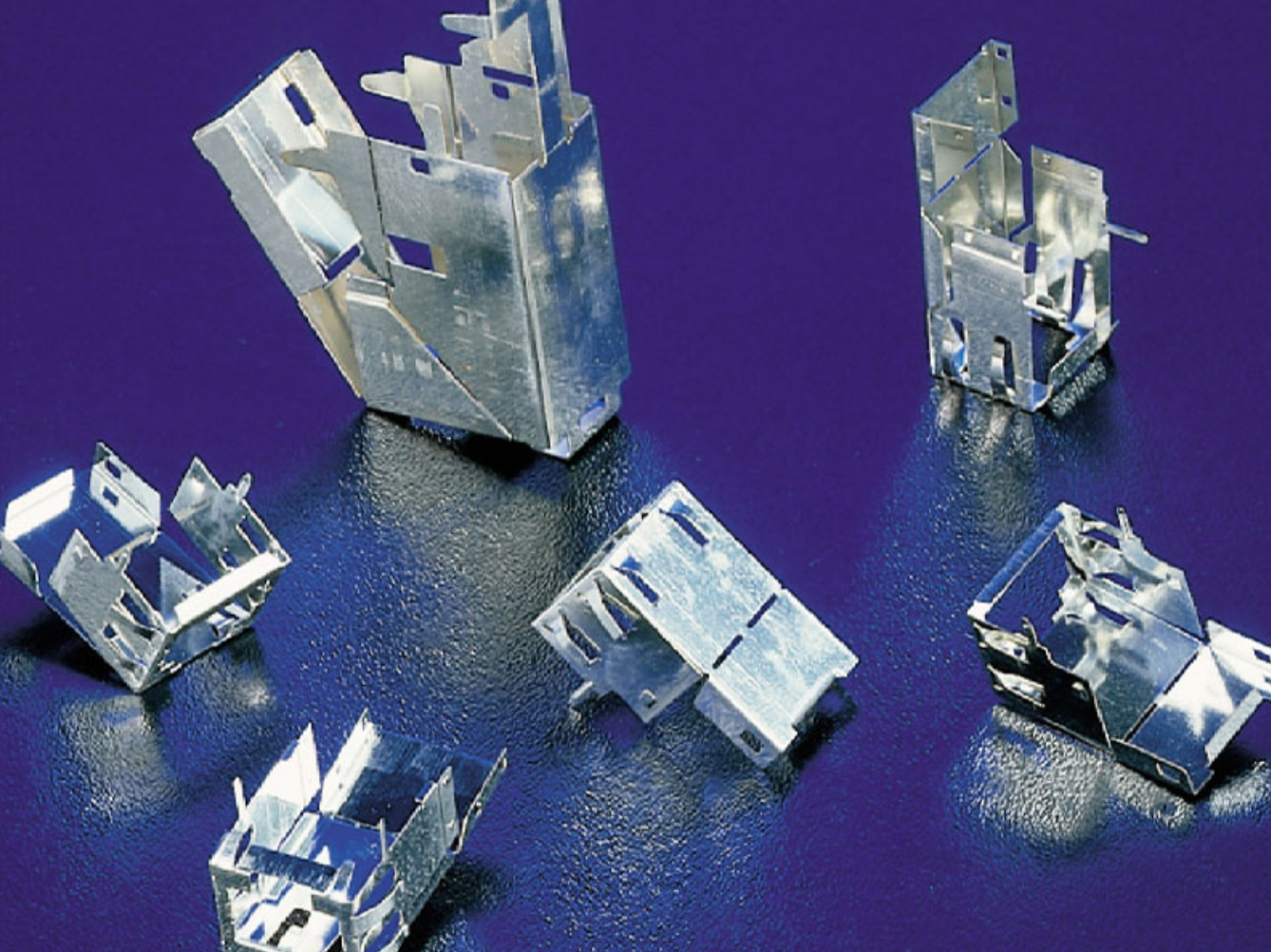
Our overview of stamping process capabilities
We offer a variety of processes such as single-pass stamping, multi-pass stamping, progressive die stamping, deep drawing, and four-slide stamping, and based on the 3D model and technical drawings you upload, we will match the most efficient solution for you.
Progressive Die Stamping
Using multiple dies and multiple steps, it can manufacture parts that are deeper and have more complex geometries than single-die stamping. The workpiece is always fixed on the tape and is sequentially passed through each station by the tape. This method is particularly suitable for the production of large-scale and large-sized parts in the automotive industry and other fields. The transfer die stamping is similar, except that the workpiece is separated from the tape and moved between each station by a transfer device.
Deep Drawing
Used to manufacture parts with deep cavity structures, such as closed rectangular boxes. During the extreme deformation process of the metal, the internal structure is compressed more densely, thereby giving the part high rigidity. In addition, we also often use the standard drawing process, using a shallow die to shape the metal.
Four-Slide Stamping
Forming the part from four directions simultaneously, mainly used for manufacturing small and precise parts, such as mobile phone battery connectors and other electronic components. The advantage of this process is higher design flexibility, lower single-piece cost, and faster production speed, and is widely used in aerospace, medical, automotive, and electronic industries.
Hydraulic Forming
This is an improved form of traditional stamping. The metal sheet is placed on the lower die, and above it is a flexible bag filled with liquid. After the bag is pressurized, the metal is pressed into the shape of the lower die. This process can simultaneously form multiple parts, is fast and high in precision, but later, the parts need to be separated from the sheet using a trimming die.
Blanking and Deep Drawing
Blanking is a preparatory process before forming, where the required outline shape is cut from the sheet. Deep drawing is a special form of blanking, capable of cutting out smooth-edge and flat-surface high-precision shapes. Drilling holes
Contrary to blanking - blanking involves cutting out the actual part itself, while punching removes material from the workpiece (such as making a hole). Embroidery
Forming three-dimensional patterns on the metal surface can be either raised relief or a series of depressions forming a texture.
Bending and Flanging
Bending is carried out along a single axis and is often used to create U-shaped, V-shaped or L-shaped contours. It is achieved by clamping one side and bending the other side towards the mold, or by pressing the metal into/against the mold. Flanging is the bending of local protrusions or parts of the workpiece rather than the entire part.

Production Batch Description
Haina offers flexible production batch solutions to meet the needs of customers at different stages:
Small batch production (≤ 100,000 pieces)
Most stamping projects have an order quantity of 1,000 pieces or more to ensure cost-effectiveness. Customers usually use small batch orders to complete the transition from prototype to mass production or to test market reactions. For customized products, small batch production is also applicable. Even for small batch orders, we can offer competitive unit prices.
Medium batch production (100,000 - 1,000,000 pieces)
It combines the flexibility of small batches with the cost advantages of large batches. Compared to small batches, the unit price is further reduced, and the initial investment cost of the mold is also more controllable.
Large batch production (≥ 1,000,000 pieces)
The metal stamping process has good scalability, and cost-effectiveness is most prominent in large batch production. As production volume increases, the cost of custom molds is fully amortized, and the unit cost significantly decreases.
High-precision tolerance capability
No matter which industry you serve in - aerospace, automotive, telecommunications or electronics - our precision stamping services can meet your strict requirements for the shape of the parts. By continuously optimizing the mold design, we constantly improve the output accuracy to match your tolerance demands. It should be noted that the stricter the tolerance requirements, the higher the manufacturing difficulty and cost.
Quality control system
After each stamping process is completed, we will conduct regular inspections to ensure that the products meet the specifications. Quality and consistency are the core contents of our comprehensive production maintenance (TPM) plan, which is specifically used to monitor the wear of stamping molds (usually made of D2 tool steel). For long-running stamping production lines, using dedicated inspection fixtures (gauge) for measurement is a standard procedure.
At Haina, we firmly believe that our engineering technology, metal stamping component production, and overall performance are truly an art. Over the past decades, we have continuously utilized cutting-edge technologies and uniquely applied them to our advanced systems, striving to get things done perfectly the first time.
From selecting the best materials to customizing molds for your metal stamping projects, we are committed to providing services that satisfy our customers, thereby building their trust, confidence and value, and making them feel at ease. Our professional expertise in custom precision stamping and continuous mold metal stamping services ensures that your parts can be manufactured exactly according to your specifications and the highest quality standards.