CNC Machining
In CNC machining, "5-axis" is often seen as a symbol of high-end technology. However, many overlook a key point: not every task labeled "5-axis machining" actually requires full simultaneous 5-axis movement. For most angled surfaces and undercut features, 3+2 positioning can solve the problem very well.
I. Clarifying the Two Concepts
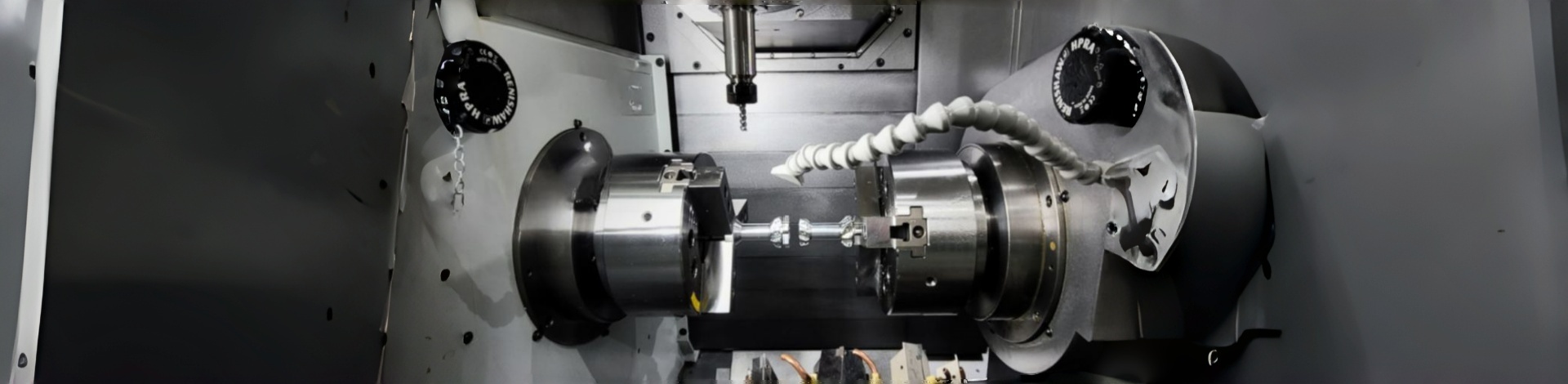
3+2 Positioning: The workpiece is rotated to a fixed angle, the rotary axes are locked, and the machining on that face is completed using traditional 3-axis methods. After finishing that face, the part rotates to the next angle, locks, and continues machining. Simply put, it's "machining by angles, in batches."
5-Axis Simultaneous Machining: During the cutting process, the three linear axes (X, Y, Z) and two rotary axes (A, B, or A, C) move concurrently. The tool's orientation relative to the workpiece changes continuously.
The essential difference is that 3+2 is "step-by-step," while 5-axis simultaneous is "moving and turning at the same time."
II. What Can 3+2 Do, and What Can't It Do?
What 3+2 CAN do:
Machine holes, slots, and flat surfaces on angled faces
Machine parts with undercut features (e.g., side-core areas in molds)
Complete machining on multiple faces in a single setup, reducing cumulative errors from repeated re-clamping
What 3+2 CANNOT do well or at all:
Areas where the tool must continuously change its orientation relative to a curved surface to avoid interference (e.g., impeller blades, deep cavity sidewalls)
Complex freeform surfaces requiring intricate tool-axis control (e.g., variable cross-section channels in aerospace structural parts)
Situations where the cutting point needs to always stay within the "sweet spot" of a ball nose mill's effective radius
III. How to Determine if You Need 5-Axis
When evaluating a part, ask yourself these questions in order:
Step 1: Does the part have angled surfaces or undercuts?
No → 3-axis is sufficient
Yes → Proceed to Step 2
Step 2: Can these features be machined at a few fixed angles?
Yes, and the tool does not interfere → 3+2 positioning is enough
No, or there are too many angles and frequent reorientation → Consider 5-axis
Step 3: During cutting, does the tool's orientation relative to the surface need to change continuously?
No (e.g., flat surfaces, straight walls, regular curved surfaces) → 3+2 is adequate
Yes (e.g., freeform surfaces, variable cross-section channels, impeller blades) → 5-axis is necessary
IV. An Often Overlooked Cost Analysis
A 5-axis simultaneous machine tool is typically 30%-50% more expensive than a comparable 3+2 machine. Programming is also significantly more complex, requiring specialized CAM strategies and post-processors, as well as higher-skilled operators. If 80% of your parts can be machined with 3+2 and only 20% truly require simultaneous 5-axis, purchasing a full 5-axis machine may not be cost-effective. A more economical strategy is to use a 3+2 machine with a rotary table for the majority of work and outsource the few parts that absolutely require simultaneous 5-axis machining.
V. Conclusion
For the mold and die industry, most features like cavities, slides, and angled lifters can be handled very well with 3+2 positioning. The real need for full 5-axis simultaneous machining often arises for parts with complex freeform surfaces – such as aerospace structural components, impellers, and medical implants – which are high-end manufacturing fields. Understanding this distinction will help you make more precise and effective equipment investment decisions.

0086 0755 23170739
0086-0755-24325235
ciky@hainamould.com
Room 1605, 16th Floor, Hongyu Building, No. 495, Donghuan 2nd Road, Longhua Subdistrict, Longhua District, Shenzhen, Gongdong ,China 518109


Copyright 2026 Hainamould.com All rights reserved.
-
 0086 0755 23170739
-
 Facebook
-
 WhatsApp
-
 LinkedIn
-
 TOP
TOP