
Company News
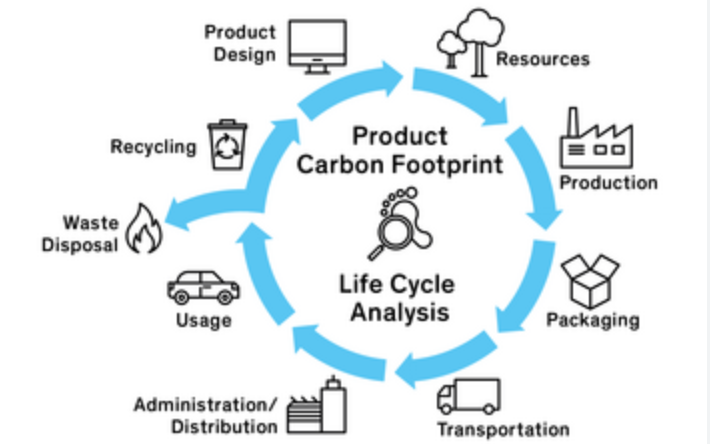
To be honest, a few months ago when a client mentioned in an email that they needed us to "provide a product carbon footprint report," our first reaction was utter confusion. We've been in the mold and injection molding business for years, and this was the first time we'd ever encountered such a request.
Later we figured it out: this wasn't just a paperwork formality – without this report, we wouldn't get the order. The EU Carbon Border Adjustment Mechanism (CBAM) had already taken effect in 2026, and our clients themselves were required to submit carbon data, so of course they needed it from us.
Step One: Get our own numbers straight first
We had our finance department dig up all the electricity bills from the past year and tallied up the monthly consumption. The injection molding workshop is the biggest energy guzzler – injection molding machines, dryers, cooling towers, air compressors – these machines run 24/7, so the electricity bill represents the largest share of our emissions.
Then we calculated how much electricity it takes to produce one kilogram of injection-molded parts. Dividing the total monthly electricity usage by the monthly output gave us a rough figure, but at least it gave us a baseline.
Next, we looked at raw materials. Materials like ABS and PP plastic pellets – we used to only care about price, never giving a thought to their carbon emissions. We later learned that plastic already generates emissions during the refining process from petroleum. We couldn't calculate this data ourselves; we had to get it from our upstream suppliers.
It wasn't until we talked with our client that we truly understood
We made a special call to our European client and asked: why do you insist on this so much?
Their response was very straightforward: our products are destined for the EU market, and a carbon footprint declaration is mandatory. If you can't provide it, we'll have to find another supplier.
It's that simple. It's not about environmental idealism – it's a regulatory red line.
After doing it, we found it was actually a good thing
After calculating our energy consumption, we discovered that several older machines were far too inefficient. We took the opportunity to replace them with hybrid injection molding machines, and our electricity bills dropped noticeably.
In the process of requesting carbon data from upstream suppliers, we identified a group of well-prepared suppliers in advance. And when talking with clients, bringing up carbon footprints actually made them view us as more professional.
A word of advice to peers in the industry
Don't wait until your clients start pushing before you take action. Carbon data can't be sorted out in a day. Electricity bills need to be tallied monthly, equipment energy consumption needs to be verified one by one, and upstream supplier data has to be pursued. The earlier you start, the more breathing room you'll have later.
The national standard, "Greenhouse gases – Methods and requirements for quantifying the product carbon footprint of plastic products" (GB/T 45441—2025), has already been published – following this standard is the safest path forward.
A carbon footprint may look like an environmental requirement, but at its core, it's a requirement for data capability. Those with more standardized internal management and more transparent data will be the ones to survive this round of industry consolidation.

0086 0755 23170739
0086-0755-24325235
ciky@hainamould.com
Room 1605, 16th Floor, Hongyu Building, No. 495, Donghuan 2nd Road, Longhua Subdistrict, Longhua District, Shenzhen, Gongdong ,China 518109


Copyright 2026 Hainamould.com All rights reserved.
-
 0086 0755 23170739
-
 Facebook
-
 WhatsApp
-
 LinkedIn
-
 TOP
TOP