

Company News
In injection mold design, undercuts on the outside of a product (such as side holes, side grooves, or external snaps) also present a challenge for ejection. The slide is the key mechanism that addresses this issue.
A slide, also known as a sliding block, is a horizontal side-core-pulling mechanism mounted on the outside of the mold. During mold opening, the slide is driven by the angled guide pin to move outward horizontally, disengaging from the undercut area and allowing the product to be ejected smoothly.
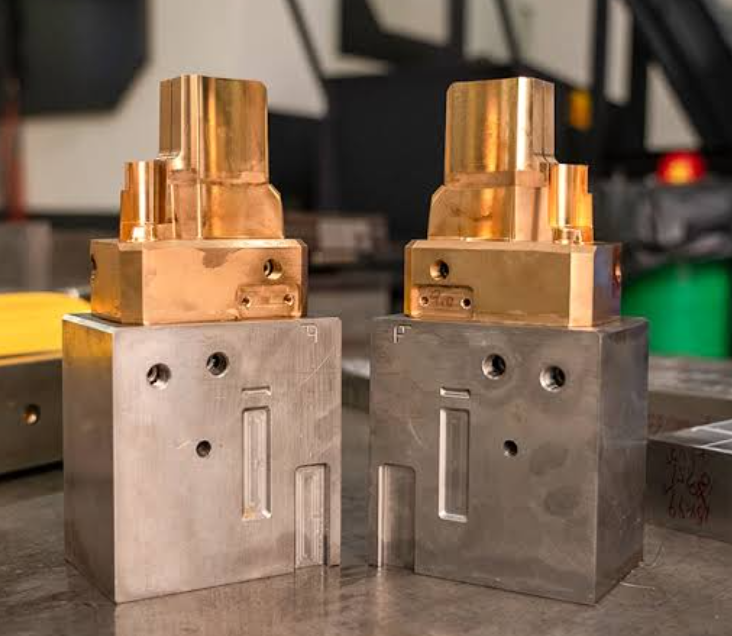
Unlike a lifter, which is used for internal undercuts, the slide is primarily designed for forming undercuts on the outside of a product. A slide mechanism typically consists of components such as the slide body, slide insert, angled guide pin, and wedge lock, and is driven by either an angled guide pin or a hydraulic cylinder.
When designing a slide, the core-pulling distance must be greater than the undercut depth with an added safety margin. The angle of the guide pin is typically controlled between 15° and 25°. For materials, the slide insert is often made of wear-resistant steels such as SKD61 or H13, with nitriding treatment to ensure service life.
Though slightly more complex in structure, the slide is an indispensable precision mechanism in mold design. Haina Precision has extensive experience in slide applications and is committed to providing our customers with reliable and robust mold solutions.
👉 Get a Quote Now — Submit your project details and we'll respond within 24 hours.
Click here to start

0086 0755 23170739
0086-0755-24325235
ciky@hainamould.com
Room 1605, 16th Floor, Hongyu Building, No. 495, Donghuan 2nd Road, Longhua Subdistrict, Longhua District, Shenzhen, Gongdong ,China 518109


Copyright 2026 Hainamould.com All rights reserved.
-
 0086 0755 23170739
-
 Facebook
-
 WhatsApp
-
 LinkedIn
-
 TOP
TOP