

Company News
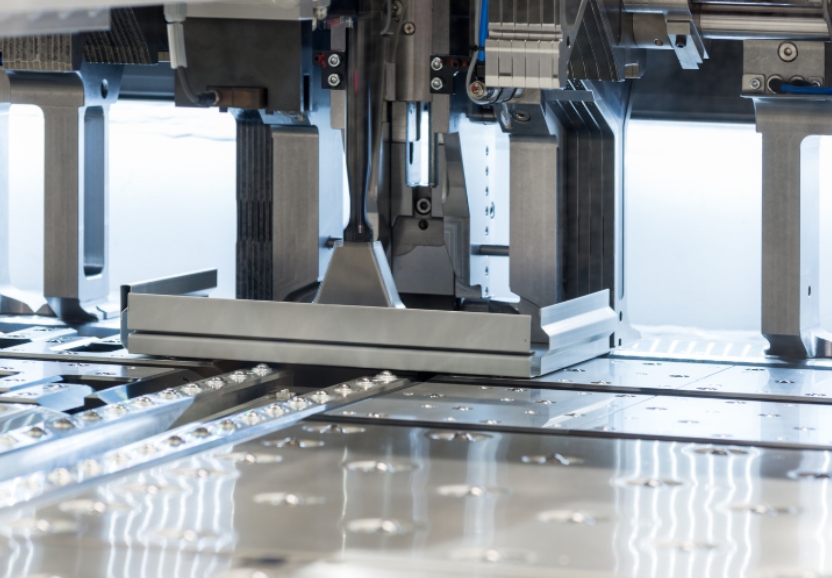
Stamping, in simple terms, is a processing method that relies on presses and molds to apply external force to metal sheets and other materials, causing them to deform or separate, thereby obtaining parts with the desired shape and dimensions.
To use a vivid analogy: stamping is like using a cookie cutter to "press" dough into different shapes. The only difference is that in stamping, the "dough" is metal sheet, and the "mold" is a specially crafted tool made through precision machining. This process, together with forging, belongs to the category of plastic processing, collectively referred to as "forge and press."
The "Superpowers" of Stamping: Why Is It So Important?
First, its efficiency is remarkable. With advanced molds such as multi-station progressive dies, a single press can produce hundreds of stamped parts per minute. From coil uncoiling to finished product output, the entire process can be fully automated.
Second, its precision is extremely high. Using precision molds, stamped parts can achieve micron-level accuracy with high repeatability and excellent consistency.
In addition, material utilization is high. Typically reaching 70-85%, this belongs to the category of minimal or no cutting, effectively reducing costs.
At the same time, finished parts offer high strength and light weight. Stamping can also produce complex structures such as reinforcing ribs and flanges, enhancing part rigidity.
How Is Stamping Classified?
Stamping processes are mainly divided into two major categories:
Separation Processes (Blanking): These involve separating material along a certain contour line, with the goal of obtaining a specific contour shape and cross-section. Examples include blanking (where the punched-out portion becomes the part), piercing (where the punched-out portion is scrap), trimming, and more.
Forming Processes: These involve causing the material to undergo plastic deformation without fracturing, to produce the required shape. Examples include bending, deep drawing (to create hollow parts), flanging, and more.
In actual production, multiple operations are often combined into a single mold set, allowing multiple steps to be completed in one stamping stroke.
Applications of Stamping: Everywhere
Stamping holds a pivotal position in the manufacturing industry. Of the world's steel production, 60% to 70% is in sheet form, and the majority of that is made into finished products through stamping.
In the automotive manufacturing sector, stamping is the first of the four major processes, with approximately 60% to 70% of metal components requiring stamping. On average, each vehicle contains about 1,500 stamped parts. Body panels, chassis structural components, and more are all produced using this method. In addition, industries such as home appliances, electronics, aerospace, and medical devices also rely heavily on stamping technology.
Haina's Stamping Technology
Haina's stamping technology is advancing in the direction of intelligence, automation, and lightweighting. We serve the needs of industries such as new energy vehicles and their growing demand for lightweight solutions. Visit our stamping services page to learn more(Stamping Service - hainamould Mould Company Limted ), or contact us if you have any questions.
Start Your Project Now
📧 Email: ciky@hainamould.com
🌐 Website: https://www.hainamould.com/Contactus/SendMessage
👉 Submit Your Drawings for a Free Technical Evaluation and Quote
(Please upload your 3D/2D drawings, material specifications, estimated quantity, and delivery requirements. We will respond within 24 hours.)

0086 0755 23170739
0086-0755-24325235
ciky@hainamould.com
Room 1605, 16th Floor, Hongyu Building, No. 495, Donghuan 2nd Road, Longhua Subdistrict, Longhua District, Shenzhen, Gongdong ,China 518109


Copyright 2026 Hainamould.com All rights reserved.
-
 0086 0755 23170739
-
 Facebook
-
 WhatsApp
-
 LinkedIn
-
 TOP
TOP