

Company News
From the precision snaps of smartphones to the complex cylinder blocks of automotive engines, nearly every industrial product is supported by a set of molds. Yet this century-old industry is undergoing a profound transformation at its very core—when mold meets 3D printing, manufacturing is shifting from "subtractive" to "additive."
3D printing is not meant to replace traditional cutting and machining processes. Instead, it has found irreplaceable value where conventional methods "cannot do" or "cannot do well." Conformal cooling channels and rapid iterative delivery stand out as the two most compelling battlegrounds in this revolution.
Breaking a Century-Old Bottleneck: Conformal Cooling Makes Molds "Breathe"
Traditional mold cooling channels are straight holes drilled by bits. But mold cavities are often curved and complex, creating a long-standing pain point: areas close to the channels cool quickly, while distant areas cool slowly. Uneven cooling directly leads to part deformation, sink marks, and even burn marks—a problem that has plagued mold engineers for decades.
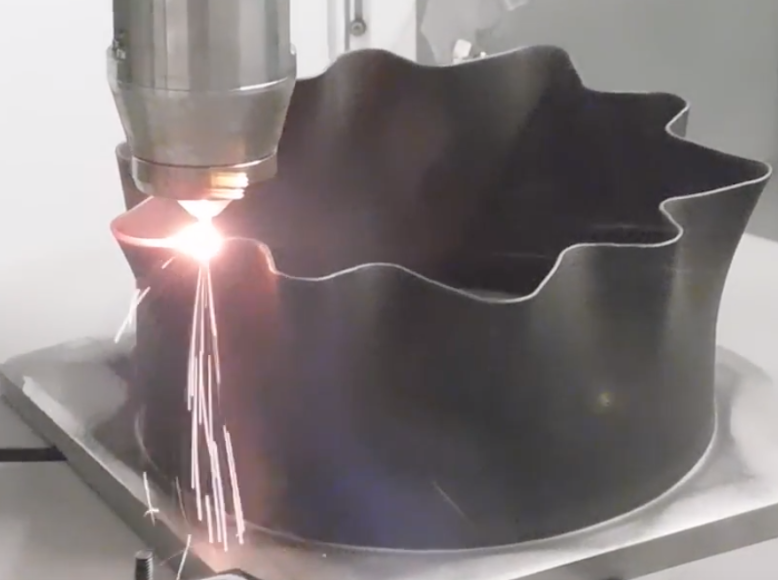
The advent of metal 3D printing has completely shattered this limitation. By melting metal powder layer by layer, 3D printing can produce conformal cooling channels that perfectly follow the contours of the cavity—however the cavity bends, the cooling channel follows. Such complex internal flow structures are impossible to produce with conventional machining, yet 3D printing accomplishes them in a single step.
Real-world application data is compelling:
·Cooling efficiency soars: For products with deep-cavity structures, cooling time can be reduced by 30% to 80%. In one case, the mold cycle time dropped from 4 seconds to 2 seconds, effectively doubling production capacity.
·Quality improves markedly: Mold temperature uniformity is significantly enhanced, product shrinkage becomes consistent, and warpage is reduced. In one example, the temperature differential across the mold cavity surface plummeted from 19°C to just 5°C.
·Service life extends: Localized thermal stress concentration is alleviated, improving mold durability. The use of 3D-printing-specific mold steel (with hardness up to 52 HRC) offers greater wear resistance compared to traditional beryllium copper cooling solutions.
Today, conformal cooling molds have been adopted in volume production across sectors including medical and cosmetic packaging, 3C electronics (such as Bluetooth earphones and phone cases), automotive interior components, and white goods housings. Publicly listed companies like Guangdong Hongtu have also integrated 3D printing into the core processes of conformal cooling channel manufacturing and rapid prototype delivery.
Reshaping Delivery Cadence: From "Waiting by the Month" to "Delivering by the Day"
Beyond solving technical challenges, 3D printing is upending delivery lead times in the mold industry.
Modifying a traditional mold design requires rescheduling production, reordering materials, and waiting in line for machine tools—a process measured in weeks. With 3D printing, one simply modifies the data file and reprints the same day. This "by-the-day" iteration pace is invaluable for fast-moving industries like consumer electronics and footwear.
Two Parallel Paths: Breakthroughs in Metal Forming and Sand Casting
The adoption of 3D printing in the mold industry follows two distinct technological paths:
Path One: Direct Metal 3D Printing of Molds
Molds or inserts are printed layer by layer on a metal powder bed and used directly in mass-production scenarios such as injection molding and die-casting. This is the primary method for manufacturing conformal cooling molds. While costs remain relatively high today—primarily serving high-value-added products (medical, 3C, automotive) or used as "inserts" within traditional molds—the demonstration effect is accelerating penetration into broader applications.
Path Two: Sand 3D Printing—Skipping the Mold for Casting
Traditional casting requires building a mold first, then using that mold to create a sand mold, and finally pouring the metal. Sand 3D printing eliminates the intermediate "mold-making" step entirely—using fine sand and binder to print the sand mold layer by layer, ready for metal pouring immediately after.
The Road Ahead and Challenges: From "Printable" to "Reliably Production-Ready"
Despite its immense promise, 3D-printed molds are not without bottlenecks:
·Material performance and cost: Die-casting molds operate under extreme conditions requiring high temperature resistance and thermal fatigue strength. Currently, the range of 3D-printing-specific materials suitable for die-casting is limited, with performance still undergoing continuous optimization.
·Internal quality inspection: The metal 3D printing process is complex and prone to internal defects such as porosity and micro-cracks, which are difficult to fully detect with traditional inspection methods. The industry is exploring "real-time in-process monitoring + digital twin" solutions, aiming to control porosity below 0.5%.
·Limitations of polymer molds: Molds printed with photopolymer resins or nylon are low-cost and quick to produce, but their strength and heat resistance are limited. They are currently suitable primarily for prototyping and small-batch production, with a considerable gap remaining before they can support mass production.
Conclusion: A Precision "Scalpel"
The future of the mold industry lies in an intelligently integrated manufacturing system that deeply converges additive, subtractive, and casting technologies. And how far this integration can go is a question worthy of the entire manufacturing sector's continued attention and anticipation.
If you want to know more. Please contact:
Click here to start

0086 0755 23170739
0086-0755-24325235
ciky@hainamould.com
Room 1605, 16th Floor, Hongyu Building, No. 495, Donghuan 2nd Road, Longhua Subdistrict, Longhua District, Shenzhen, Gongdong ,China 518109


Copyright 2026 Hainamould.com All rights reserved.
-
 0086 0755 23170739
-
 Facebook
-
 WhatsApp
-
 LinkedIn
-
 TOP
TOP