CNC Machining
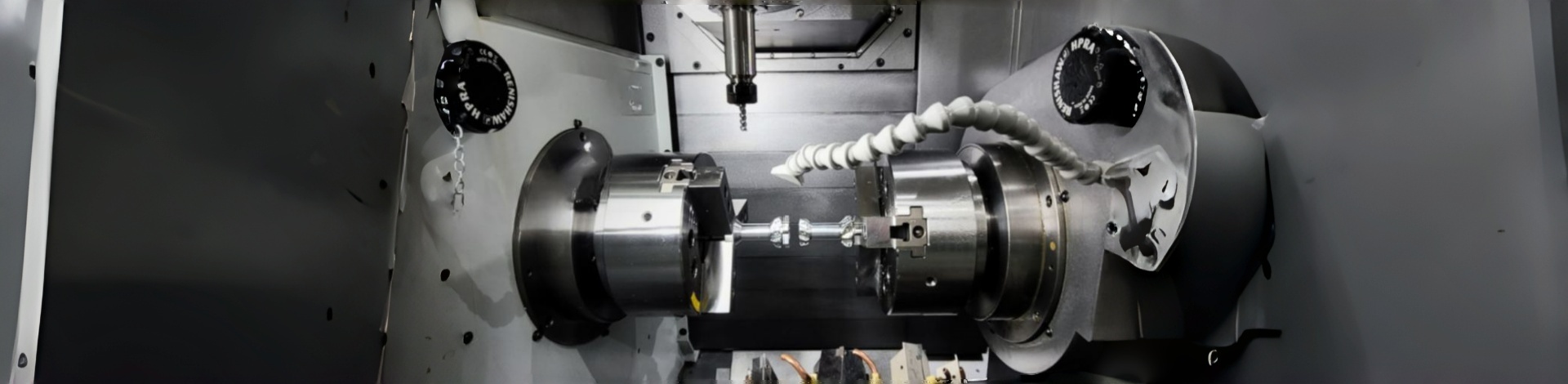
Over nearly 20 years of CNC machining at Haina, we have witnessed every leap—from manual programming to CAD/CAM, from fixed parameters to adaptive control. In recent years, the introduction of AI-assisted machining has been driving qualitative changes in two core metrics: efficiency and tool life. Here are some of our practical observations.
🎯 Efficiency Gains: From "Waiting for Code" to "Code Waiting for You"
Intelligent Programming: Giving Time Back to Process Engineering
In the past, generating a CNC program for a complex mold component—from modeling and feature recognition to toolpath generation—could take a skilled engineer most of a day. Now, with AI-assisted functions embedded in CAM software, the system can automatically analyze CAD models, identify machinable features, and generate optimized toolpaths. In our actual projects, programming and setup time has been reduced by up to 80%. This means engineers can devote more energy to where experience truly matters—such as deformation control for thin-walled parts and surface quality optimization for high-gloss finishes.
Adaptive Machining: Letting the Machine "Make Its Own Decisions"
In mold machining, uneven material hardness and fluctuating stock removal are the norm. The traditional approach is to set conservative parameters, sacrificing efficiency for stability. AI adaptive machining, however, uses spindle load, vibration, and acoustic feedback to adjust feed rates and speeds in real time. It's like installing "cruise control" on the machine—when roughing large mold bases, we've seen efficiency improve by approximately 15%–20%, while tool load actually becomes more stable.
Digital Twins: Eliminating Problems Before the First Cut
Before machining large molds, Haina uses AI-driven simulation to verify toolpaths, stresses, and potential collisions. This virtual validation gives us greater confidence at first-cut, reducing repeated trial cuts and air passes—especially effective in deep cavities, narrow slots, and other interference-prone areas.
🔧 Tool Life: From "Scheduled Replacement" to "On-Demand Replacement"
·Predictive Wear Monitoring
In the past, we replaced tools based on experience or fixed intervals—either too early (wasteful) or too late (catastrophic breakage). Now, AI analyzes spindle torque, vibration, temperature, and acoustic signals to issue warnings before tool wear degrades surface quality. Multi-sensor fusion combined with deep learning models can achieve wear recognition accuracy of over 99%, with remaining useful life prediction errors kept to a minimum.
·Early Fault Warning
Beyond tools, AI can also detect anomalies in spindle bearings, guide rails, and other critical components ahead of time. Research shows that deep learning systems can predict bearing failures, spindle issues, and tool wear with accuracy rates of 92%, 88%, and 84% respectively, with early detection windows of 12–36 hours in industrial environments. For Haina, this means scheduling tool changes or maintenance in advance, rather than scrambling for emergency repairs after a breakdown.
·Intelligent Tool Management
AI-supported tool search and in-machine tool visualization systems help us quickly match suitable tools and perform non-contact wear detection. For mold orders with multiple varieties and small batches, this rapid changeover capability is especially valuable.
📊 Haina's Takeaway
From our actual data, the changes brought by AI-assisted machining are tangible: unplanned downtime reduced by 20–30%, and mean time between failures increased from 7.7 hours to 11.76 hours. For a mold factory, this means fewer rejects, shorter cycles, longer tool life, and more stable delivery.
At Haina, we have always believed: AI does not replace people—it amplifies human experience. The judgment of a master craftsman combined with AI's real-time data is the most competitive combination in this industry. Going forward, we will continue to apply these capabilities to more large-scale and precision mold projects, so that what our customers receive is not just a mold, but a commitment to consistent quality.
Learn more about Haina's CNC machining capabilities:CNC Machining - hainamould Mould Company Limted

0086 0755 23170739
0086-0755-24325235
ciky@hainamould.com
Room 1605, 16th Floor, Hongyu Building, No. 495, Donghuan 2nd Road, Longhua Subdistrict, Longhua District, Shenzhen, Gongdong ,China 518109


Copyright 2026 Hainamould.com All rights reserved.
-
 0086 0755 23170739
-
 Facebook
-
 WhatsApp
-
 LinkedIn
-
 TOP
TOP