
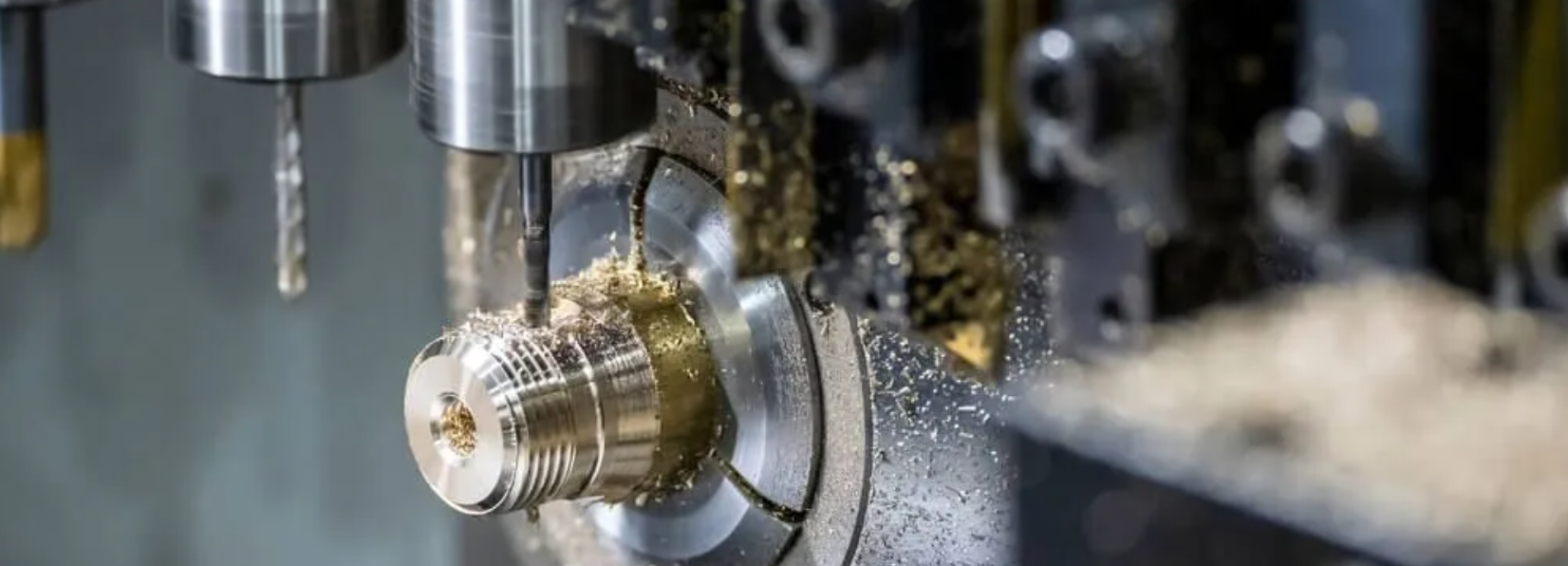
Die Casting
Die casting has an inherent contradiction: molten metal must fill a complex mold in a fraction of a second, at extremely high speed, and it inevitably traps air from the cavity. The gas has no time to escape before it gets "frozen" inside the solidifying metal, forming porosity. Too much porosity weakens the casting, and for sealed components, it causes gas or oil leaks.
The idea behind vacuum die casting is straightforward: if gas is the culprit, then remove the air from the cavity before the molten metal rushes in.
How does it work in practice?
Right after the injection plunger seals the pouring hole but before the metal begins its high-speed fill, a vacuum valve opens, and a connected vacuum tank drops the cavity pressure to a very low level in less than a second. This window is short—roughly one second from vacuum onset to completion—and must mesh precisely with the injection rhythm. Just before the molten metal enters the cavity, the vacuum valve closes in time; otherwise, the metal would backflow into the vacuum line.
The results are concrete. One study compared porosity in aluminum alloy die castings at different vacuum levels: when absolute pressure dropped from 500 mbar to 100 mbar, average porosity fell from 4.8% to 2.8%, pore size shrank from 8.65 microns to 5.61 microns, and tensile strength increased by 13%. Research from Korea likewise showed that a high-vacuum die casting system reduced internal porosity by nearly 58% compared with a non-vacuum system. Strictly speaking, "sucking away" isn't quite accurate—the porosity isn't drawn out; the air is cleared in advance. When the molten metal arrives, there is no gas left to entrap, and porosity naturally decreases.

0086 0755 23170739
0086-0755-24325235
ciky@hainamould.com
Room 1605, 16th Floor, Hongyu Building, No. 495, Donghuan 2nd Road, Longhua Subdistrict, Longhua District, Shenzhen, Gongdong ,China 518109


Copyright 2026 Hainamould.com All rights reserved.
-
 0086 0755 23170739
-
 Facebook
-
 WhatsApp
-
 LinkedIn
-
 TOP
TOP