
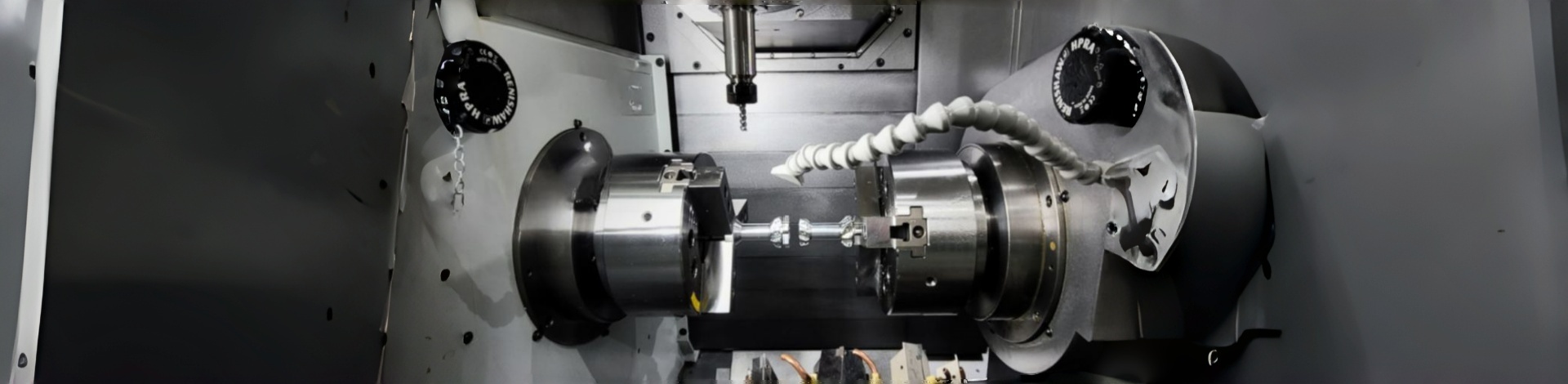
CNC Machining
Anyone who has worked with CNC machining has probably had this experience: the same aluminum part gets quoted at 80 by one shop and 200 by another. Why such a big difference? The truth is, the cost of CNC machining aluminum parts varies widely—from a few dollars for simple batch parts to over a thousand dollars for complex prototypes. There's no fixed "one price," but the logic behind the cost is clear.
1. How Big Is the Price Difference?
Let's look at a few market references to get a sense of the range:
For simple aluminum parts, such as brackets and spacers, if produced in batches of 100 or more, the unit price can drop to just a few dollars to a few dozen dollars per piece. But if you're only making one prototype, the price can jump to several hundred dollars because of the high programming and setup costs spread over just one piece.
For medium-complexity parts, such as housings and cavities, batch prices typically range from a few dozen to over a hundred dollars; for a single piece, it could be two to three hundred dollars.
For complex precision parts, such as 5-axis machined components, the unit price usually exceeds several hundred dollars, and complex ones can reach over a thousand dollars, depending on tolerance requirements and structural difficulty.
2. Where Does the Money Go?
A CNC machining quote typically consists of four parts: material cost, machine hourly rate, setup cost, and post-processing cost.
Material cost, accounting for about 15% to 25%. Aluminum itself isn't expensive—6061 aluminum stock costs roughly ten to twenty-plus yuan per kilogram. But the wasted portion also counts. If you carve a very small part out of a large block, most of the material becomes chips, and that loss directly drives up the cost.
Machining time, the largest share, up to 50% to 70%. This is the biggest cost, calculated as "machine hourly rate × machining time." A 3-axis machine may cost two to three hundred yuan per hour, while a 5-axis machine, being more expensive equipment, can cost five to six hundred yuan per hour or even more. The more complex the part, the longer the cutting time, and the higher the cost.
Setup and programming, a fixed cost, accounting for 10% to 30%. This includes CAM programming, fixture making, tool setting, and first-article trial cutting. This cost is charged per batch, regardless of whether you make 1 piece or 100. That's why the unit price for a single piece is extremely high, but once you reach 100 pieces, the setup cost spread over each piece becomes almost negligible.
Post-processing and inspection, accounting for 5% to 25%. Surface treatments such as anodizing, sandblasting, and electroplating, as well as CMM inspection, are charged separately.
3. How Do You Judge Whether a Quote Is Reasonable?
If you get a quote and think it's expensive, you can compare it against these points:
Is the tolerance too tight? Does the drawing specify ±0.01 mm on every dimension? Usually only mating surfaces need tight tolerances. Relaxing non-critical dimensions to ±0.05 mm or ±0.1 mm can significantly reduce machining time and cost.
Is the structure difficult to machine? Are there particularly deep cavities, very thin walls—say, below 0.8 mm—or internal sharp corners? These force the machine to reduce feed rates and increase machining time.
Is the quantity cost-effective? If you're only making a few prototypes, a high unit price is normal. Try increasing the quantity to 10, 50, or 100 pieces, and the unit price often drops sharply.

0086 0755 23170739
0086-0755-24325235
ciky@hainamould.com
Room 1605, 16th Floor, Hongyu Building, No. 495, Donghuan 2nd Road, Longhua Subdistrict, Longhua District, Shenzhen, Gongdong ,China 518109


Copyright 2026 Hainamould.com All rights reserved.
-
 0086 0755 23170739
-
 Facebook
-
 WhatsApp
-
 LinkedIn
-
 TOP
TOP