CNC Machining
In mold manufacturing and modification, CNC machining and welding are two processes with opposite natures that are nonetheless often used in tandem. The industry often sums it up in one sentence: CNC is "subtractive"—it removes material; welding is "additive"—it puts material back. The two work in opposite directions, yet frequently follow one another in the same mold modification.
Two Processes, Each with Its Own Role
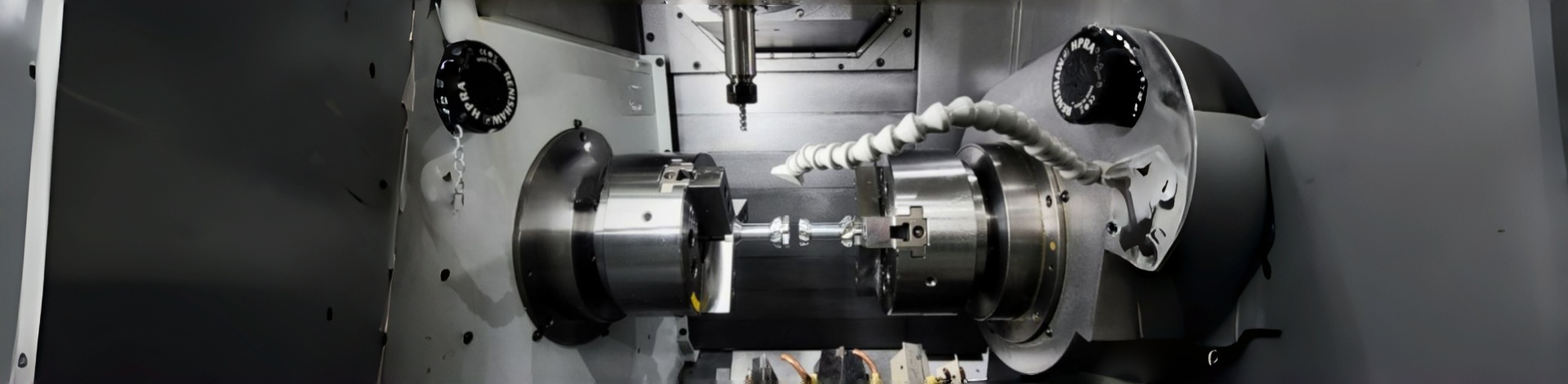
CNC machining is a conventional subtractive process that mills mold steel down to the designed dimensions. In mold modification, CNC is mainly used to mill away reserved stock, enlarge holes, machine new cooling channels or insert slots, and correct dimensions. It offers high precision, is programmable, and suits batch machining—but it can only remove material, not add it.
Welding, by contrast, is a remedial additive process that restores missing metal. In mold modification it is mainly used to repair CNC over-cuts, build back material at locations that need "adding material" after trial molding, repair chipped corners and porosity, and restore worn areas. It can locally restore material, but the heat input affects the mold, and welded areas usually still need further CNC or EDM finishing.
The Typical Sequence in Mold Modification
In practice, the two processes typically follow the sequence: "weld to build up material first, then CNC machine, then polish." For example, if a location is found undersized after trial molding and needs material added, or if CNC has over-cut, laser welding or TIG welding is first used to build the material back with machining allowance left; the welded surface is then uneven and dimensionally inaccurate, so it is re-machined on a CNC to the target dimensions, or EDM is used for fine features; because the welded area differs in material from the base metal, appearance surfaces usually still require polishing.
The industry cautions that when both welding and CNC are needed in a modification, the order must not be reversed: always weld first, then finish with CNC. If CNC is brought to final size before welding, the heat distortion and weld-layer allowance will damage the already-machined dimensions, requiring another pass. At the same time, sufficient machining allowance must be left at the welded location, otherwise a single CNC pass will bring it right back to the pre-weld dimensions.
Choosing the Right Welding Method
The choice of welding method directly affects the outcome. Laser welding concentrates heat with a very small heat-affected zone, so the mold is unlikely to distort after welding; it suits repairing fine ribs, sealing surfaces, and minor defects on appearance surfaces, and polishes well with little trace. TIG welding inputs more heat and easily causes mold distortion or corner collapse, but for large defect areas requiring thick build-up, it is actually safer than laser welding when combined with preheating and heat treatment, because laser welding built up layer by layer is prone to porosity and detachment.
Not a Cure-All: Limitations of Welding
Welding is not suitable for every scenario. Molds for transparent products or products with high-gloss appearance requirements generally do not permit welding, because the material difference between the welded area and the base metal may leave marks or flow lines on the product surface after injection molding. For high-pressure load-bearing core locations or molds that already have internal cracks, welding carries higher risk—the weld layer may detach or crack—and requires careful evaluation.
Practical Significance for Mold Modification Costs
In modification plans, the combination of CNC and welding has real economic significance. Taking a certain valve body mold modification as an example, if the front mold insert, rear mold insert, and slides are all to be remade, CNC is the main process but the cost is relatively high; if only local adjustments are needed on some existing mold components and a full remake is to be avoided, welding to build up material followed by CNC finishing is a more economical alternative. Properly combining these two processes can control modification costs while ensuring dimensional accuracy and shortening repair cycles.

0086 0755 23170739
0086-0755-24325235
ciky@hainamould.com
Room 1605, 16th Floor, Hongyu Building, No. 495, Donghuan 2nd Road, Longhua Subdistrict, Longhua District, Shenzhen, Gongdong ,China 518109


Copyright 2026 Hainamould.com All rights reserved.
-
 0086 0755 23170739
-
 Facebook
-
 WhatsApp
-
 LinkedIn
-
 TOP