Injection molding
In the injection molding industry, many customers ask during the inquiry stage: "Can you do the injection molding? Can you handle the surface treatment?" A common response from many factories is: "Injection molding is no problem, but for deburring and polishing, you'll need to find another vendor—or we can help you find an outsourcing partner."
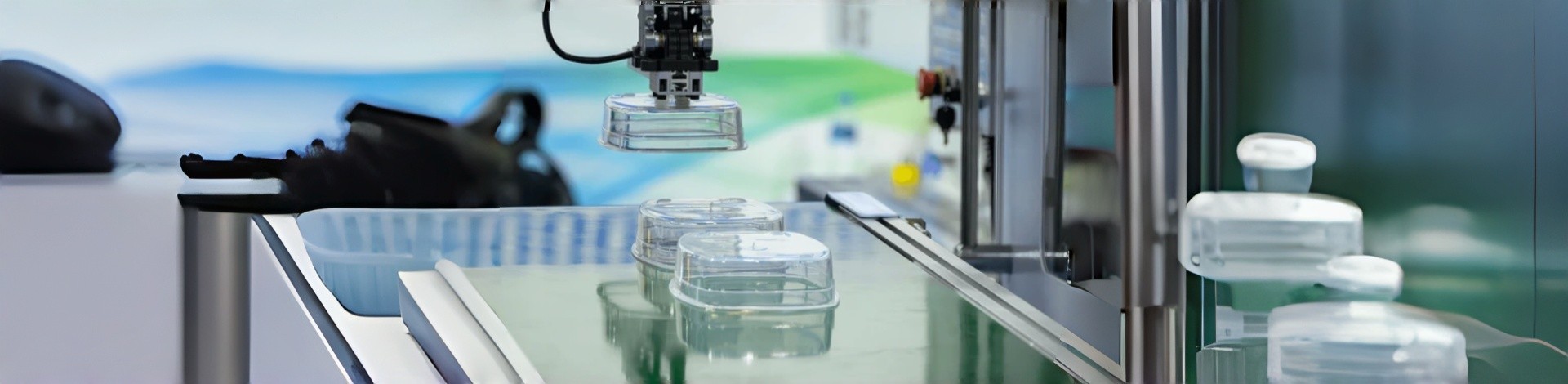
But in our view, a truly excellent injection-molded part must not only be "well molded" but also "cleanly finished." To control quality and lead times, our factory is equipped not only with high-precision injection molding machines but also with dedicated, professional polishing equipment.
1. Why Is Deburring and Polishing Essential for Injection-Molded Parts?
Plastic parts coming out of a mold are rarely perfect. The mold's parting line, remnants at the gate, and even ejector pin marks can leave raised or sharp edges on the product surface (commonly known as burrs or flash).
If left untreated, this leads to several critical issues:
·Assembly issues: Especially for precision parts, even a 0.1 mm burr on the parting line can prevent a part from fitting smoothly into a slot or cause gaps after assembly.
·Safety hazards: For medical devices, consumer electronics, children's toys, or automotive interiors, sharp edges can cut users.
·Cosmetic defects: If subsequent painting or electroplating is required, burrs will cause an uneven surface and affect the final appearance quality.
2. Why Must Polishing Be Done In-House by the Injection Molder?
Many customers think deburring is simple manual labor—just have a few workers scrape it with a knife. This is not the case. Injection molding and polishing are closely interconnected.
·Material properties: Different plastics (such as PA66, PC, ABS) have completely different hardness and toughness. Glass-fiber-reinforced engineering plastics are highly prone to burrs and are very hard, while some soft plastics deform easily. Only a factory that understands injection molding knows how to set the polishing force and blade angle to thoroughly clean the part without damaging the product itself.
·Dimensional accuracy control: When we previously made high-precision connector parts, the requirement was that "not a single tooth could be off." In this case, polishing is not just about deburring but also about fine-tuning and correcting dimensions. If handed to an outsourcing vendor, they often lack a proper understanding of injection molding tolerances and can easily "over-polish," resulting in the scrapping of an entire batch.
3. What Does In-House One-Stop Processing Bring to Customers?
Keeping injection molding and polishing (and even subsequent secondary machining) within the same facility benefits the customer most:
·Significantly shorter lead times: Parts go directly from the injection molding floor to the polishing workshop. This eliminates the lengthy cycle of packing, shipping to an outsourcing vendor, waiting for processing, and receiving the goods back.
·Seamless quality control: If batch flash issues are discovered during polishing, we can immediately trace them back to the specific mold problem and repair it on the spot. Outsourced processing cannot achieve this kind of rapid feedback.
·Lower overall costs: On the surface, buying a polishing machine costs money. But in the long run, in-house processing eliminates the outsourcing vendor's profit margin and round-trip logistics costs. Overall, the quotes we give customers are often more competitive.

0086 0755 23170739
0086-0755-24325235
ciky@hainamould.com
Room 1605, 16th Floor, Hongyu Building, No. 495, Donghuan 2nd Road, Longhua Subdistrict, Longhua District, Shenzhen, Gongdong ,China 518109


Copyright 2026 Hainamould.com All rights reserved.
-
 0086 0755 23170739
-
 Facebook
-
 WhatsApp
-
 LinkedIn
-
 TOP