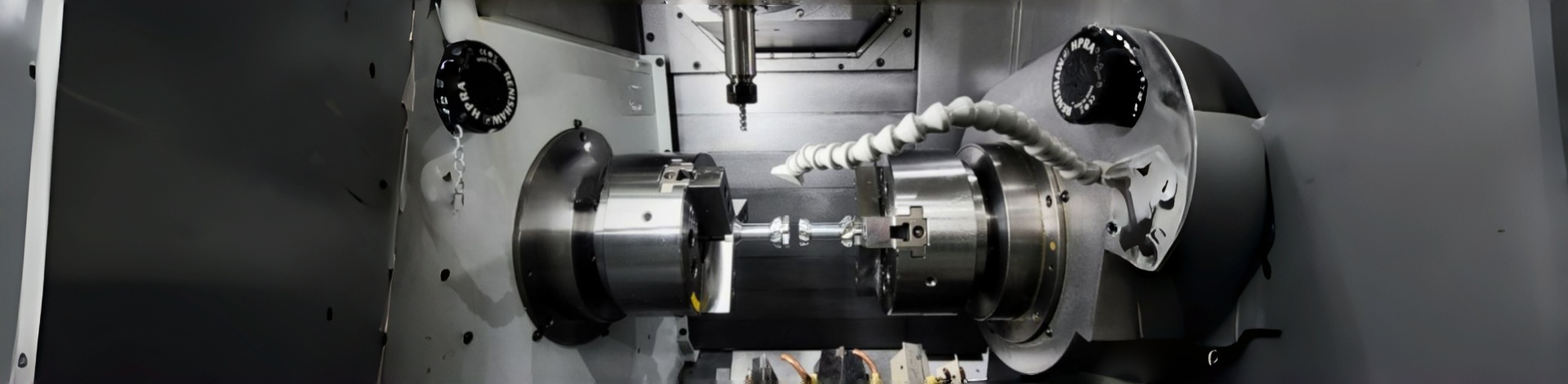
CNC Machining
When evaluating a mold quotation, many people tend to focus only on what high-grade steel is used for the "mold core (cavity/core)" while neglecting the "skeleton" that supports the operation of the entire mold—the mold base.
An excellent mold emphasizes "using good steel where it matters most." Core forming components require mold steel with high hardness and high wear resistance; but for non-forming structural parts, such as mold base plates, bottom plates, and ejector plates, the industry usually chooses carbon structural steel.
This type of steel has low cost and excellent machinability. Although its hardness is not high and it cannot be used for core forming parts, it perfectly fulfills the role of the mold skeleton.
S45C / S50C (or 45# / 50#): the "main skeleton" of the mold
• What steel is this?
This is medium carbon steel. S45C and S50C are Japanese standard (JIS) designations, while 45# and 50# are Chinese national standard (GB) designations. The numbers represent their approximate carbon content; the higher the carbon content, the relatively higher the strength.
• Core uses in molds:
They can be called the "all-purpose" steel of mold factories. The mold base plates (A plate, B plate), bottom plates, ejector plates, and top clamping plates you usually see are mostly made of these two materials. In addition, some mechanical parts that are not subjected to large forces but require certain strength and rigidity also use them.
• Why use them?
Because mold base plates are usually large in size and use a lot of material. If expensive mold steel were used for everything, the cost would soar. S45C/S50C is not only cheap, but also very smooth to machine, with extremely high efficiency in CNC milling and drilling. More importantly, they can improve internal stress through subsequent heat treatment, ensuring that the mold base is not easily deformed under long-term pressure.
Q235: an economical and practical "peripheral workhorse"
• What steel is this?
Q235 is ordinary carbon structural steel. Q stands for yield strength, and 235 means the yield value is about 235 MPa. It is one of the most basic and common steels in industry.
• Core uses in molds:
It is usually not used for precision structural parts, but for the outermost support structures, spacer blocks, non-precision connecting parts, or workshop fixtures.
• Why use it?
Because it is very soft and has excellent weldability. Sometimes mold factories need to temporarily weld a support frame or transport base, and Q235 is the first choice. It is effortless to machine and extremely low in cost, suitable for places where "only external dimensions are required, not precision fit."
Reasonable matching is the key to reducing costs and increasing efficiency
Many customers are very strict about the material list when opening a mold, hoping that every component uses the best steel. But in fact, a mature mold design is based on a scientific balance according to functional requirements.
High-grade mold steels such as H13, NAK80, and S136 are used for core forming parts to ensure product precision and mold life; while for places that play a physical framework role, S45C, S50C, or Q235 can be generously used, which can ensure the overall rigidity of the mold while greatly reducing mold opening costs.
As a professional mold manufacturer, we not only know how to use good steel, but also know how to control every unnecessary cost for customers through reasonable material selection and matching.
Our teams:Professional Team - hainamould Mould Company Limted
If you have any questions about mold material selection, you are welcome to communicate with us at any time.
📧 Email: ciky@hainamould.com
🌐 Website: https://www.hainamould.com/Contactus/SendMessage

0086 0755 23170739
0086-0755-24325235
ciky@hainamould.com
Room 1605, 16th Floor, Hongyu Building, No. 495, Donghuan 2nd Road, Longhua Subdistrict, Longhua District, Shenzhen, Gongdong ,China 518109


Copyright 2026 Hainamould.com All rights reserved.
-
 0086 0755 23170739
-
 Facebook
-
 WhatsApp
-
 LinkedIn
-
 TOP