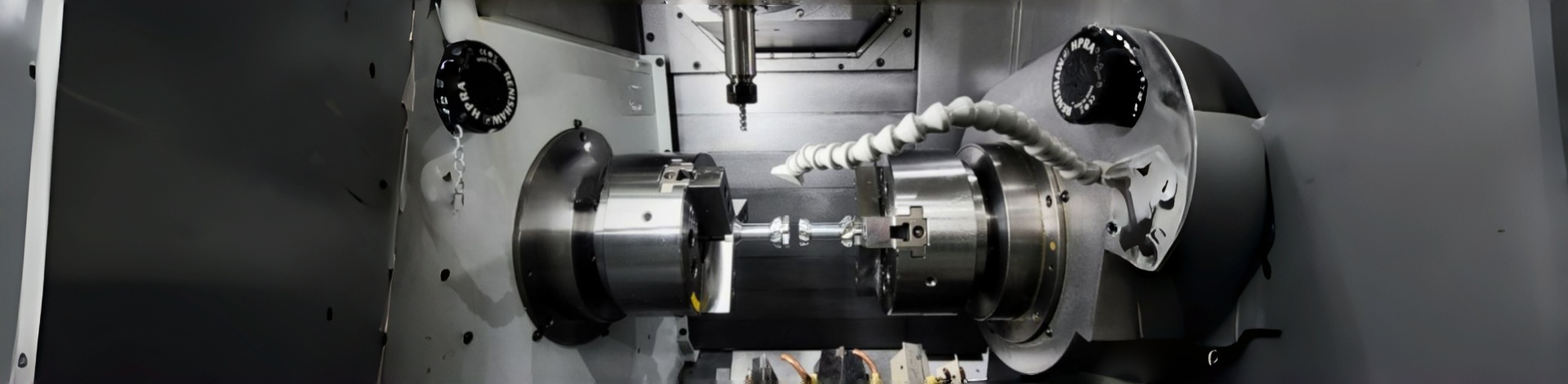
CNC Machining
In manufacturing and product development, many people assume CNC is simply a "machining tool" to be called upon whenever needed. In reality, CNC occupies a very clear and critical position in a standard product lifecycle—it typically sits in the transitional stage between "design validation" and "mass production," with its most essential application occurring before mold making (the fabrication of production tooling).
If we arrange product development chronologically, CNC generally appears in the following four key stages:
1. After Design Completion, Before Mold Making (Core Stage: Prototyping)
This is the most common and irreplaceable use of CNC. After engineers finish the 3D drawing (CAD model) on the computer, they cannot immediately commit to a steel mold costing hundreds of thousands of dollars, because no one knows whether the structure is sound or whether the parts will fit together perfectly.
At this point, CNC machines are used to produce a few to several dozen prototype parts for appearance evaluation, structural interference checks, drop testing, and assembly feel validation. CNC can use the same materials as final mass production (such as ABS, PC, and aluminum alloy), producing parts with high strength and accurate dimensions (down to ±0.01 mm), providing the most realistic test feedback. If problems are found at this stage, the cost of revising the drawing is minimal; if problems are only discovered after the mold is made, the losses are often hard to bear.
2. Trial Production Stage (Small-Batch Production)
If prototype testing passes but the production mold is still being manufactured, or the product's market potential is still uncertain, companies typically use CNC to directly machine dozens to hundreds of parts in small batches. These parts can be used for customer samples, trade show exhibits, or early market preheating. Compared with spending heavily on a mass-production steel mold, CNC small-batch trial production carries far less financial risk.
3. During Mold Manufacturing (Mold Component Machining)
When a project formally enters the mold-making stage, CNC machines themselves are the main equipment in mold shops. In the mold workshop, CNC is widely used to machine high-precision mold bases, inserts, sliders, and the "copper electrodes" used in EDM. It is fair to say that the birth of a precision mold relies on the deep involvement of CNC.
4. Fabrication of Jigs and Fixtures
When a product is about to be mass-produced and is ready for assembly line work or inspection, factories need to make various dedicated fixtures to hold the product and ensure assembly precision. These high-precision, non-standard jigs and fixtures are, in the vast majority of cases, also machined by CNC.
Contact Haina for CNC processing of your parts:
📧 Email: ciky@hainamould.com
🌐 Website: https://www.hainamould.com/Contactus/SendMessage

0086 0755 23170739
0086-0755-24325235
ciky@hainamould.com
Room 1605, 16th Floor, Hongyu Building, No. 495, Donghuan 2nd Road, Longhua Subdistrict, Longhua District, Shenzhen, Gongdong ,China 518109


Copyright 2026 Hainamould.com All rights reserved.
-
 0086 0755 23170739
-
 Facebook
-
 WhatsApp
-
 LinkedIn
-
 TOP