CNC Machining
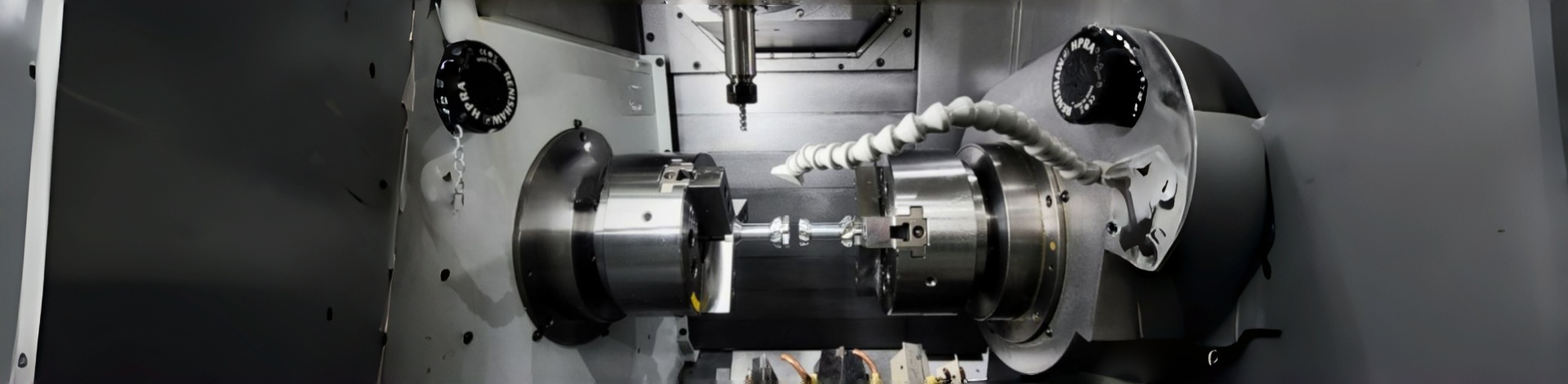
In the manufacturing industry, people often ask: do parts machined by CNC "shrink"? The answer is clear: CNC machining itself essentially does not involve material shrinkage.
What we commonly call "shrinkage" usually refers to the volumetric and dimensional reduction that occurs when plastics are injection molded or metals are die cast, as they cool from a high-temperature molten state to room temperature. CNC machining, by contrast, is a subtractive manufacturing process—it cuts a solid block of material into the desired shape with cutting tools at room temperature, without involving phase changes or cooling solidification. Therefore, the machined dimensions are mainly affected by tool wear, machine tool precision, and thermal expansion, not material shrinkage.
However, in actual production, there are indeed some phenomena that are easily mistaken for "shrinkage." For example, friction between the tool and the material generates heat during machining, and metals expand when heated—if dimensions are measured while the workpiece is still hot, they will appear smaller once cooled to room temperature. Or, a plate may already contain residual internal stress, and after cutting removes a large amount of material, the stress balance is disrupted, causing the part to bend or warp. These situations look like "shrinkage," but they are essentially deformation caused by thermal expansion and contraction or stress release, not the same as the physical shrinkage of the material itself.
In addition, there is one of the most common points of confusion: if you machine a part with CNC to validate the assembly effect of subsequent injection molding or die casting, you must factor in the shrinkage rate of the final mass-production process in advance. For example, ABS material used for injection molding typically has a molding shrinkage rate of 0.4%–0.6%. To make the CNC prototype as close as possible in dimensions to the future injection-molded part, engineers may deliberately scale up the model by the corresponding ratio during programming—commonly known in the industry as "adding shrinkage allowance."
In summary: CNC machining itself does not produce material shrinkage. If a CNC part's dimensions change after machining, it is usually due to cutting heat or internal stress; and when you use a CNC part to match dimensions against an injection-molded or die-cast part, you need to factor in the shrinkage rate of the mass-production process in advance. Understanding this distinction is the key to avoiding incorrect dimensional judgments during the prototype validation stage.

0086 0755 23170739
0086-0755-24325235
ciky@hainamould.com
Room 1605, 16th Floor, Hongyu Building, No. 495, Donghuan 2nd Road, Longhua Subdistrict, Longhua District, Shenzhen, Gongdong ,China 518109


Copyright 2026 Hainamould.com All rights reserved.
-
 0086 0755 23170739
-
 Facebook
-
 WhatsApp
-
 LinkedIn
-
 TOP