
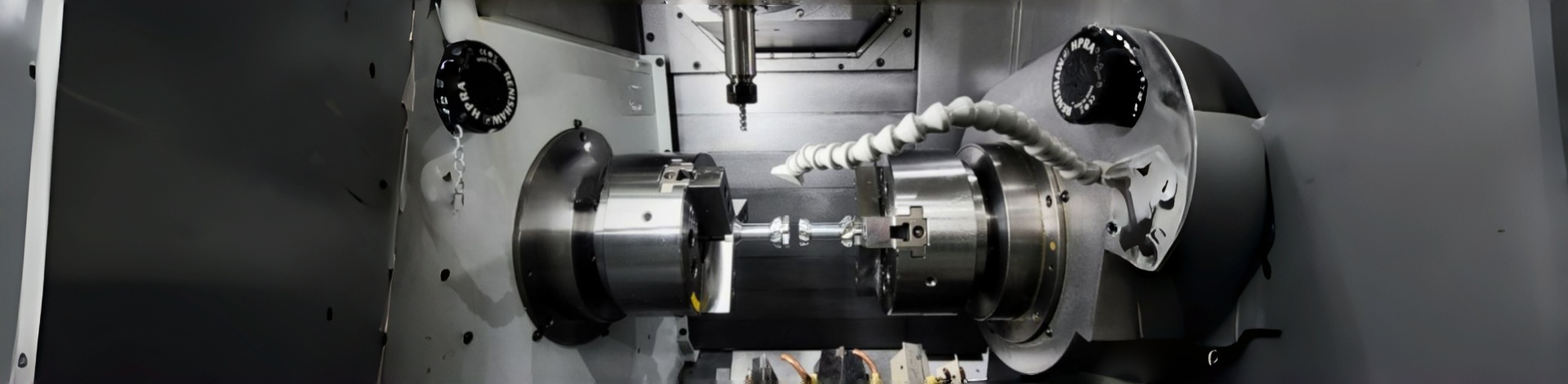
CNC Machining
The same drawing can get quotes from different shops that differ by several times. This isn't simply a matter of "who's expensive and who's cheap"—it's the quote structure, process judgment, and hidden costs at work. For buyers and product engineers, understanding the underlying logic of CNC machining pricing matters more than landing a low number.
What's Actually in a Quote
A complete CNC quote usually consists of five or six line items, not one vague "machining fee."
Material cost is priced by blank weight, not finished weight. The blank needs clamping allowance, facing allowance, and finishing allowance—the actual plate or bar stock purchased is often a size larger than the finished part. For parts with many pockets, most of the material ends up as chips; the relationship between blank size and finished geometry directly determines waste.
Machine rate / hourly rate is where the biggest variation lies. According to machining service quotes published on domestic tender procurement platforms in 2026, three-axis machining center hourly rates run roughly $12–16 (varying with machine travel size), while five-axis centers run $37–63. Note these are tax-inclusive tender prices and may differ from what shops quote walk-in customers. Some industry guides give lower reference ranges for ad-hoc customers: $25–40/hour for three-axis, $50–80/hour for five-axis. There's no absolute standard for the hourly rate itself—what matters is whether the hours quoted match the part's actual machining requirements.
Programming and setup fees are fixed costs. Simple part programming runs about $7–30; complex surfaces rise significantly. This fee is charged per order, so the larger the batch, the less it adds per unit. From 1 to 50 pieces, unit price typically drops 60–75%; from 50 to 1,000 pieces, another 40–55%.
Post-processing and inspection fees are easily overlooked. Anodizing, sandblasting, and passivation are priced per piece or per area, and small batches may trigger a finishing shop's minimum batch charge. If a CMM inspection report is required for every piece, cost rises noticeably; sampling inspection is more manageable.
Four Variables That Really Drive Up Price
Tolerance is the most hidden cost multiplier. Standard tolerances can be met with routine roughing and finishing. Tightening to ±0.01mm requires lower feed rates, more passes, and frequent measurement—cost can double. At ±0.005mm, temperature-controlled environments and high-precision tooling are also needed, with relative cost reaching 3–5× baseline. A practical rule: specify tight tolerances only on mating and functional surfaces; return non-critical faces to standard range.
Material machinability directly affects cycle time and tool consumption. 6061 aluminum cuts fast with low tool wear—one of the most cost-effective choices. Stainless steel gums tools and distorts from heat; titanium's elasticity causes tool deflection. Both significantly lengthen machining time. If the design allows, switching to an easier-to-machine material often delivers more cost reduction than repeated haggling.
Structural features determine process difficulty. Deep pockets, thin walls, and small internal radii are the three big cost drivers. Tools are round—the smaller the internal corner radius, the smaller the usable tool diameter, the slower the cutting speed and the worse the rigidity. Thin walls under 1mm and pockets deeper than 30mm often require re-planning toolpaths or adding auxiliary support, with added machining cost reaching 30–60% of baseline cycle time.
Setup count matters more than hourly rate. A shop at $45/hour needing four setups can cost more in total than a shop at $60/hour completing it in two. Fewer setups mean less accumulated error, shorter auxiliary time, and lower scrap risk. When requesting quotes, ask the shop for its estimated setup count—more meaningful than comparing rates alone.
Quote Traps and Signals to Watch
Lowball opening, mid-job markup is a common tactic. Quote well below market to lock in the order, then add charges during machining citing "material price increases" or "process more complex than expected." The counter: demand itemized quotes and sign a firm-price contract specifying what's included.
Inconsistent quote scope creates false low prices. Shop A quotes $10 without finishing and inspection; Shop B quotes $15 all-inclusive. A looks cheaper on the surface, but after full delivery A may cost more. When comparing quotes, always align: drawing revision, material grade, batch size, surface treatment, inspection requirements, and delivery terms.
Practical signals for judging a shop's capability: whether the workshop is temperature-controlled (a necessity for precision work); whether tools are replaced on a life-cycle basis with records; whether CMM is available with on-the-spot reports; and whether measuring the same dimension on 3–5 samples from a batch shows stable deviation. These reveal more about real capability than a brochure's equipment list.
Cutting Costs at the Design Stage Beats Post-Hoc Haggling
Loosen non-critical tolerances—check each tight callout on the drawing for genuine necessity. Enlarge internal radii—give the tool room wherever function allows. Control pocket depth-to-width ratio—keep depth within 3–4× tool diameter. Use standard blank sizes—avoid purchasing oversized stock for non-standard dimensions. Choose post-processing as needed—accept "as-machined" delivery for non-cosmetic surfaces.
There's no single answer to CNC machining pricing, but there is a verifiable cost structure. When a quote arrives, rather than fixating on the total, break it down: Is the cycle time estimate reasonable? Is the setup count minimized? Are the included items complete? A transparent itemized quote is itself a signal of a shop's professionalism.

0086 0755 23170739
0086-0755-24325235
ciky@hainamould.com
Room 1605, 16th Floor, Hongyu Building, No. 495, Donghuan 2nd Road, Longhua Subdistrict, Longhua District, Shenzhen, Gongdong ,China 518109


Copyright 2026 Hainamould.com All rights reserved.
-
 0086 0755 23170739
-
 Facebook
-
 WhatsApp
-
 LinkedIn
-
 TOP