

Industry Insights
In the manufacturing chain, molds are referred to as the "mother of industry". However, for many purchasers, especially for start-ups entering from different industries, when they first encounter mold quotations, they often feel completely confused: for one set of molds, some manufacturers quote only 3,000 to 5,000 yuan, while others charge 30,000 to 50,000 yuan, or even as much as several hundred thousand yuan. The price gap is so huge, comparable to the difference between a bicycle and a luxury car. What exactly drives this huge profit margin, or is there something else hidden behind it?

Core fact: It's not "random quotations", but "different items"
"Many customers would ask the first question, 'How much does a mobile phone case mold cost?' This leaves us completely at a loss for an answer. It's like asking, 'How much does a complete house decoration cost? Can a simple decoration be the same as a luxurious one?
Molds, as highly customized non-standard products, their prices are first determined by the application scenarios and product requirements.
• Low-end market (thousands to tens of thousands of yuan): Commonly found in daily necessities, simple plastic parts, toys, etc. Usually made of ordinary steel, with conventional heat treatment, and simple structures. The mold lifespan may only be 50,000 to 100,000 injections, with large product tolerances and often having burrs.
• Mid-range market (tens of thousands to two hundred thousand yuan): Covers household appliances, automotive interior parts, electronic products, etc. Starts to use better mold steel (such as P20, 718H), and introduces preliminary mold flow analysis and precision processing.
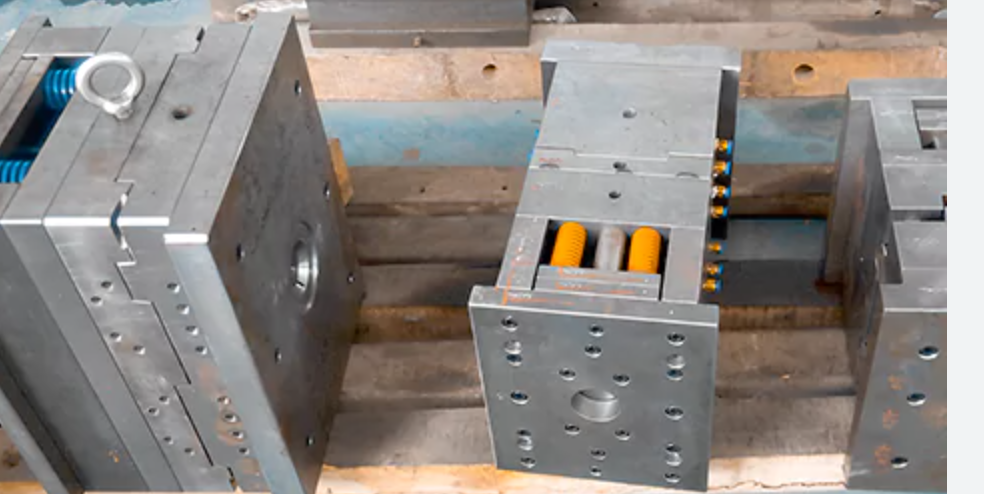
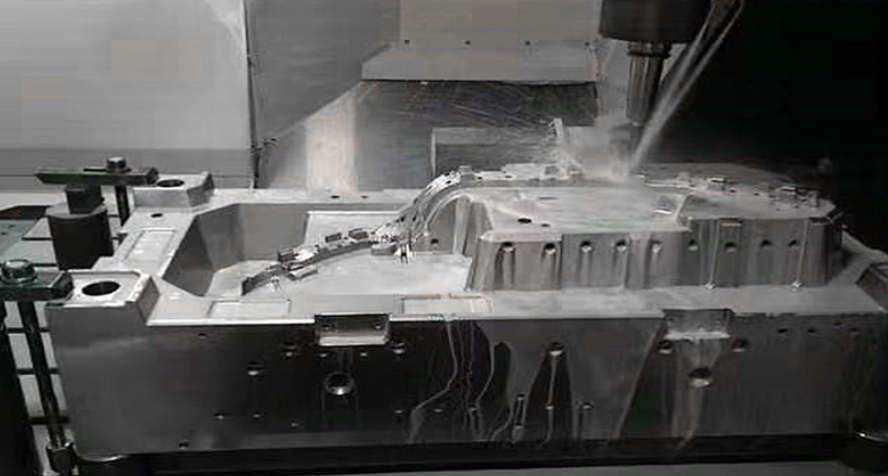
• High-end market (two hundred thousand to several million yuan): Concentrated on automotive safety components, precision connectors, medical consumables, high-end packaging (such as multi-chamber bottle caps molds). Requires micrometer-level precision, millions or even tens of millions of injection lifespans. Must use imported high-quality steel (such as Iwasei, Grizzi), high-speed five-axis processing, mirror surface electro-discharge, and expensive imported hot runner systems.
The generation gap in hardware and materials is the first branch of the price gap.
In-depth Investigation: "The Invisible Costs" Are the True Traps
If materials and equipment are the "visible costs", then technology, craftsmanship, and after-sales service are the "invisible abysses", and they are also the greater source of varying prices.
1. The "Intellectual Premium" of Design and Analysis
High-level mold design is not just about drawing. Senior engineers will use expensive mold flow analysis software to simulate the flow, cooling, and warping of plastic melt in the mold cavity before opening the mold, solving potential problems. While low-priced molds often rely on "the experience of veteran workers", resulting in repeated trial moldings and modifications later, delaying the product launch time.
2. The "Craftsmanship Value" of Machinists
In the mold industry, there is a saying: "The dignity of the mold lies in the hands of the machinist." An experienced machinist can precisely align the mold parting surfaces to an almost seamless state, producing products that do not require secondary processing. However, in some workshops, apprentice workers assembling the molds may have rough edges, seriously affecting production efficiency.
3. The "Invisible Bundling" of After-Sales
A low-price contract of several tens of thousands of yuan often only includes one trial molding or does not include it at all. Each subsequent machine debugging, maintenance, and polishing requires additional charges. While a high-price contract often includes service commitments throughout the entire life cycle, including mold warranty, regular maintenance, remote or on-site fault support, etc.
Some people buy a set of 50,000 yuan molds at a low price, only to install them on a 500,000 yuan injection molding machine. They experience frequent machine shutdowns for maintenance, with a good product rate of only 70%. Later, they replaced it with a 250,000 yuan mold, although it is expensive, it has been continuously produced for two years with almost no problems, and the good product rate is over 99%. In the end, the cheaper set actually cost us nearly 500,000 yuan more.
Industry Pain Points: Malignant Competition and Information Asymmetry
"It's not that we want to charge a high price; it's that inferior products drive out superior ones," said a senior executive of a national-level high-tech enterprise specializing in high-precision molds in Shenzhen, with a sense of helplessness. On the internet, there are advertisements like "only a few thousand yuan for mold creation", attracting many clients who are not familiar with the market situation. The common tactics of these low-price traps are:
1. Low-price bait: Sign contracts at prices far below the cost.
2. Process escalation: During the manufacturing process, use reasons such as "design changes", "steel grade upgrade", "high precision requirements" to constantly request an increase in the budget.
3. Delivery of defective products: Rush to deliver a "usable" mold, but it has an extremely short lifespan, and the subsequent repair costs are high, ultimately forcing the customer to seek a reliable supplier again to make a new set, with the total cost far exceeding the initial choice of a regular manufacturer.
This malignant competition not only harms the purchasers but also squeezes the survival space of regular mold manufacturers, hindering the entire industry's transformation towards high-end manufacturing.
Purchasers should establish a "full life cycle cost" mindset
An expert from the China Mold Industry Association pointed out in an interview that to understand the differences in mold prices, the core lies in changing the mindset - do not view the mold as a "commodity", but as an "investment project".
"The output of the mold is every qualified product it manufactures." When enterprises purchase molds, they should not only consider the "purchase price per unit", but also conduct a "full life cycle cost" calculation. The formula is approximately:
Total cost = Mold purchase price + Trial and repair costs + Production maintenance cost + Losses due to mold failure + (Unit cost of the product × Output)
From this perspective, a set of molds that costs 30% more but is stable, efficient, and has a long lifespan often has a lower comprehensive cost than a set of cheaper molds that have numerous problems. Summary
The "unevenness" in the prices of the mold industry is not a result of market disorder per se, but rather an inevitable consequence of significant differences in technology, materials, processes, and service levels.
For manufacturing enterprises, being "greedy for small benefits" at the critical stage of mold production is likely to result in "big losses" in subsequent production stages. A wise choice is to find suppliers with matching technical capabilities, good reputation, and the ability to provide a full range of services, based on the product's life cycle, quality requirements, and production capacity needs, and conduct a scientific cost-benefit assessment instead of simply pursuing the "lowest price".
After all, the stability of the "mother industry" determines the health of all the "children" in the manufacturing sector.

0086 0755 23170739
0086-0755-24325235
ciky@hainamould.com
Room 1605, 16th Floor, Hongyu Building, No. 495, Donghuan 2nd Road, Longhua Subdistrict, Longhua District, Shenzhen, Gongdong ,China 518109


Copyright 2026 Hainamould.com All rights reserved.
-
 0086 0755 23170739
-
 Facebook
-
 WhatsApp
-
 LinkedIn
-
 TOP
TOP