
CNC Machining
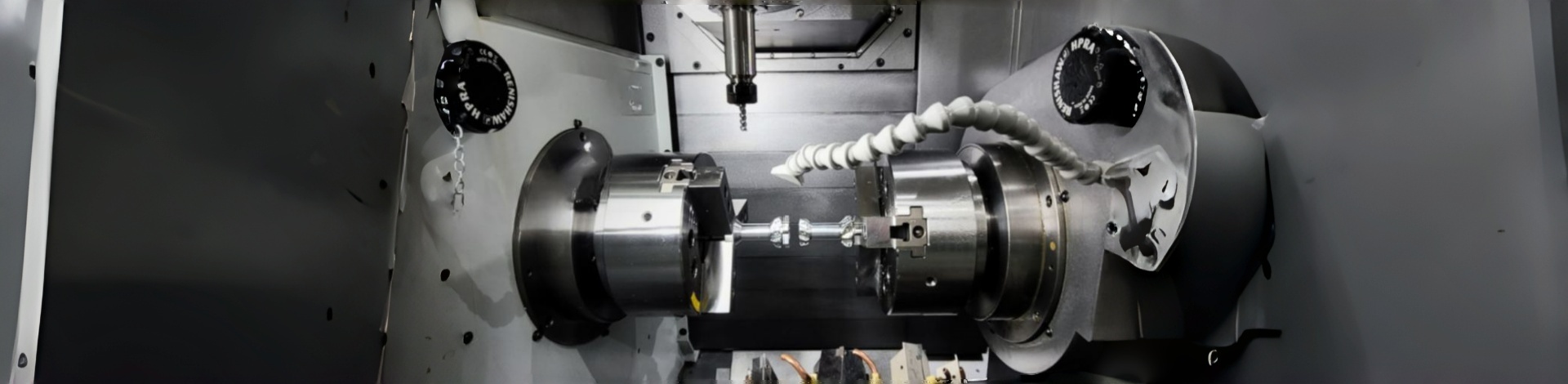
The CNC lathe is one of the core pieces of equipment in metalworking. It works by spinning the workpiece at high speed while the cutting tool moves precisely along the axial and radial directions, "turning" the metal bar stock into the desired shape. Rotational parts such as shafts, flanges, and threads are almost always produced on CNC lathes.
Basic Workflow
The first step is to analyze the drawing and determine the machining sequence. This typically involves roughing (rapid removal of most material), semi-finishing, and finishing (achieving final dimensions and surface quality). At the same time, an appropriate workholding method must be selected, with the three-jaw chuck being the most common.
The second step is to write the program. Simple parts can be manually programmed using G-code, while complex parts are usually programmed with CAM software. A typical program block includes commands for spindle rotation, tool positioning, linear interpolation cutting, and so on.
The third step is to prepare materials and cutting tools. Common machined materials include aluminum alloy (easy to cut), 45 steel (general purpose), and stainless steel (requires low speed and high torque). Cutting tools are selected based on the operation, including turning tools, grooving/parting tools, threading tools, and boring tools.
The fourth step is workholding and tool setting. The workpiece should extend from the chuck jaws by an appropriate length. Slender parts must be supported by a tailstock center. Tool setting tells the machine the exact spatial position of each tool, typically done by trial-cutting the face and the outer diameter.
The fifth step is program simulation and first-part trial cutting. The first run must be performed in dry-run or single-block mode to verify that the toolpath is safe. After the first part is machined, measure the critical dimensions using a micrometer and calipers, and adjust any deviations through tool offsets.
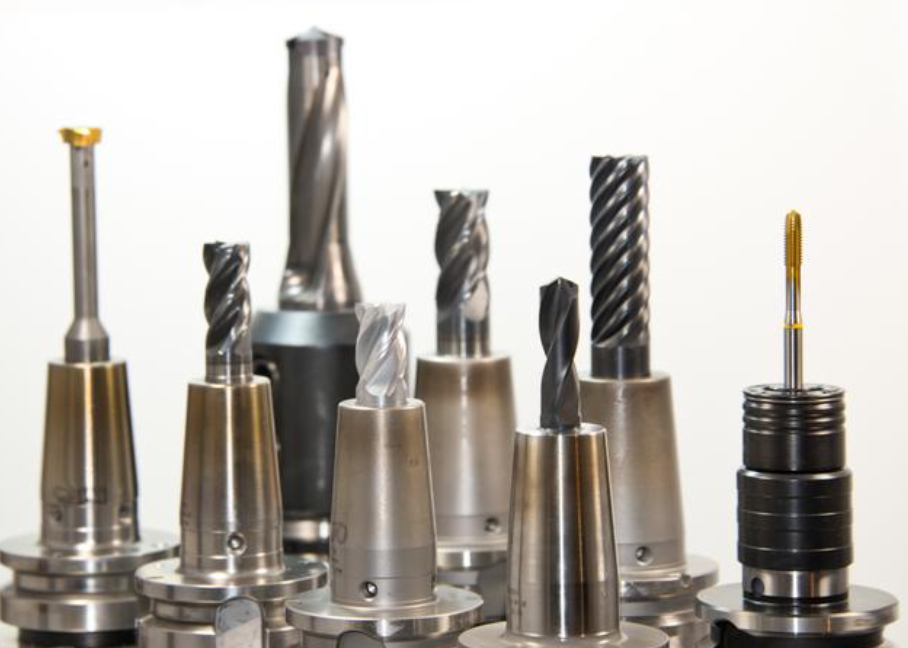
The CNC machine uses various cutting tools to shape the mold into the desired form
Key Parameters
When machining 45 steel (with coated carbide inserts), roughing parameters are: depth of cut 1.5-3.0 mm, spindle speed 800-1200 rpm, feed rate 0.20-0.35 mm/rev. Finishing parameters are: depth of cut 0.1-0.3 mm, spindle speed 1800-2500 rpm, feed rate 0.05-0.12 mm/rev. For stainless steel, reduce the speed by 30-40%; for aluminum alloy, you can increase the speed by 2-3 times.
Three Most Common Mistakes for Beginners
The first is failing to account for tool deflection. When machining slender parts, the cutting tool gets pushed away by the workpiece, resulting in a larger diameter at the far end. The solution is to add a semi-finishing pass or use constant surface speed control.
The second is chip tangling into a "bird's nest." Long, stringy chips wrapping around the workpiece and tool are very dangerous. This can be solved by increasing the feed rate, reducing the depth of cut, or switching to an insert with a chipbreaker.
The third is incorrect tool nose radius compensation. When machining tapers or arcs, you must properly use the G41/G42 compensation commands and input the tool nose radius and orientation in the tool offsets.
Tips for Special Cases
When machining slender shafts (length-to-diameter ratio greater than 15), a steady rest or follower rest is mandatory, and a reverse cutting pass should be used. When machining thin-walled parts (wall thickness less than 1 mm), use a soft jaw with larger contact area, reduce clamping force but increase spindle speed. When machining deep holes, choose a solid carbide boring bar for better vibration resistance, and ensure the bar overhang is sufficient.
Pre-Operation Checklist
Before machining, quickly verify: Is the workpiece extension length less than 3 times the diameter (if not using a tailstock)? Has the program been tested in dry-run mode? Are tool offsets properly set, including radius compensation? Do the cutting parameters match the insert's recommended range? Is the coolant nozzle aimed at the cutting zone?
CNC lathe machining is a highly hands-on skill. Start by practicing simple cylinders and stepped shafts, then gradually master grooving, threading, and arcs. You'll soon develop a feel for metal cutting. For specific materials or part shapes, use the parameters above as a starting point, and don't hesitate to experiment and make careful adjustments.
Haina Company has many well-known brands of CNC machining lathes. Our employees have all received professional training. In this video (https://youtube.com/shorts/YRBeXB2I-ns) , our machines are processing modules.
If you have any needs, please feel free to contact us!
Email: Ciky@hainamould.com

0086 0755 23170739
0086-0755-24325235
ciky@hainamould.com
Room 1605, 16th Floor, Hongyu Building, No. 495, Donghuan 2nd Road, Longhua Subdistrict, Longhua District, Shenzhen, Gongdong ,China 518109


Copyright 2026 Hainamould.com All rights reserved.
-
 0086 0755 23170739
-
 Facebook
-
 WhatsApp
-
 LinkedIn
-
 TOP
TOP