

Injection molding
For many engineers and product managers, the most common confusion they encounter is: Which one should I choose between vacuum forming and injection molding?
In fact, there is no standard answer to this question. Both processes have their own advantages. The key is to understand their fundamental differences and make a choice based on the requirements of your project.
Small batch, large size: The advantageous fields of vacuum forming
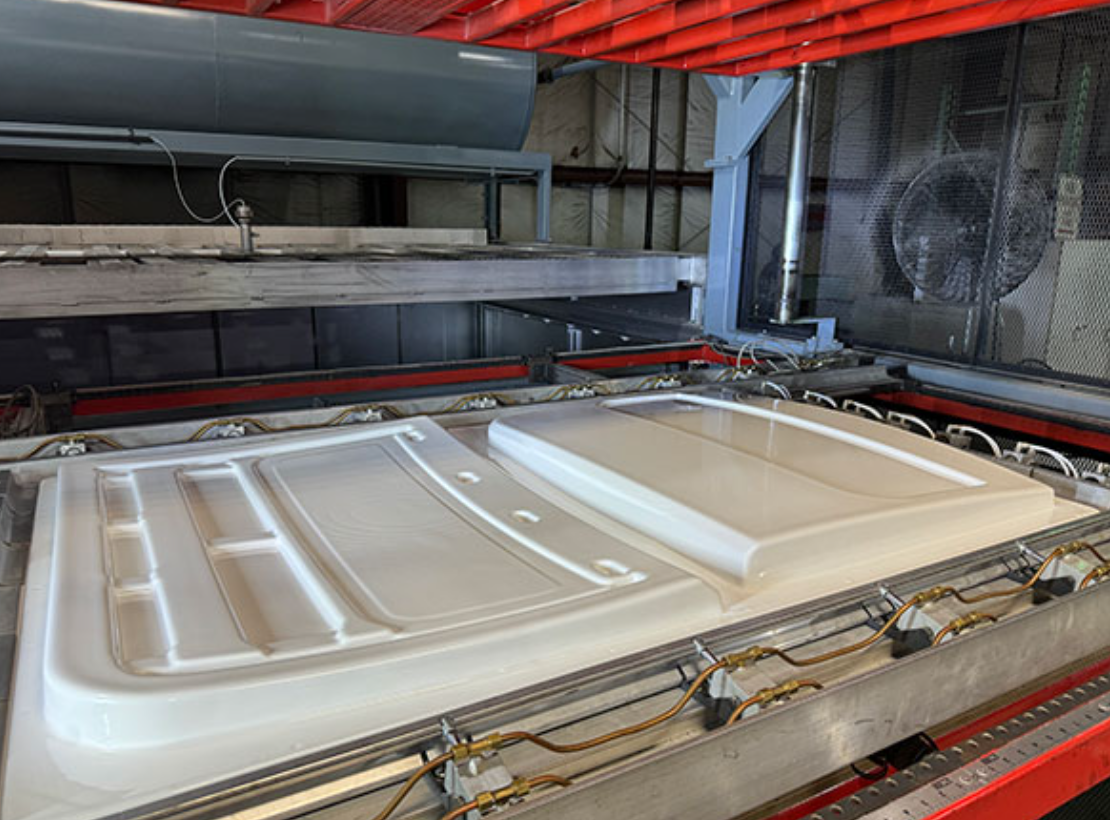
The core advantage of vacuum forming lies in its low cost and quick response. The molds for it are usually made of aluminum or even wood, with costs being only a fraction or even a few fractions of those of injection molding molds. The processing cycle only takes a few days to two weeks. This makes it an ideal choice for small batch production and product prototype verification.
More importantly, vacuum forming is excellent for large-scale production. Whether it's for car dashboards, refrigerator interiors, or large equipment shells, these shallow, large-sized components are almost the only economically viable solution for vacuum forming. If your product design is relatively simple, has no complex internal structures, and the initial production volume is within a few thousand pieces, vacuum forming can help you quickly bring your product to the market at a very low cost.
Mass production, high precision: The dominance of injection molding
When products enter the mass production stage and higher requirements are imposed on precision and structural complexity, injection molding demonstrates an irreplaceable advantage.
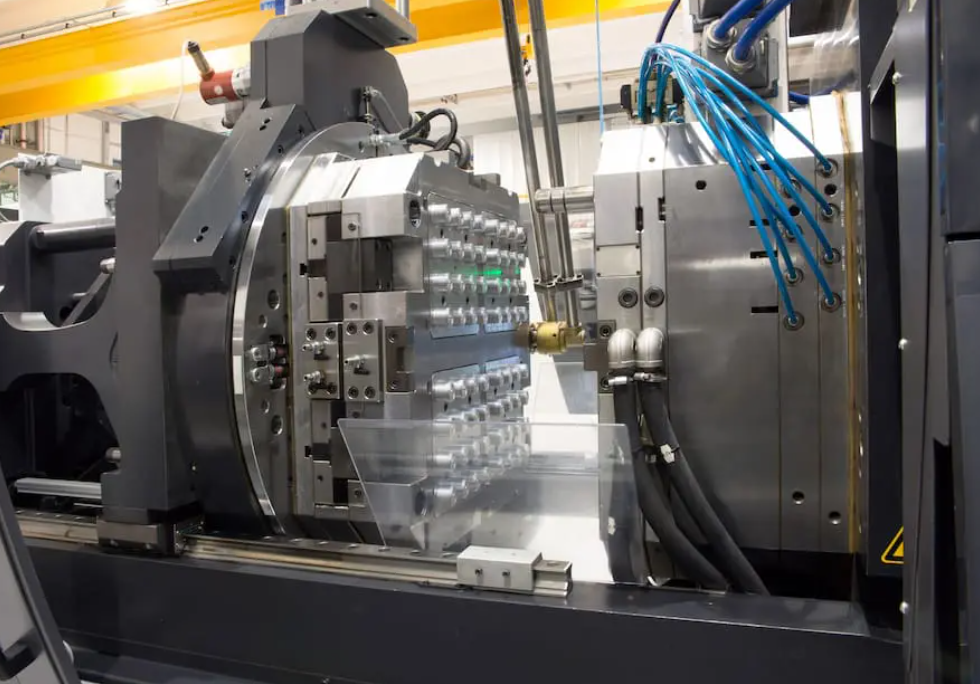
Injection molding can produce parts with complex features such as snap-in pieces, threads, reinforcing ribs, and precise holes all at once, with tolerances reaching ±0.02 millimeters. This is beyond the reach of vacuum molding. Although the initial investment in molds is high, it may cost tens of thousands or even hundreds of thousands of dollars, yet for products like phone cases, Lego bricks, and precision gears, which involve tens of thousands of units, the cost of molds is spread out, resulting in extremely low manufacturing costs for each part. For projects that aim for long-term stable mass production, injection molding is undoubtedly the industrial standard answer.
How to make a decision?
When faced with these two processes, you can make the judgment along the following lines:
- First, look at the production volume: If the expected production quantity is between several hundred and two thousand pieces, vacuum molding can enable you to start production with very low initial investment; if the production volume is tens of thousands or more, and the product has a long life cycle, investing in injection molds would be a more economical choice.
- Then, consider the product itself: Is the product a large and flat shallow cavity structure, or a small and delicate three-dimensional component? The former is more suitable for vacuum molding, while the latter requires injection molding to ensure accuracy and strength.
Overall, vacuum forming is a cost-effective option for "prototyping and small-scale production of large simple components", while injection molding is the industrial standard for "mass production of precise and complex plastic parts".

0086 0755 23170739
0086-0755-24325235
ciky@hainamould.com
Room 1605, 16th Floor, Hongyu Building, No. 495, Donghuan 2nd Road, Longhua Subdistrict, Longhua District, Shenzhen, Gongdong ,China 518109


Copyright 2026 Hainamould.com All rights reserved.
-
 0086 0755 23170739
-
 Facebook
-
 WhatsApp
-
 LinkedIn
-
 TOP
TOP