CNC Machining
Today, with robotics technology advancing rapidly, we are often amazed by the robots' flexible movements and precise control. However, what truly supports these outstanding performances is not just advanced algorithms and chips, but a often overlooked yet critically important foundation—precision CNC machining.
If the control system is the "brain" of a robot, then CNC machining shapes its "musculoskeletal system." Without a strong musculoskeletal system, even the smartest brain cannot fully exert its capabilities.
Precision Joints: Determining Motion Quality
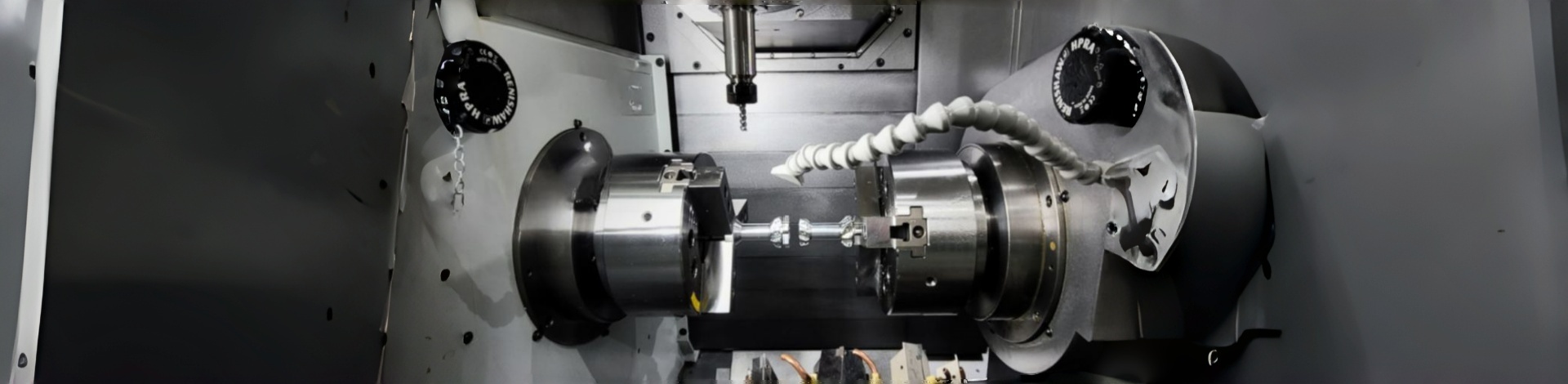
Every smooth turn and every precise grasp of a robot relies on core transmission components—harmonic reducers and RV reducers. These parts, which serve as the robot's "joints," require gear tooth precision reaching the micron level. Such precision requirements are beyond the reach of conventional machining equipment. It is precisely through CNC gear shaping, hobbing, and grinding processes that we can manufacture high-rigidity, long-life precision joints, making every movement of the robot smooth and reliable.
Solid Frame: Bearing Strength and Stability
The robot's base, upper arm, lower arm, and other structural components are just like the human skeleton, bearing the weight and load of the entire body. These large, complex parts require one-time clamping and five-face machining on large CNC gantry mills, ensuring that the parallelism and perpendicularity of all mounting surfaces are strictly controlled within 0.02mm. Only then can a robot remain as stable as a mountain under high-speed, heavy-load conditions, consistently maintaining operational precision.
Custom Tools: Flexibly Handling Ever-Changing Demands
On automated production lines, robots often need to undertake various non-standard tasks. This is where the advantages of CNC machining become evident. Whether it's specially shaped grippers, precision suction cup bases, or unique rotary table brackets, CNC machining can quickly transform design drawings into high-strength aluminum alloy or stainless steel parts. This flexibility and adaptability make robots truly versatile.
Accelerated Iteration: Shortening the Distance from Drawing to Physical Object
During the development phase of new robots, time is competitiveness. CNC machining eliminates the need to wait for mold opening, allowing engineering plastic or aluminum alloy parts to be directly machined for testing. When a design needs optimization, simply modifying the program allows new parts to be obtained in just a few days. This compresses the development cycle from months to weeks, greatly accelerating the pace of robotics technology evolution.
In my view, CNC machining and robotics technology are like the relationship between musculoskeletal system and flesh. Without precision CNC machining, no matter how brilliant a robot design may be, it remains just theoretical. From a micron-level reducer gear to a base capable of bearing several tons of weight, it is CNC machining that gives robots tangible strength.
The precision of CNC machining determines the performance ceiling of robots; the efficiency of CNC machining affects the speed at which robotics technology advances. This is the deepest insight we in precision manufacturing have gained, and it is also the driving force behind our continuous pursuit of excellence.
https://www.facebook.com/XinhuaNewsAgency/videos/meet-real-life-transformer-robot-built-to-carry-humans/27375259655412741/

0086 0755 23170739
0086-0755-24325235
ciky@hainamould.com
Room 1605, 16th Floor, Hongyu Building, No. 495, Donghuan 2nd Road, Longhua Subdistrict, Longhua District, Shenzhen, Gongdong ,China 518109


Copyright 2026 Hainamould.com All rights reserved.
-
 0086 0755 23170739
-
 Facebook
-
 WhatsApp
-
 LinkedIn
-
 TOP
TOP