

Injection molding
In injection molding workshops, changing molds has always been a troublesome task. Tightening bolts, adjusting pressure plates, and aligning positions - all of this takes anywhere from half an hour to several hours. When dealing with large molds, several people working together can be extremely exhausted, not to mention the concern about the pressure plates not being securely locked.
Now, some people have applied magnetic clamps to injection molding processes. When the mold is placed on it, it is immediately attracted. The greatest advantage of this technology is that it significantly improves the efficiency of mold changing.
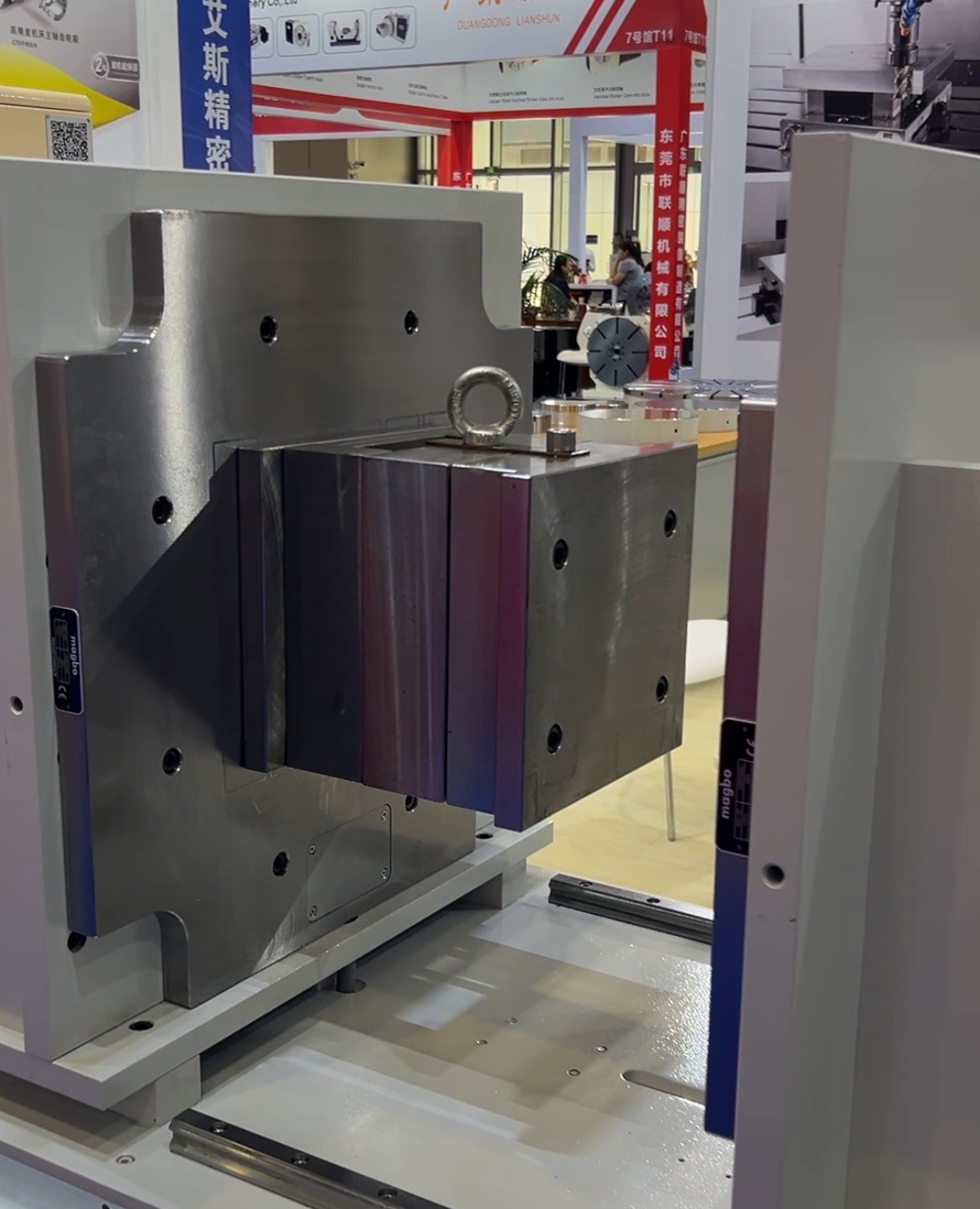
The traditional method relies on bolts to lock the pressure plates of the mold. Each bolt needs to be tightened and each pressure plate needs to be adjusted. Changing a medium-sized mold usually requires two people to work for forty minutes. What about magnetic clamps? The re-magnetization and demagnetization only take a few seconds. The operator simply presses a button, and the magnetic force comes on, keeping the mold immobile. Including the lifting and alignment process, the entire mold changing process can be controlled within 15 minutes without any problem. The mold changing time is shortened by over 70%.
This means that companies can handle small-batch orders because the time cost does not take up a long time, and the equipment utilization rate has increased. Moreover, this "speed" is not achieved through people's exhaustion, but through technology, which is stable and reliable.
The mold life is longer, and the product accuracy is higher.
This point is often overlooked by many people.
The traditional pressure plates lock the mold, with the pressure concentrated at a few points around the mold. During injection molding, the central area of the mold is subjected to high-pressure impact from the molten material, while the periphery is firmly pressed by the pressure plates, and there is no support in the middle. Over time, small deformations will occur. The deformation becomes larger, resulting in flash on the product, increased mold wear, and a mold that could originally last for several years may be ruined after only two years.
Magnetic clamps are different. The entire mold backplate is uniformly attracted, and the force distribution is very uniform. The mold deformation is small, and the fit accuracy is maintained well, so the lifespan is naturally longer. At the same time, the consistency of the injection molded parts will also be significantly improved - for large and precise parts such as automotive instrument panels and bumpers, this is of great value.
Flexibility and security have also improved.
After using the magnetic plate, the installation of molds is basically not restricted by the position of the pressure plate. Large molds, small molds, horizontal installation, vertical installation - just attach them directly. Some factories have found that after using the magnetic plate, tasks that required larger-tonnage machines to complete can now be done with machines of the same tonnage - because the magnetic plate has released the installation space.
In terms of safety, the current magnetic system has multiple protections. Sensors monitor the adsorption status in real time. Once it detects that the mold is separated from the magnetic plate by more than 0.2 millimeters, the machine immediately stops. Compared to traditional pressure plates which might loosen due to vibration, the magnetic plate is actually more reassuring in this regard.
However, this technology is not without its limitations.
A high-quality magnetic template system is not cheap, and it represents a significant investment for small factories. But if the mold replacement frequency is high, the savings in labor and downtime can eventually pay off in the long run.
The second point is the requirements for the molds. Magnetic plates can only attract molds made of magnetic materials - in simple terms, those made of mold steel. If the back plate of the mold is made of aluminum or stainless steel (which are non-magnetic), it won't stick and a magnetic pad needs to be added to make it work.
The third point is to pay attention to cleaning. The surface of the magnetic plate must be free of iron filings or oil stains; otherwise, it won't stick. Before changing the mold, spend one minute cleaning it up. This habit must be maintained.
The fourth point is about magnetic field interference. When the magnetic plate is in operation, it generates a strong magnetic field, which has an impact on sensitive items such as pacemakers, watches, and mobile phones. A safe area should be marked in the workshop, with proper signs, and reminders should be given when necessary, and isolation measures should be taken when necessary.

0086 0755 23170739
0086-0755-24325235
ciky@hainamould.com
Room 1605, 16th Floor, Hongyu Building, No. 495, Donghuan 2nd Road, Longhua Subdistrict, Longhua District, Shenzhen, Gongdong ,China 518109


Copyright 2026 Hainamould.com All rights reserved.
-
 0086 0755 23170739
-
 Facebook
-
 WhatsApp
-
 LinkedIn
-
 TOP
TOP