

Automobile parts
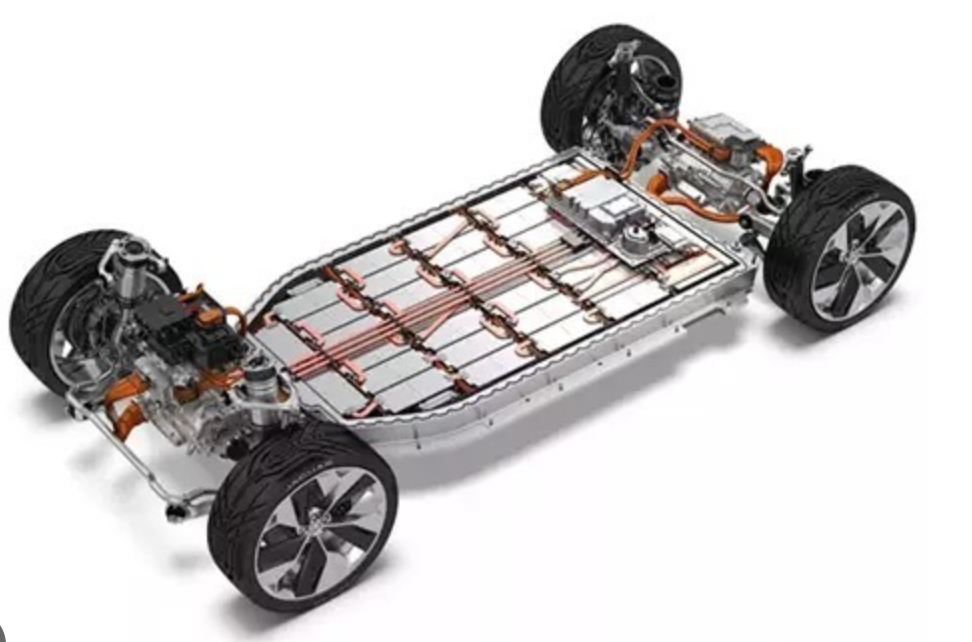
Anyone who has worked on battery tray processing knows how troublesome this can be. A tray that is over one meter long but has a wall thickness of only a few millimeters is already a headache. The aluminum alloy is inherently soft, and with such a large thin-walled structure, it can deform even by itself, let alone being machined on a machine tool.
Today, let's talk about how to solve the deformation problem in the processing of large thin-walled aluminum parts.
Why does it deform?
The deformation problem of battery trays mainly has three sources.
First is the springback. The elastic modulus of aluminum is only one-third that of steel. Under the same force, the elastic recovery of aluminum is two or three times that of steel. Once the internal stress is released after the part is processed, the size changes.
Second is the cutting force causing the tool to move. The thin walls and poor rigidity of the part cause the workpiece to be pushed aside by the tool, and after cutting, the size becomes biased. In severe cases, it may even produce vibration patterns.
Third is the clamping deformation. This is the most easily overlooked one - when the clamping plate is pressed, the part appears perfectly flat and smooth on the worktable. But when it is released and picked up, it bends. Because it has already been deformed during clamping.
When clamping, do it gently to avoid damaging the parts
The traditional method is to press directly with a pressure plate and lock the four corners tightly to complete the process. But for thin-walled parts, this approach itself is a problem.
A better solution is vacuum adsorption. The workpiece is adsorbed on the worktable by a multi-hole vacuum suction cup through uniform negative pressure, which is only a few tens of a fraction of the pressure of a traditional pressure plate. This method completely avoids clamping deformation, but it is only suitable for workpieces with good flatness.
There is also a flexible fixture that uses a silicone rubber chuck instead of a rigid pressure plate to achieve pressure-free positioning through shape adaptation. More advanced hydraulic elastic clamping forms a closed cavity between the workpiece and the fixture, injects liquid for pressure, and uses the static pressure of the liquid to evenly support the outer surface of the workpiece.
Cutting should be "steady", and the parameters should not be too drastic
For thin-walled parts, the traditional head-on cutting approach doesn't work.
Rough and finish machining must be separated. During rough machining, use a large knife to cut quickly, eliminating most of the excess material and allowing some of the internal stress to be released first. It is best to let it stand naturally for a period of time or undergo a stress relief annealing before fine processing.
The cutting force must also be controlled. The anti-deformation capacity of thin-walled parts is limited. Currently, constant force cutting is adopted - the cutting force is monitored in real time through a force sensor, and the tool position is dynamically adjusted. Data shows that after adopting this technology, the processing deformation rate of thin-walled aluminum parts can be reduced from over 20% to within 3%.
There are also certain considerations regarding the tool path. Try to avoid repeatedly moving the tool at the same position. Adopt strategies such as helical cutting and cycloidal machining to disperse the cutting force.
Can it still be saved if it has deformed?
If all the previous steps have been controlled but there is still slight deformation, an additional shaping process can be added.
The method is very simple: After the part is processed, place it in a limit fixture and hold it for a period of time to forcibly correct its shape. Although it involves an additional process, it is much better than scrapping.
Ultimately
There is no single solution to the processing deformation problem of large thin-walled aluminum parts such as battery trays. It is necessary to take measures simultaneously from several dimensions such as clamping, process and post-treatment.
Summarize several key points: The clamping should be gentle; do not use the pressure plate to press firmly. The cutting should be steady and the coarse and fine parts should be separated. Deformation should be prevented. If necessary, a shaping fixture should be added as a safety net.
If you are currently working on a battery tray project, it is recommended that you prioritize checking the clamping method and cutting parameters - these two aspects are the most prone to problems and also the easiest to improve.

0086 0755 23170739
0086-0755-24325235
ciky@hainamould.com
Room 1605, 16th Floor, Hongyu Building, No. 495, Donghuan 2nd Road, Longhua Subdistrict, Longhua District, Shenzhen, Gongdong ,China 518109


Copyright 2026 Hainamould.com All rights reserved.
-
 0086 0755 23170739
-
 Facebook
-
 WhatsApp
-
 LinkedIn
-
 TOP
TOP