CNC Machining
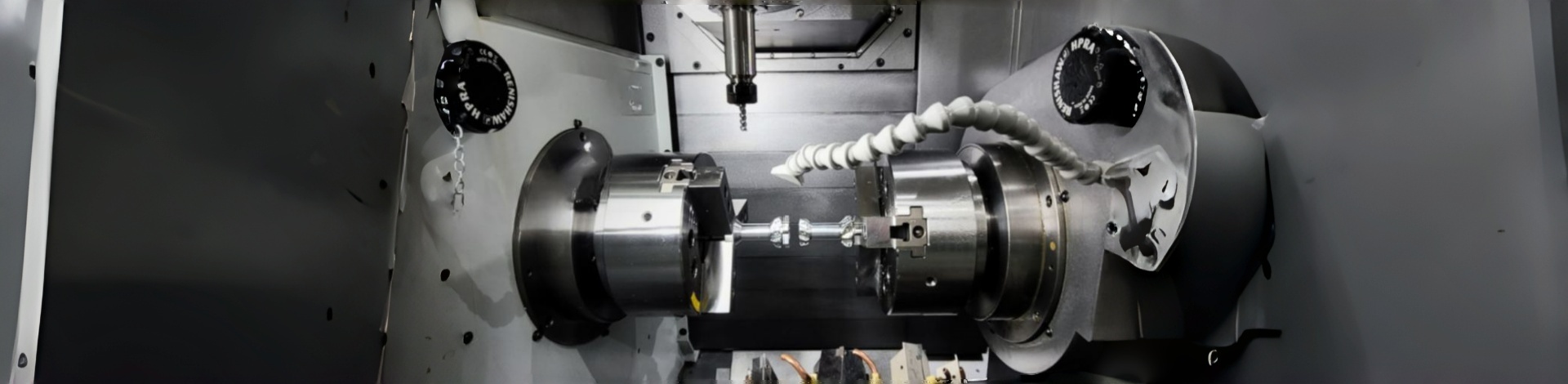
A CNC milling machine is a type of machine tool that automates the cutting process through a computer digital control system. In simple terms, it
enables the tool to move and rotate automatically in three-dimensional space along multiple directions (typically X, Y, and Z axes) according to
pre-written programs, thereby performing precise milling on the material of the workpiece.
Compared to traditional milling machines, the advantages of CNC milling machines are far greater. Firstly, they have high precision. The resolution
of the CNC system can reach the micron level, and the consistency of the same batch of parts is much better than that of manual operation.
Secondly, they are highly efficient. A CNC milling machine can operate continuously automatically, significantly reducing the time for clamping,
measurement, and tool changing. Thirdly, they have strong capabilities for complex processing. Four-axis and five-axis Cooperat machines can
complete the processing of multiple surfaces in one setup, avoiding errors caused by repeated positioning.
Its main applications and functions:
1. Plane and contour machining
2. Complex surface machining: It can produce extremely complex three-dimensional surfaces, such as molds (e.g., phone casings, toys, automotive
interior parts), turbine blades
3. Hole system machining: It can perform precise drilling, reaming, tapping, and boring operations, with extremely high positional accuracy.
4. Grooves and cavities machining: It can mill various shapes of keyways, T-shaped slots, dovetail slots, and closed or open cavities on the workpiece.
5. Gears and special parts machining
From the perspective of application fields, CNC milling machines are the core equipment in modern manufacturing and are widely used in:
•Mold manufacturing: Processing injection molds, die-cast molds, stamping molds, etc.
•Aerospace: Processing high-precision parts such as engine blades, structural components.
•Automotive industry: Processing engine blocks, cylinder heads, transmission housings, etc.
•Electronic products: Processing metal casings and frames of mobile phones and laptops.
•Mechanical parts manufacturing: Manufacturing various non-standard parts and tooling fixtures.
•Model and prototype production: Rapidly producing product prototypes.

0086 0755 23170739
0086-0755-24325235
ciky@hainamould.com
Room 1605, 16th Floor, Hongyu Building, No. 495, Donghuan 2nd Road, Longhua Subdistrict, Longhua District, Shenzhen, Gongdong ,China 518109


Copyright 2026 Hainamould.com All rights reserved.
-
 0086 0755 23170739
-
 Facebook
-
 WhatsApp
-
 LinkedIn
-
 TOP
TOP