

Automobile parts
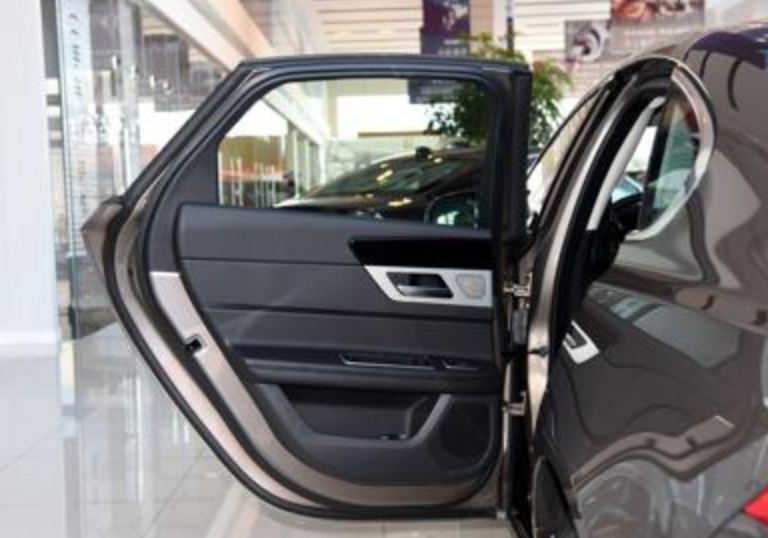
The car door is one of the most complex and quality-demanding stamping parts in the vehicle body. When we open a car door and see a smooth curved surface, flat edges, and exquisite details - all of these are given by the stamping molds. So, how does a perfectly flat steel plate turn into a three-dimensional car door through the mold?
1. The composition of the car door
A complete car door is not formed by a single mold at one time. Instead, the "inner panel" and "outer panel" are separately manufactured and then combined through the edge wrapping process.
The inner panel of the car door is the framework of the door, and its structure is extremely complex. It has a large number of reinforcing ribs, installation holes, window frame structures, and various features for fixing door locks, glass lifters, audio systems, etc. A typical rear door inner panel may have as many as 110 holes, and the directions are all different.
The outer panel of the car door is the visible exterior part of the vehicle body. It has extremely high surface quality requirements and cannot have any wrinkles, waves, or scratches.
2. Core process
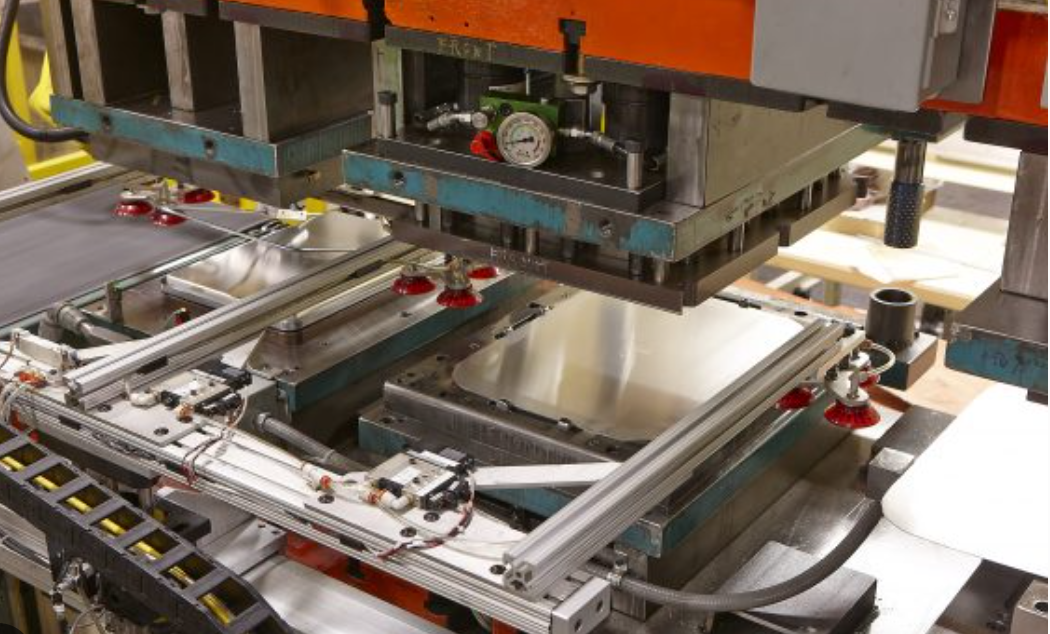
The mass production of modern car doors generally adopts a four-process stamping process scheme. This means that a flat blank needs to be completed four times through four presses to become a qualified car door part.
The first step: Forming - from flat to three-dimensional
Forming is the core process of the car door. The flat blank is held by the edge clamping ring, and the punch moves downward, pulling the steel plate into the concave mold cavity, causing it to flow into a three-dimensional shape.
During the metal forming process, the material cannot be cracked or wrinkled. For complex rear door inner panels, designers may even add cuts 10mm before the final forming to release the excess material and eliminate the risk of cracking. Before actually manufacturing the mold, engineers will use CAE software such as AutoForm for tens of rounds of simulation analysis and repeatedly optimize the forming shape to ensure a stable and reliable forming process.
Second and third sequence: Edge trimming and punching
After the semi-finished product is completed by deep drawing, there is a ring of excess waste around the periphery and some areas that need to be removed inside. The edge trimming process is to cut off this waste using a mold.
Since many holes on the door are not in a vertical direction, ordinary punching molds can only process vertical holes. For these "slanted" holes, a special mechanism called a hanging wedge must be used - a special structure that installs the punch on a slanted slider, which can convert the vertical motion of the press machine into a slanted punching motion.
Fourth sequence: Flanging and shaping
The last process is to finely refine the door. Flanging is to bend certain edges at a specific angle to facilitate subsequent edge sealing with the outer panel; shaping is to correct the local shape to ensure the contour accuracy and flatness of the door's sealing surface.
For the inner panel of the rear door, the sealing surface of the inner ring is of crucial importance - if this surface has wrinkling defects, it will affect the sealing performance and lead to water leakage. Therefore, in the flanging shaping process, the sealing surface needs to be carefully corrected.
3. Key technical challenges and solutions
Wrinkling and cracking
These are the two most common defects when punching the car door. Wrinkling usually occurs because the material is fed in too much, causing the material to pile up and form waves; cracking is when the material is not fed in enough and is pulled thin to the limit. The solution requires precise control: adjusting the resistance of the drawing ribs, changing the sheet size, and optimizing the clamping force.
Rebound control
Steel plates have a tendency to rebound after bending or deep drawing, causing the part size to deviate from the design. For parts with high precision requirements like the door, usually an additional shaping process is needed to eliminate the rebound effect.
Surface quality
The surface of the exterior door panel must not have any scratches, blemishes or waves. The surfaces of the punch and die of the drawing die must undergo fine grinding and polishing; at the same time, iron filings on the die must not damage the surface of the parts.
Stability in mass production
A stamping line may produce 8-12 door parts per minute, and the die must withstand tens of thousands of impacts every day. Therefore, the die material is usually selected from high-strength die steels such as SKD11 or STD11. The key inserts are designed as replaceable, and sensors such as misfeed detection and waste floating detection are installed on the die to prevent accidental damage.
Conclusion
From a flat steel plate to a delicate door, behind it lies the crystallization of the wisdom of stamping mold designers and manufacturers. Each set of molds weighing tens of tons carries the conclusions of countless CAE simulations, years of accumulated process experience, and the persistent pursuit of micrometer-level precision.
The manufacturing of stamping molds for car doors is not only the art of shaping metal, but also a concentrated manifestation of modern industrial precision manufacturing capabilities. The next time you open the car door, think about it - every curved surface, every hole, and every edge line of this door comes from a meticulously designed and precisely manufactured stamping mold.

0086 0755 23170739
0086-0755-24325235
ciky@hainamould.com
Room 1605, 16th Floor, Hongyu Building, No. 495, Donghuan 2nd Road, Longhua Subdistrict, Longhua District, Shenzhen, Gongdong ,China 518109


Copyright 2026 Hainamould.com All rights reserved.
-
 0086 0755 23170739
-
 Facebook
-
 WhatsApp
-
 LinkedIn
-
 TOP
TOP