
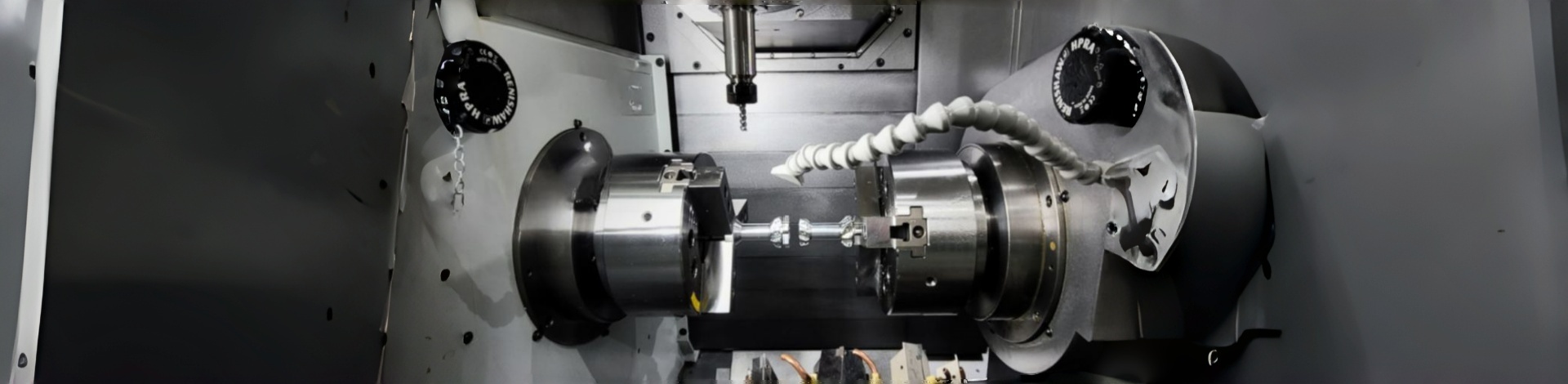
CNC Machining
Many machining technicians will encounter a problem: The machine is running, the work is being done, but the number of parts produced at the end of the day just won't go up. Increasing the number of parts is not essentially about making the machine "run faster", but about "having the machine as much as possible in the cutting state, reducing all waiting and idle time".
Let's discuss some practical solutions from several perspectives.
1. Make the cutting time more "solid"
First, optimize the processing itself. Under the condition that the rigidity of the cutting tool and the machine tool is allowed, appropriately increase the spindle speed, feed rate and cutting depth. This can directly shorten the single-piece time. Using high-speed machining technology or dynamic milling can maintain a uniform load on the cutting tool, allowing for larger cutting depths and higher feed rates.
At the same time, make good use of the tool path optimization function of the CAM software to reduce idle running, lifting the tool, and unnecessary long-distance tool movement. Every time the tool moves in the air is a waste of production capacity.
2. Clamping Method Determines the Efficiency Limit
Often, the bottleneck is not in the cutting process, but in the clamping procedure.
The simplest and most effective solution is to "clamp multiple parts at once". Arrange multiple vices or use pneumatic fixtures on the workbench, and clamp four, six, or even more workpieces simultaneously. Through multiple coordinate system offsets (such as G54.1, G54.2, etc.), the same program processes each piece sequentially. Clamp once, process multiple pieces, and the time spent on individual clamping is almost zero.
Furthermore, a "zero-point quick-change system" can be adopted. Pre-load the next batch of parts on an external quick-change tray. After the current workpiece is processed, the entire tray can be replaced within one minute, and the machine is almost not stopped. This effect is even more pronounced if it is a machine with an exchange worktable.
3. Let Automation Handle the Tasks for Us
For some parts with stable production volumes, consider implementing automated loading and unloading. Hexapod robotic arms or small joint robots can automatically grasp the raw materials and place them in fixtures, then remove the finished products after processing. When combined with a bar feed system, lathes can operate unmanned for long periods, especially suitable for night shifts or weekends.
Even without investing in robots, a "material storage system" can be used. Some small vertical machining centers can be equipped with simple material storage and loading/unloading mechanisms to achieve "unattended" batch processing.
4. Reducing Ineffective Downtime in Management
Calculate the complete processing cycle for each part and you will find that the auxiliary times such as clamping, setting the tool, cleaning, and inspection often account for the majority. Prioritize improvement for the bottleneck processes, for example, moving the tool setting outside the machine, or using the tool life management function to reduce unexpected downtime caused by tool issues.
In addition, arranging parts with similar shapes and sizes in the same batch for processing can reduce the number of times for changing fixtures, changing programs, and adjusting parameters. This is the idea of grouping technology, small but effective.
Summary
To increase the number of parts for CNC machines, the key lies in two aspects: reducing the cutting time for each part and minimizing the waiting time for the machine. Starting from optimizing the tool path and multi-position fixtures is the most effective approach. If conditions permit, introducing zero-point quick-change or automated loading and unloading can truly enable the machine to "stop the operator but not the machine", and the output will naturally increase. Different workshops and different types of parts require different combinations of methods. However, as long as we make improvements in the direction of "reducing idle time", we will always be able to find room for improvement.

0086 0755 23170739
0086-0755-24325235
ciky@hainamould.com
Room 1605, 16th Floor, Hongyu Building, No. 495, Donghuan 2nd Road, Longhua Subdistrict, Longhua District, Shenzhen, Gongdong ,China 518109


Copyright 2026 Hainamould.com All rights reserved.
-
 0086 0755 23170739
-
 Facebook
-
 WhatsApp
-
 LinkedIn
-
 TOP
TOP