Industry Insights
In the mold industry, molds are called "the mother of industry", and mold designers are the ones who give this "mother" wisdom and soul. A good mold designer often determines the success or failure of a project, and even affects the competitiveness of an enterprise.
The determinant of quality
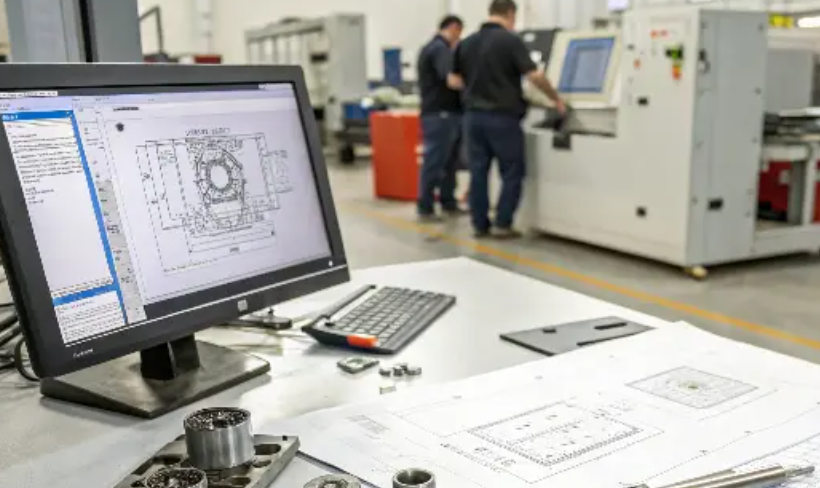
The appearance, dimensional accuracy, and assembly effect of the product are all directly determined by the mold cavity. Excellent designers can achieve uniform material flow, controlled shrinkage, and minimal deformation during the molding process through scientific parting surface design, reasonable pouring system and cooling system layout. Well-designed molds can be replicated identically thousands or even millions of times with stable high precision and good appearance. On the contrary, it will lead to various problems in the product, from minor aesthetic issues to direct scrapping.
The controller of costs
o Reduce material and processing costs
o Shorten injection molding/pressing cycle
o Reduce scrap rate
The guarantee of lifespan and reliability
Molds need to work continuously for tens of thousands or even millions of times in high-temperature, high-pressure, and high-speed opening and closing environments. During the initial design, we usually precisely calculate the structural strength, select materials reasonably, design the optimal guide and support systems, avoid stress concentration, and arrange uniform cooling water channels to prevent thermal fatigue. This way, the molds produced have a long lifespan and low failure rate. Any negligence in the design can lead to premature cracking, abnormal wear, or jamming of the molds, not only causing high maintenance costs but also resulting in production line shutdown losses.
The Friend of Time
In today's world where "time is the market", the one who can transform a product from concept to stable mass production parts the fastest will have the advantage. Senior mold designers can use CAE mold flow analysis software to predict and solve problems such as filling, cooling, and shrinkage during the design stage, avoiding the vicious cycle of repeated mold testing and modification. Moreover, they will actively communicate with product designers and propose optimization suggestions for product details, such as increasing the demolding slope and adjusting the wall thickness, making the product inherently suitable for mold molding. This "one-time success" ability can significantly shorten the project development cycle.

The Firewall Against Risks
In mold production, accidents are the most feared. If the pusher damages the cavity, the entire mold may be directly scrapped. Good designers will set comprehensive safety interlocking structures, reliable ejection reset systems, and various error prevention measures in the drawing stage. At the same time, they will also consider the maintainability of the mold - whether the wear parts are easy to replace? Are the components clearly marked? These seemingly trivial designs can avoid countless shutdowns and disputes in actual production.
Conclusion
A set of molds costing several hundred thousand yuan, if the design fails, may not be able to be put into production at all, resulting in huge waste; while a well-designed set of molds, although the cost on the drawings may not be much different, can significantly reduce the production cost of millions of subsequent products and ensure stable and reliable quality.
Therefore, in the mold industry, the salary of an outstanding designer is often several times that of an ordinary draftsman. They are not simple "drawing workers", but systematic engineering experts who integrate materials science, fluid mechanics, thermodynamics, mechanical structure, and a large amount of practical experience. With just one drawing, they lay the foundation for success for the entire production chain - this is the fundamental reason why a good mold designer is so important.

0086 0755 23170739
0086-0755-24325235
ciky@hainamould.com
Room 1605, 16th Floor, Hongyu Building, No. 495, Donghuan 2nd Road, Longhua Subdistrict, Longhua District, Shenzhen, Gongdong ,China 518109


Copyright 2026 Hainamould.com All rights reserved.
-
 0086 0755 23170739
-
 Facebook
-
 WhatsApp
-
 LinkedIn
-
 TOP
TOP