CNC Machining
The transition of humanoid robots from the laboratory to mass production is inseparable from a seemingly low-key but crucial role - CNC machining. If the motor is the "muscle" of the robot, the algorithm is the "brain", then precision machining is the pair of hands that shape the "bones" and "joints".
Why is CNC machining indispensable for robots?
In the hardware cost of a high-performance humanoid robot, the actuator joints account for more than half. The tolerance requirements for these components need to reach the micron level. CNC machining can stably achieve a precision within ±0.05 millimeters, which is irreplaceable by other processes.
More importantly, robot parts are subjected to repetitive movements and loads for a long time, requiring sufficient mechanical strength. Metal parts processed by CNC machining have become an indispensable part in robot manufacturing in terms of precision, strength, and consistency.
Which machine tools are used for processing?
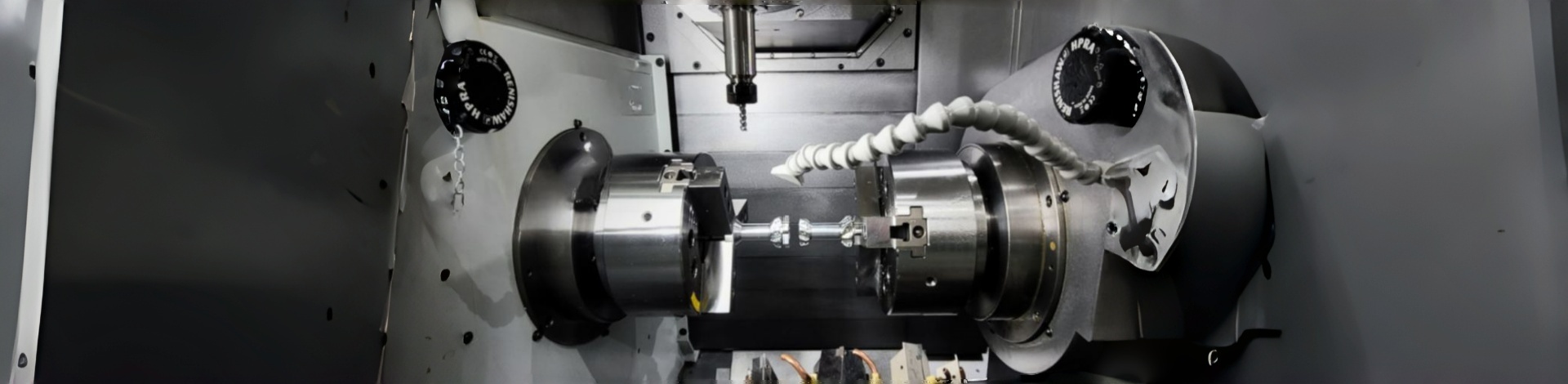
The five-axis machining center is the main equipment. The robot joint shell has complex curved surfaces, and ordinary three-axis machine tools cannot complete all the processing in one clamping. However, the five-axis machine tool can significantly reduce the repetitive positioning error. When Beijing Jingzhu's JDMR400 vertical five-axis machining center processes structural components, the material removal rate can reach 90%, and the concentricity is controlled within 20 micrometers.
From thousands to tens of thousands
The global shipment of humanoid robots is expected to be approximately 18,600 units in 2025. Industry predictions suggest that a "key leap" towards tens of thousands of units will occur in 2026. From thousands to tens of thousands is not only an increase in quantity, but also a shift in manufacturing paradigm - small batches can rely on manual debugging, but large-scale production must rely on high rigidity and high automation flexible manufacturing units.
Domestic five-axis machine tools are seizing this opportunity. Guo Li Intelligent Equipment's "3+2" solution has solved the processing problem of the robot joint's complex curved surfaces, with a price only one-third of the imported equipment, and has entered the first-tier supplier system of many leading enterprises. The domestic five-axis machining centers of companies such as Keda Numerical Control and Beijing Jingzhu have also been batch-applied to the processing of key components of robots.

0086 0755 23170739
0086-0755-24325235
ciky@hainamould.com
Room 1605, 16th Floor, Hongyu Building, No. 495, Donghuan 2nd Road, Longhua Subdistrict, Longhua District, Shenzhen, Gongdong ,China 518109


Copyright 2026 Hainamould.com All rights reserved.
-
 0086 0755 23170739
-
 Facebook
-
 WhatsApp
-
 LinkedIn
-
 TOP
TOP