CNC Machining
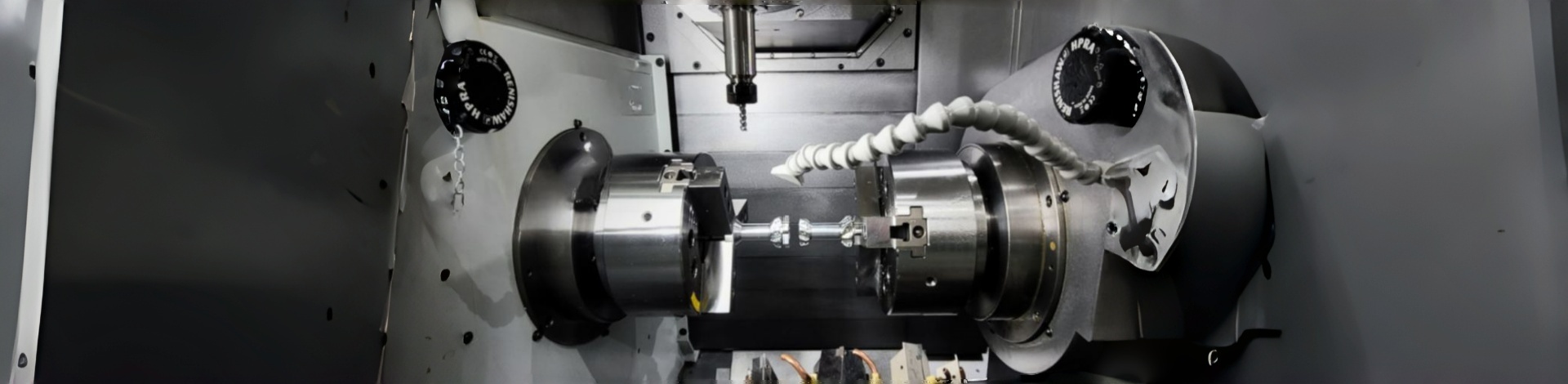
In today's high-end manufacturing industry, which is moving towards precision and complexity, five-axis CNC machining has gradually evolved from a "high-end and advanced" technology to a core processing method in fields such as aerospace, automotive manufacturing, and robot joints. How to make good use of five-axis machines and master their processing techniques directly affects the precision and production efficiency of components.
Two modes, flexible responses to different needs
Five-axis machining mainly consists of two modes.
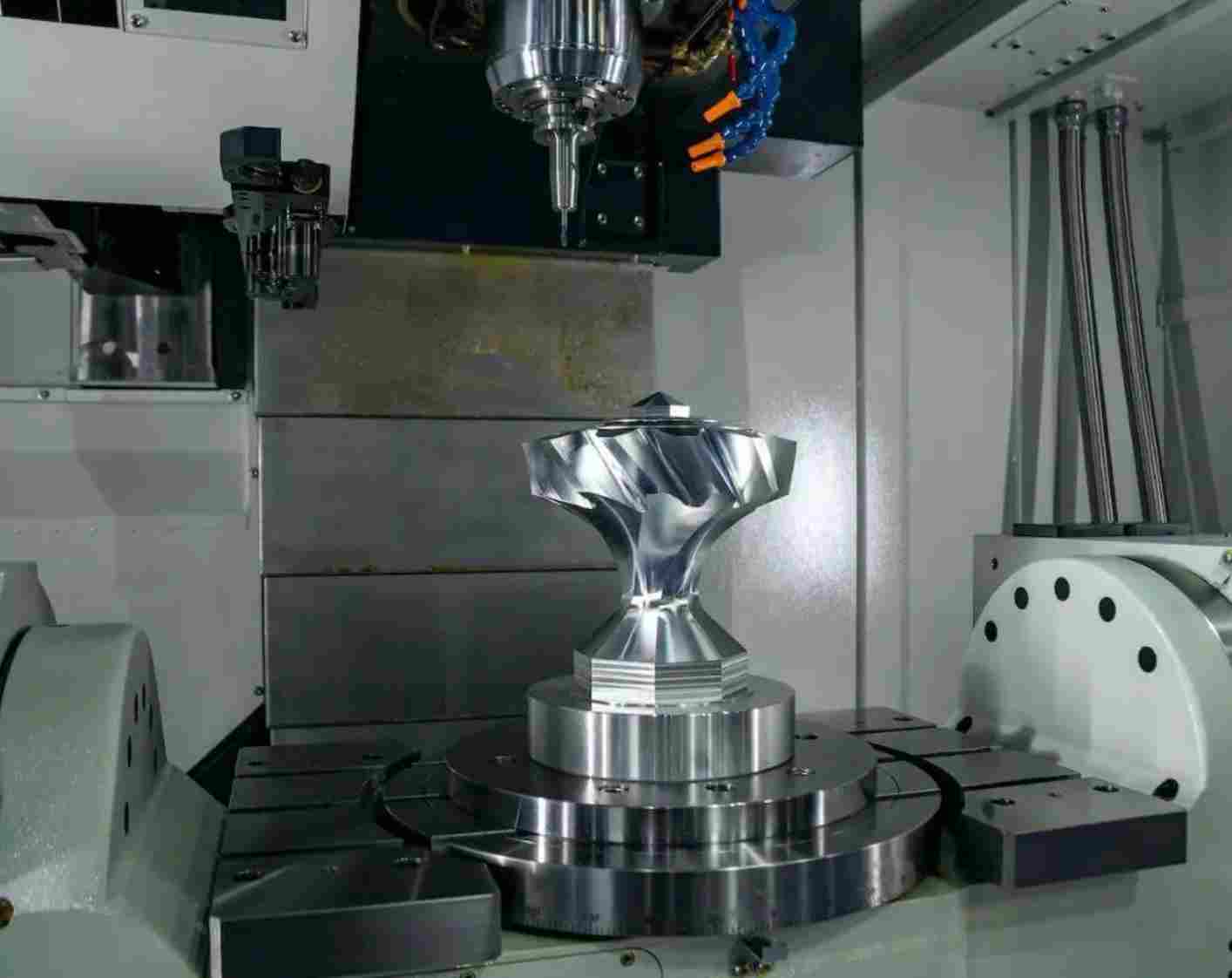
— Continuous five-axis machining: Suitable for complex curved surface parts such as impellers and turbines. Five axes move simultaneously, and the tool and the surface of the workpiece are in continuous contact, forming smooth free-form surfaces.
— 3+2 axis machining: First position the rotating axis and then lock it. Use three linear axes for processing, suitable for parts with multiple planes or specific angle features.
Programming and clamping: The key connection between software and machine tools
In the programming stage, it is crucial to fully utilize the dedicated strategies of CAM software. For example, when processing inclined surface parts, the coordinate conversion function can be used to convert inclined surface processing into planar processing, simplifying the complex five-axis linkage into ordinary three-axis programming, significantly reducing the programming difficulty.
In terms of clamping, the core advantage of five-axis machining is that all or most features can be processed at once or nearly so during one clamping. Reducing each clamping operation reduces the chance of cumulative error.
Tool and accuracy
In five-axis machining, the tool posture is variable, and the cutting force direction changes constantly. Using a conical ball head tool can effectively enhance the rigidity of thin-walled blade-type parts; high-strength clamping solutions such as hydraulic tool holders or heat shrink tool holders can ensure the smoothness of the cutting process.
Precision control is the top priority in five-axis machining. Advanced five-axis machines will install temperature sensors at key positions to monitor thermal deformation and make compensation. At the operational level, the machine should be fully preheated for at least 30 minutes after startup, sufficient coolant should be used, and the room temperature should be maintained stable. At the same time, strictly follow the strategy of "rough machining - semi-finish machining - finish machining", and when necessary, arrange stress relief heat treatment between processes to release residual stress generated by cutting.
From trial cutting to mass production: Optimizing in practice
The cutting parameters calculated theoretically often cannot be directly used in production. Before formal batch processing, a trial cut verification must be carried out. For example, in the processing of a booster impeller, engineers found that leaving too little rough machining allowance would cause insufficient rigidity of the blade during finish machining, resulting in vibration patterns; after increasing the allowance from 0.15mm to 0.25mm, the problem was solved.
Five-axis machining is a highly practical technology. From understanding the machine tool structure, proficient use of CAM software, to optimizing clamping schemes, verifying cutting parameters, every aspect of meticulous polishing is the key to achieving high precision and efficiency processing. With the continuous improvement of the cost performance of domestic five-axis machines, mastering these "techniques" is becoming the core competitiveness of more and more manufacturing enterprises.

0086 0755 23170739
0086-0755-24325235
ciky@hainamould.com
Room 1605, 16th Floor, Hongyu Building, No. 495, Donghuan 2nd Road, Longhua Subdistrict, Longhua District, Shenzhen, Gongdong ,China 518109


Copyright 2026 Hainamould.com All rights reserved.
-
 0086 0755 23170739
-
 Facebook
-
 WhatsApp
-
 LinkedIn
-
 TOP
TOP