CNC Machining
In mold manufacturing, "error" is an unavoidable topic. In simple terms, error refers to the difference between the actual size and the designed size.
No processing can achieve absolute zero error. The key lies in whether the error is controlled within the allowable range.
I. Where Does the Error Come From?
Mold manufacturing involves multiple stages, and errors accumulate gradually:
• Processing equipment: The precision limitations of CNC, EDM, etc.
• Tools/electrodes: Dimensional deviations caused by tool wear and electrode wear
• Clamping positioning: Positional offsets resulting from multiple clamping processes
• Material deformation: Deformation caused by heat treatment or stress release
• Measurement deviation: Reading errors caused by detection equipment and methods
II. What Kind of Error Is Considered Acceptable?
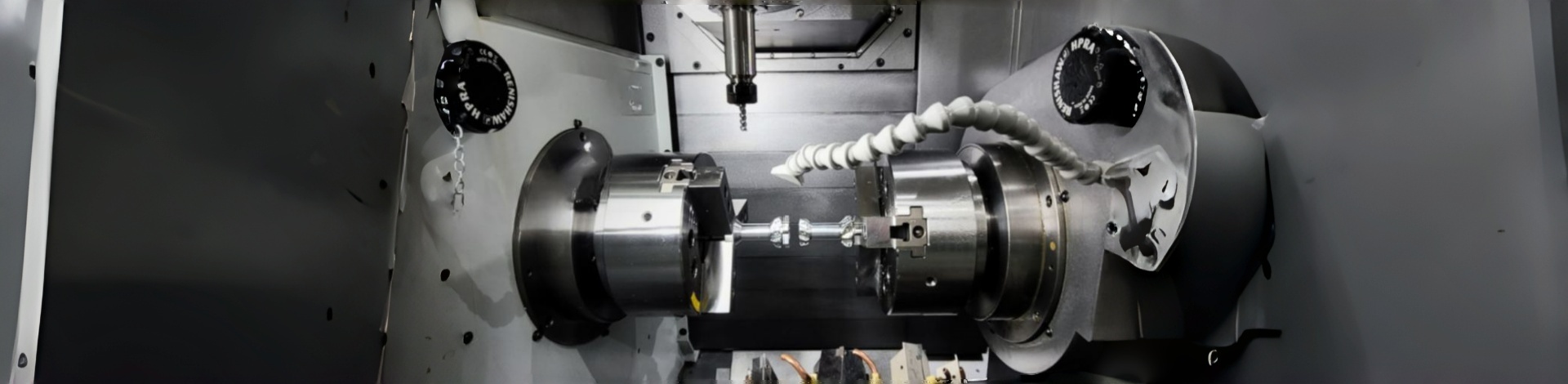
This depends on the tolerance requirements of the part. Different processing methods can achieve different levels of accuracy: Ordinary CNC processing can generally reach ±0.05 to 0.10 millimeters, suitable for rough processing or non-interlocking surfaces; Precision CNC processing can control within ±0.01 to 0.02 millimeters, often used for mold inserts and interlocking surfaces; High-precision CNC can achieve ±0.005 millimeters, meeting the requirements for precise positioning and sliding surfaces; While EDM precision processing typically has an accuracy of ±0.005 to 0.01 millimeters, suitable for processing complex cavities and chamfering areas. Choosing the appropriate processing method based on the actual needs of the part is the key to controlling errors and ensuring mold quality.
Haina completes the entire process from mold opening to product production, equipped with CNC, EDM, die-casting, stamping, injection molding and professional testing equipment. Each mold and each batch of products undergo strict testing, using data to prove to customers that the accuracy is controllable and the delivery is reliable.

0086 0755 23170739
0086-0755-24325235
ciky@hainamould.com
Room 1605, 16th Floor, Hongyu Building, No. 495, Donghuan 2nd Road, Longhua Subdistrict, Longhua District, Shenzhen, Gongdong ,China 518109


Copyright 2026 Hainamould.com All rights reserved.
-
 0086 0755 23170739
-
 Facebook
-
 WhatsApp
-
 LinkedIn
-
 TOP
TOP