Company Blogs
"Provincial mold polishing" is a specialized term in the mold manufacturing industry. In simple terms, it refers to the process of finely grinding and polishing the surface of the mold using hand-held grinding stones, oil stones, or sandpapers. This task requires extreme patience and highly skilled operation.
Why do we do "provincial mold polishing"?
After the molds are processed by CNC or EDM, they will leave knife marks or spark marks on their surfaces. The main purposes of mold surface polishing are as follows:
1. Enhance product appearance: Make the mold surface smoother, so that the products produced by injection molding or stamping have a smooth and beautiful surface, achieving a high-gloss or even mirror-like effect.
2. Assist demolding: The polished mold surface has a low roughness, making it easier for the products to be removed from the mold, preventing mold sticking, and thus improving production efficiency and yield.
Process Comparison: Manual vs. Machine
Although there are automated equipment such as mirror spark machines nowadays, manual mold surface polishing is still indispensable.
• Manual mold surface polishing: Highly flexible, often used for handling complex cavities, deep grooves, and fine ribs that machines cannot reach. It relies on the experience and touch of skilled workers, has a long cycle, but can handle precise local details.
• Machine polishing (such as mirror spark machines): High efficiency, suitable for large-scale precision processing, can achieve a high degree of uniform smoothness, but the equipment cost is higher.
Guangdong Province of China (such as Dongguan and Foshan) is a hub for mold manufacturing and polishing services, with a well-established supply chain and skilled workers. Our company established a factory in Dongguan over a decade ago and has been deeply involved in learning the complete process from mold production to completion. Our current technical capabilities, quality control, and delivery on-time rate have become very stable and mature.
Polishing tools:
A typical mold polishing process usually employs these tools in the following sequence:
1. Remove burrs/ridges: Use an oilstone or a rotating polishing machine with a rubber abrasive head to remove the tool marks or spark lines.
2. Semi-finish polishing: Use sandpaper + bamboo or fiber oilstone, from coarse to fine, to eliminate the scratches from the previous step.
3. Finish polishing/mirror polishing: Use a wool wheel/mattress wheel combined with diamond polishing paste, from coarse paste to fine paste, ultimately achieving a mirror-like effect.
4. Special area treatment: For inner corners, use a right-angle grinding pen; for narrow slots, use an ultrasonic polishing machine or fiber oilstone.
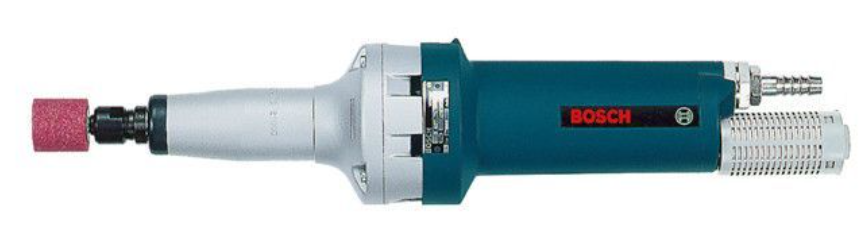
For example, our air polishing pen, which is commonly referred to in the industry as "angle air polishing pen" or "90°/120° pneumatic grinding pen", has the core value that the straight polishing pen cannot reach (such as the deep cavities and inner corner edges of the mold), and it can bend its head to enter and polish.https://youtube.com/shorts/K6etieN3UVg
There are many such tools available on the market, ranging from industrial-grade to economical models. For example, the SMS Saintner S-121D has an angle of 120 degrees, a no-load rotational speed of 52,500 rpm, and is suitable for narrow corners and deep cavity grinding; mold manufacturing, metal processing. NSK NA90-230, 90 degrees, a Japanese brand, has stable torque and small speed variation under load, suitable for precision grinding, etc.
We also have power tools, such as pneumatic/electric sanding machines (straight handle/pen type), ultrasonic polishing machines, etc. This series of tools is good at handling complex shapes such as narrow grooves, ribs, and patterns, with high efficiency and good results. Especially when dealing with large areas or needing to quickly remove material.
Summary:
Mold polishing is a precise manual finishing process used to improve the surface quality of molds and the appearance of products. If you need to contact a supplier, it is recommended to confirm the polishing finish level they are proficient in and the types of molds they are good at handling.

0086 0755 23170739
0086-0755-24325235
ciky@hainamould.com
Room 1605, 16th Floor, Hongyu Building, No. 495, Donghuan 2nd Road, Longhua Subdistrict, Longhua District, Shenzhen, Gongdong ,China 518109


Copyright 2026 Hainamould.com All rights reserved.
-
 0086 0755 23170739
-
 Facebook
-
 WhatsApp
-
 LinkedIn
-
 TOP
TOP