Company Blogs
1. Why is aluminum alloy so popular?
Before delving into specific grades, let's first take a look at what "powers" aluminum alloy has enabled it to become the darling of modern industry.
• Light, truly light: The density of aluminum is around 2.7g/cm³, which is approximately one-third of that of steel or copper. This means that parts made from it are inherently much lighter than those made from steel. When used in cars and aircraft, it can reduce fuel consumption and extend the range.
• Not inferior in strength to steel: Pure aluminum is very soft, but by adding elements such as copper, magnesium, and silicon, and through appropriate heat treatment, its strength can be increased by several times.
• Naturally "robust": Aluminum forms a dense oxide layer quickly in the air, which protects it from further corrosion. This is why aluminum doors and windows can last for many years without rusting even in coastal areas.
• Easy to process, cost-effective: Whether through CNC cutting, extrusion, rolling, or casting, aluminum alloy demonstrates excellent formability. It cuts much more smoothly than steel, and the wear on the cutting tools is less, effectively reducing processing costs.
2. Common Aluminum Alloy Grades and Typical Applications
Based on the processing method, aluminum alloys are classified into two major categories: wrought aluminum alloys and cast aluminum alloys. Wrought aluminum alloys follow a four-digit grade system, with the first digit representing the main alloying element.
| Alloy Series | Main Element | Key Characteristics | Typical Applications |
| Series 1 (1050, 1060) | Pure Aluminum (≥99%) | Excellent plasticity, good conductivity, lowest strength | Food & chemical equipment, electrical busbars, aluminum foil |
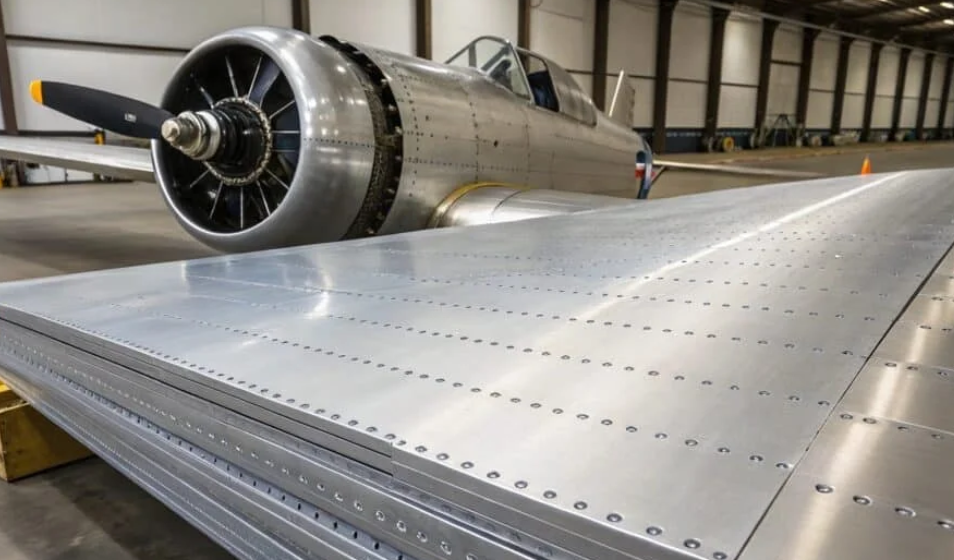
Series 2 (2024, 2017) | Copper | High strength, poor corrosion resistance | Aircraft skin, fuselage structures (requires surface treatment) |
| Series 3 (3003, 3004) | Manganese | Good corrosion resistance, excellent weldability | Cookware, chemical equipment, architectural skylights |
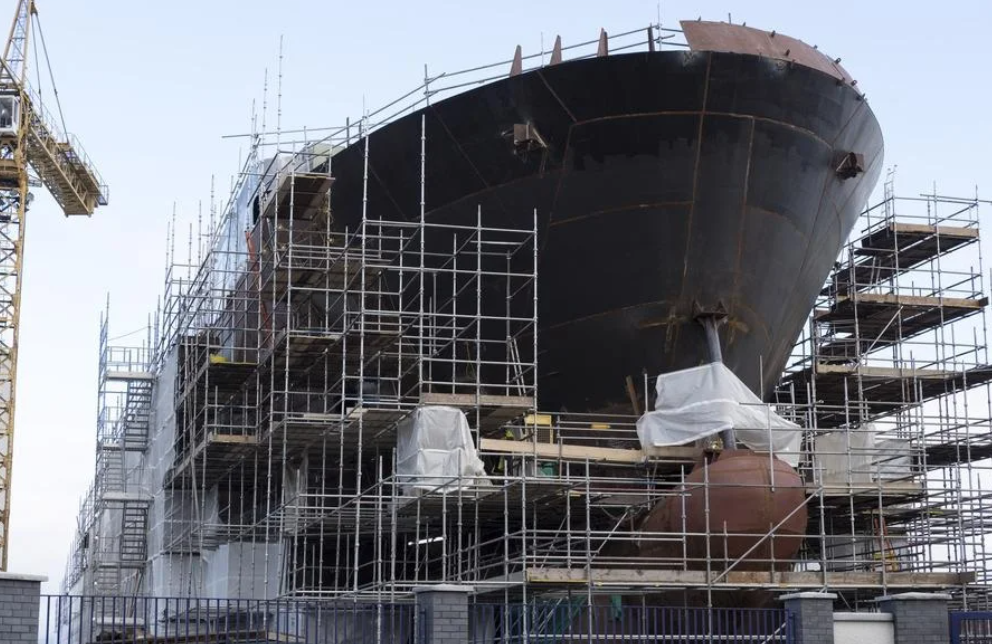
| Series 5 (5083, 5052) | Magnesium | Excellent seawater corrosion resistance, maintains strength after welding | Ship hulls, offshore platforms, pressure vessels |
| Series 6 (6061, 6063, 6082) | Magnesium + Silicon | Most balanced overall performance, heat treatable | Mechanical parts, structural components, architectural profiles |
| Series 7 (7075, 7050) | Zinc | Highest strength, comparable to steel | Aerospace structural parts, high-end competition equipment |
3. Why is 6082 aluminum alloy more favored in industrial applications?
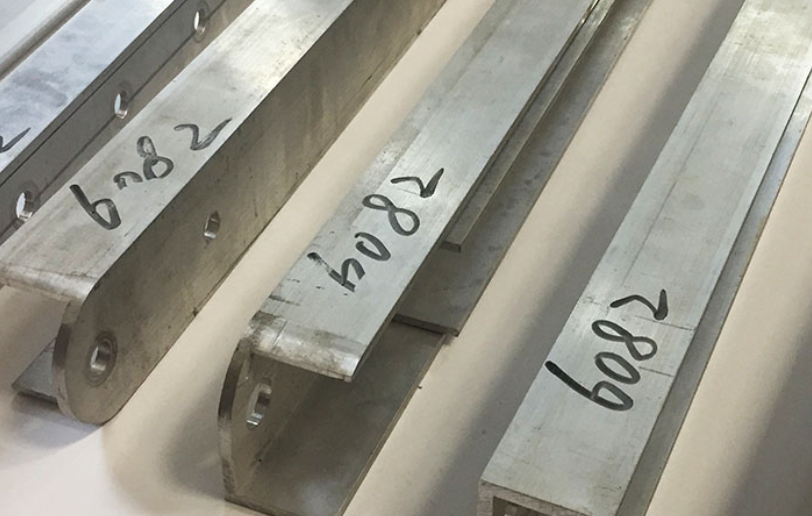
Among the 6 series aluminum alloys, 6061 is the most commonly used worldwide, 6063 is mainly used for architectural decoration, and 6082 is the "Intensity represents" among the 6 series, especially regarded as the preferred industrial structural aluminum alloy in the European market. Here is a detailed comparison between it and several key alloys.
4. Comparison with other aluminum alloys
6082 vs 6061: Dual superiority in strength and performance
Both 6082 and 6061 belong to Al-Mg-Si heat-treatable strengthened alloys, with highly overlapping application scenarios. However, 6082 significantly outperforms 6061 in key performance aspects. For example, when constructing load-bearing structures, bridges, and high-strength mechanical parts, which do not have special requirements for surface aesthetics, the hardness strength of 6082 material is higher.
In fact, these two materials are similar in many practical operations, but 6082 is more mainstream in the UK and European markets, while 6061 is more common in the United States. In many engineering discussions, 6082 is regarded as a stronger structural choice, while 6061 is usually considered a general alloy. These are often influenced by technical performance and regional supply chain habits.
6082 vs 7075: The trade-off between strength and machinability
Both 6082 and 7075 can be heat-treated, but when higher strength is prioritized, 7075 is usually chosen. In contrast, when a better balance needs to be achieved among weldability, corrosion resistance, structural practicality, and cost, 6082 is usually given priority.
5. Practical Guide for Aluminum Alloy CNC Machining
Although aluminum alloy is called an easy-to-machine material, it is not simple to machine it well. In terms of tools, it is recommended to use carbide (tungsten steel) cutting tools. In terms of cutting parameters, aluminum alloy is suitable for high-speed machining (linear speed 500 - 800 m/min), rapid removal of large depths in rough machining, and ensuring accuracy in fine machining with small depths. Coolant must be fully utilized; otherwise, aluminum chips are prone to welding to the cutting edge, causing built-up edge and surface scratches. Deformation control is the biggest challenge, especially for thin-walled parts. It is recommended to leave a 0.5 - 1mm allowance during rough machining to allow the material to naturally release stress before fine machining; for thin sheet parts, vacuum suction cups should be used first, and for complex parts, low-temperature hot melt glue can be used for fixation.
6. Surface Treatment: Enhancing the Quality of Parts
After CNC processing, aluminum parts usually require surface treatment to improve performance and appearance. Anodization is the most classic method, which can form a hard and wear-resistant oxide film on the surface and can be dyed in various colors. It is widely used in consumer electronics and mechanical parts. If higher hardness is required (such as for cylinders and pistons), hard anodization can be chosen, with a film thickness of over 50 microns, and the hardness can be comparable to that of steel. Sandblasting is a common pre-treatment process, which can create a uniform and fine matte surface on the surface, effectively covering the scratches and enhancing the technological sense and touch feel of the product. For high-end precision parts, chemical nickel plating can provide excellent uniformity and corrosion resistance. Choosing the right surface treatment can make your aluminum alloy parts both durable and upscale.

0086 0755 23170739
0086-0755-24325235
ciky@hainamould.com
Room 1605, 16th Floor, Hongyu Building, No. 495, Donghuan 2nd Road, Longhua Subdistrict, Longhua District, Shenzhen, Gongdong ,China 518109


Copyright 2026 Hainamould.com All rights reserved.
-
 0086 0755 23170739
-
 Facebook
-
 WhatsApp
-
 LinkedIn
-
 TOP
TOP