Company Blogs
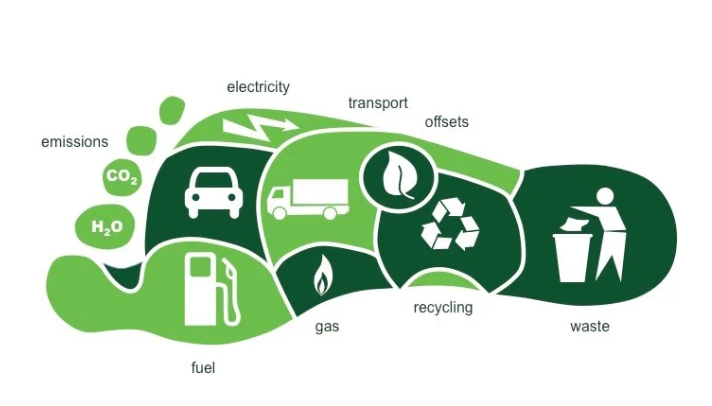
Simply put, a carbon footprint is the total amount of greenhouse gases emitted throughout a product's entire life cycle, from "birth" to "death." This full process is called the "life cycle" and includes:
-From cradle to gate: raw material extraction, transportation to the factory, and manufacturing.
-From gate to grave: product transportation to the customer, consumer use, and finally disposal or recycling.
Certification bodies verify the carbon emissions at every stage and ultimately issue a "carbon ID card" for the product, known as a carbon label, which clearly shows its carbon emission data.
Many clients now require manufacturers to submit this report, mainly for three reasons:
1. Mandatory regulations – without it, you can't enter the EU
In recent years, the EU has introduced a series of stringent green regulations that have turned carbon footprint disclosure into a hard requirement.
《The EU Battery Regulation》: Electric vehicle batteries and industrial batteries exported to the EU must provide a carbon footprint declaration; otherwise, they cannot be sold.
《EU Carbon Border Adjustment Mechanism》 (CBAM): Officially implemented in 2026, it requires imported products to provide full-chain carbon data; otherwise, high carbon tariffs will be imposed.
《The Sustainable Products Ecodesign Regulation》: Requires products to meet ecodesign requirements, with carbon footprint being one of the core indicators.
2. The "entry ticket" to the supply chain
Global giants like Apple, Volkswagen, and Tesla, in order to manage carbon emissions across their entire supply chains, have already required all suppliers to provide third-party carbon footprint reports. Without this report, you risk being cut out of the supply chain.
3. The "new currency" of market competition
Low-carbon products are themselves a selling point. When clients source your low-carbon materials, they can affix a "green label" to their own products, enhancing their brand image and even commanding higher prices.
What does this mean for “Haina”?
For Haina, since our clients have made the request, we are committed to taking full responsibility for them. Currently, many domestic material suppliers are still unable to provide this certification. Developing it in-house would require significant investment, which would increase production costs. We ourselves searched through many suppliers before finding just two that could provide this documentation. One client remarked to us: "No matter how difficult it is, you always take action first instead of rushing to say no. We truly appreciate your company's working principles." That kind of recognition from our clients is our greatest encouragement.
For material suppliers, carbon footprint certification is no longer a "bonus question" – it is a mandatory question concerning whether you can continue to participate in international trade. The sooner you prepare, the sooner you seize the advantage.

0086 0755 23170739
0086-0755-24325235
ciky@hainamould.com
Room 1605, 16th Floor, Hongyu Building, No. 495, Donghuan 2nd Road, Longhua Subdistrict, Longhua District, Shenzhen, Gongdong ,China 518109


Copyright 2026 Hainamould.com All rights reserved.
-
 0086 0755 23170739
-
 Facebook
-
 WhatsApp
-
 LinkedIn
-
 TOP
TOP