
Company Blogs
Success on the First Try Is a Low-Probability Event
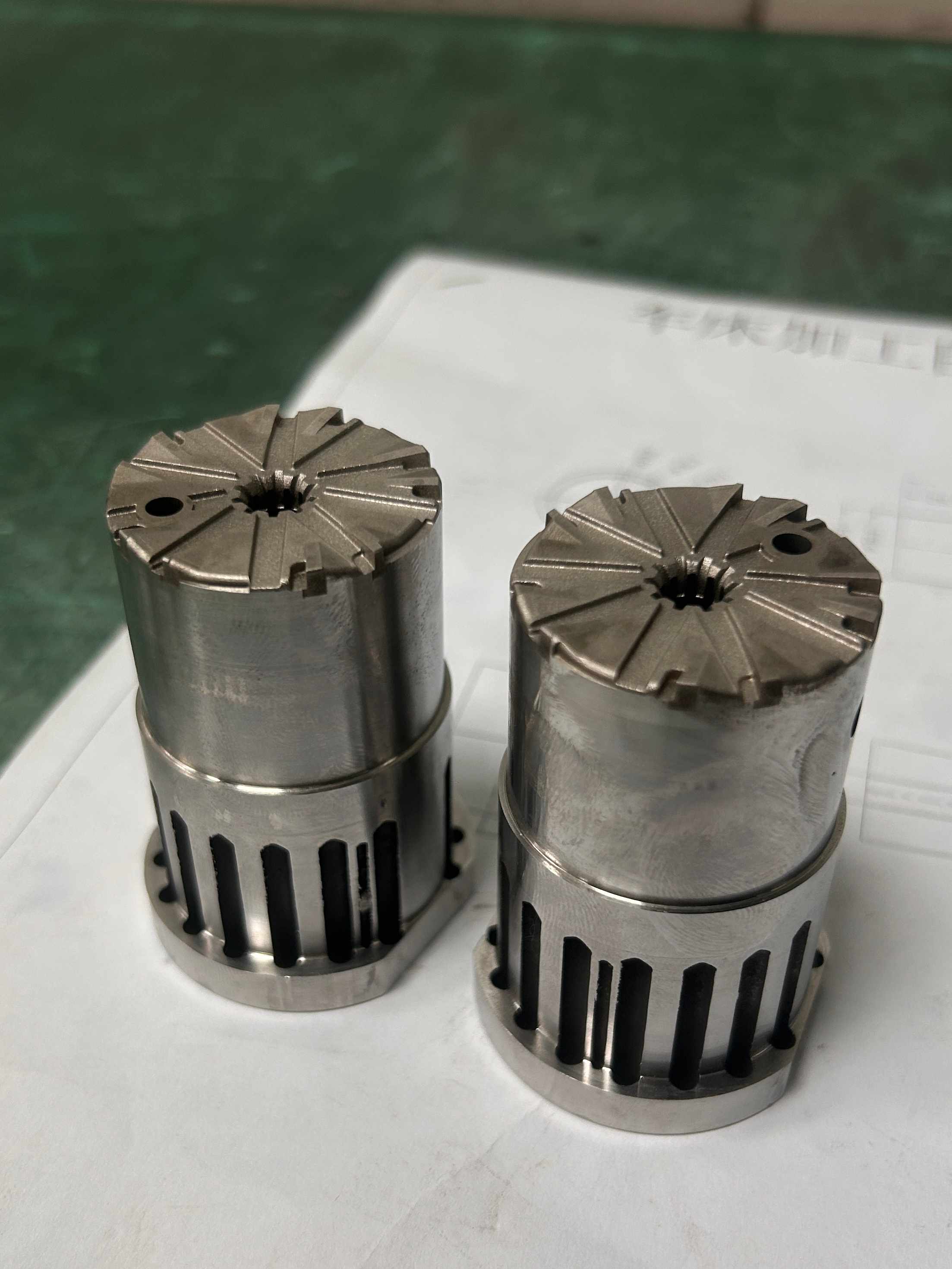
Many people have a misunderstanding about mold trials. They think that once the mold is designed and machined, it should directly produce qualified parts when put on the machine. But the reality is that between the drawing and the physical mold, there are countless variables—material, process, equipment, environment, and more. No matter how precise the design is, it is still only an estimate based on theory and experience. In actual production, the flow of plastic, the shrinkage of metal, and the speed of cooling are often far more complex than simulation software can capture.
So the situation where a mold passes on the first trial and goes straight to mass production is extremely rare. Either the product structure is extremely simple, or you are very lucky. Most of the time, mold trials are a process of repeated adjustment, gradually approaching qualification.
Why Is It Hard to Pass on the First Trial?
First, there is a gap between design and reality. The shrinkage rates and flow parameters used in mold design differ from the actual material batch, ambient temperature, and machine conditions. For example, in injection molding, the real flow behavior of plastic inside the mold is often different from what mold flow analysis predicts.
Second, process parameters need to be matched. Injection pressure, speed, temperature, holding time, cooling time; stamping tonnage and clearance; die casting injection speed… these parameters constrain each other. Adjusting one may affect another. The first trial often can only check "whether it can be molded at all," before gradually addressing "whether it is molded well."
Third, the mold itself needs fitting and repair. Trial runs often reveal problems such as poor venting, improper gate location, unbalanced ejector pins, poor cooling channel performance, or clearance in insert fits. These usually require mold disassembly, repair, or even re-machining of parts—it is impossible to get everything right in one go.
Fourth, material properties fluctuate. The same grade of plastic or metal can behave differently across batches, moisture content, and temperature. If the material used in the trial differs from that used in mass production, the results will differ too.
Fifth, product requirements are getting stricter. Many products today have very tight requirements for appearance, dimensional tolerance, and assembly fit. The first trial often can only verify basic function—there is still a distance to final qualification.
The Right Mindset for Mold Trials: Not an "Exam," but a "Diagnosis"
If you treat a mold trial as an exam, you will easily fall into self-doubt when it fails the first time. But a healthier mindset is: a mold trial is a diagnosis. Its purpose is to find problems, not to prove yourself.
The first trial verifies whether the mold can open, close, eject, and fill properly, and identifies obvious problems. The second trial adjusts the process or repairs the mold based on the defects found in the first. The third or even more trials gradually optimize dimensions, appearance, and stability. Finally, a small-batch validation confirms stable production before handover to mass production. This is the typical mold trial process.
Experienced masters often say: "Mold trials are a process of continuously finding and solving problems." Every trial accumulates information for the next success. Recording each problem clearly, analyzing whether it is a mold issue, process issue, or material issue, and then making targeted corrections is far more valuable than succeeding once by "dumb luck."
Haina's Experience
Haina has been in the mold industry for many years and has encountered many cases where a new mold fails on its first trial. This is not a failure—it is the norm. It shows that you are facing the real complexity of manufacturing, rather than living in an idealized drawing. But whether you can respond quickly and make accurate judgments based on the problems revealed in the trial is a real test of a master's ability and experience. What is truly worth worrying about is not failing the first time, but having no records, no analysis, and no improvement.
So if you are in the middle of a mold trial and the first run did not work out, do not be discouraged. Adjust slowly, step by step. There is a saying in the mold industry: "Good molds are trial-tested into existence, not drawn into existence." This is something every manufacturing professional should remember.
If you have a product you want to produce, you can send your drawings to Haina, and we will help you quickly analyze how to proceed with the mold design.
📧 Email: ciky@hainamould.com
🌐 Website: https://www.hainamould.com/Contactus/SendMessage
👉 Submit Your Drawings for a Free Technical Evaluation and Quote
(Please upload your 3D/2D drawings, material specifications, estimated quantity, and delivery requirements. We will respond within 24 hours.)

0086 0755 23170739
0086-0755-24325235
ciky@hainamould.com
Room 1605, 16th Floor, Hongyu Building, No. 495, Donghuan 2nd Road, Longhua Subdistrict, Longhua District, Shenzhen, Gongdong ,China 518109


Copyright 2026 Hainamould.com All rights reserved.
-
 0086 0755 23170739
-
 Facebook
-
 WhatsApp
-
 LinkedIn
-
 TOP
TOP