

Company Blogs
So what exactly is CNC turning? This article explains it clearly from a practical standpoint.
1. Basic Principle: The Workpiece Rotates, the Tool Moves
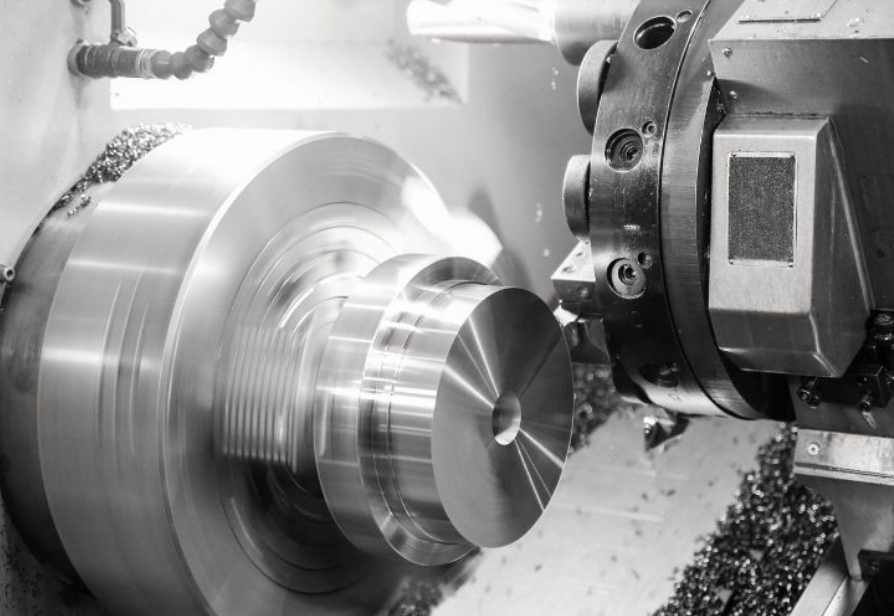
The core action of CNC turning can be summed up in one sentence: let the workpiece rotate at high speed, then use a tool to cut it.
The specific process:
·Workpiece rotation: The bar stock is clamped by the spindle and rotates at high speed (several thousand RPM)
·Tool feed: The turning tool moves along the X and Z axes, cutting away excess material bit by bit
·Forming: The rotating workpiece is "turned" by the tool into shapes such as outer diameters, inner bores, end faces, threads, and grooves
You can picture it like this: you hold a plane and shave a piece of wood spinning at high speed — except that the precision of a CNC lathe is measured in microns.
2. Composition of a CNC Lathe
An ordinary lathe is operated by hand; a CNC lathe is controlled by programs. The core components include:
·Spindle: Clamps the workpiece and drives it to rotate
·Turret: Holds multiple tools and can change them automatically. One tool for turning the outer diameter, another for cutting threads
·Tailstock: Supports the other end of long, slender workpieces to prevent them from bending or whipping
Control system: Reads G-code and directs the tool's path, cutting depth, and feed rate
3. What Turning Can Do
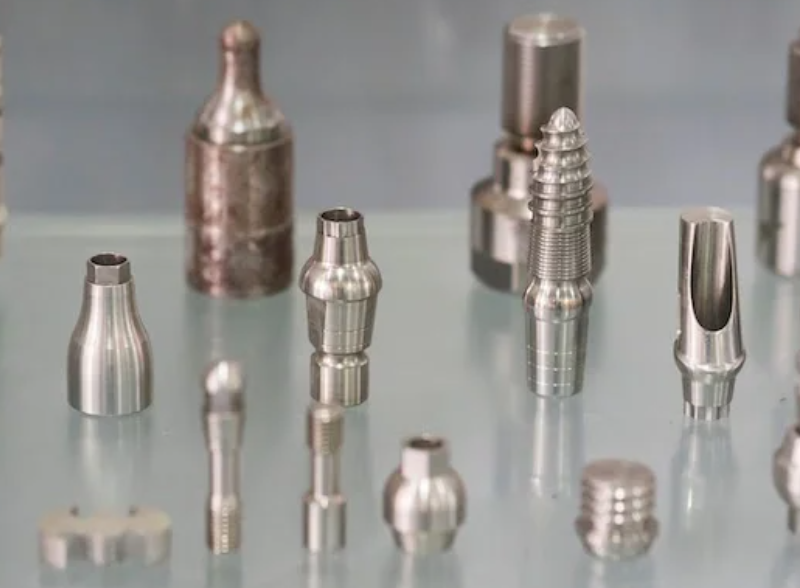
Haina's turning is best at machining rotational parts:
·Shafts, pins, bolts
·Sleeves, flanges, washers
·Valve components, fittings, nozzles
·Threads, tapers, spherical surfaces
If the lathe is equipped with live tooling (known as "turn-mill"), it can also drill, tap, and mill slots on the end face, completing multiple operations in a single setup.
👉 Get a Quote Now — Submit your project details and we'll respond within 24 hours.
Click here to start
4. The Difference Between Turning and Milling
This is where beginners get confused most easily. Remember one sentence:
·Turning: The workpiece rotates, the tool does not. Suitable for round parts (shafts, discs, sleeves)
·Milling: The tool rotates, the workpiece does not (or moves slowly). Suitable for square, complex parts with flat surfaces and slots
One handles rotational parts, the other handles non-rotational parts. Many parts require both to work together: first turn the outer shape, then mill the flat surfaces and holes.
5. Precision and Surface Quality
·Dimensional accuracy: Ordinary turning can reach ±0.05mm; precision turning can reach ±0.005mm or even higher
·Surface roughness: Ordinary turning Ra 3.2~1.6; fine turning can reach Ra 0.8~0.4; mirror turning can reach around Ra 0.1
6. Summary
CNC turning is a precision process in which the workpiece rotates and a tool cuts it, specifically for machining cylindrical and rotational parts. Its core advantage is: for round parts, it is fast and accurate.
In precision machining, turning and milling are the most common "partners" — turning handles rotational parts, milling handles complex shapes. Only when the two work together can a complete part be finished.
Start Your Project Now
📧 Email: ciky@hainamould.com
🌐 Website: https://www.hainamould.com/Contactus/SendMessage
👉 Submit Your Drawings for a Free Technical Evaluation and Quote
(Please upload your 3D/2D drawings, material specifications, estimated quantity, and delivery requirements. We will respond within 24 hours.)

0086 0755 23170739
0086-0755-24325235
ciky@hainamould.com
Room 1605, 16th Floor, Hongyu Building, No. 495, Donghuan 2nd Road, Longhua Subdistrict, Longhua District, Shenzhen, Gongdong ,China 518109


Copyright 2026 Hainamould.com All rights reserved.
-
 0086 0755 23170739
-
 Facebook
-
 WhatsApp
-
 LinkedIn
-
 TOP
TOP