Company Blogs
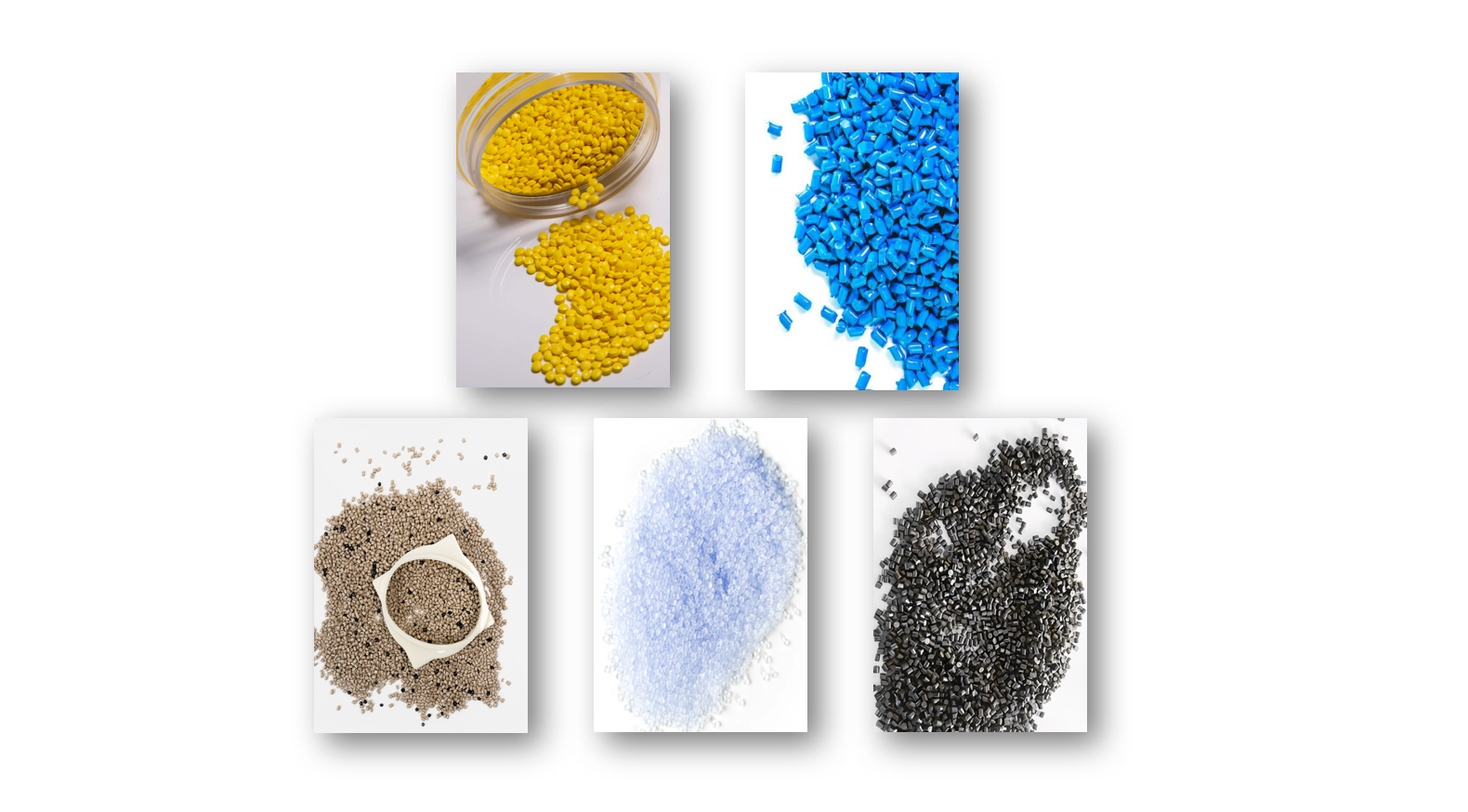
Anyone who has worked with injection molding knows the feeling: use the same mold, switch to a different plastic resin, and the part dimensions may no longer match. It might shrink, warp, fail to fill, stick to the mold, or show silver streaks. They are all "plastics," so why such big differences?
The answer lies in the molecular structure of the plastic. The differences in how various plastic materials behave during molding essentially come down to how they flow, how they cool, how they crystallize, and how they shrink. Let's break it down from two angles: shrinkage and molding.
1. Shrinkage: Crystallinity Is the Biggest Dividing Line
Shrinkage in plastics essentially happens because molecular chains that were stretched apart in the molten state curl back up and pack together as they cool and solidify, reducing volume. But how much a material shrinks varies greatly.
Crystalline plastics, such as PP, PE, PA, POM, and PET, have orderly molecular chains. As they cool, some chains rearrange into ordered crystalline regions. These crystalline regions pack tightly and have higher density than amorphous regions, so shrinkage is large and the shrinkage range is wide—typically between 1% and 3%, and even higher for PA.
Amorphous plastics, such as ABS, PC, PS, and PMMA, have randomly arranged molecular chains. When they cool, they are simply "frozen" in place without significant crystallization, so shrinkage is small—generally between 0.4% and 0.8%—and dimensions are more stable.
Beyond crystallinity, several other factors can increase or decrease shrinkage:
·Molecular orientation: During mold filling, plastic molecules orient along the flow direction, causing shrinkage to differ between the flow direction and the perpendicular direction. This is especially pronounced in glass-fiber-reinforced materials: shrinkage is small in the flow direction and large in the perpendicular direction.
·Temperature span: The greater the temperature difference from melt temperature to room temperature, the more pronounced the thermal shrinkage.
·Additives: Adding glass fiber or talc can reduce overall shrinkage but increases anisotropy; adding foaming agents may expand the material and compensate for shrinkage.
·Wall thickness and cooling rate: Thicker sections cool more slowly, crystallize more fully, and shrink more; rapid cooling suppresses crystallization and reduces shrinkage but increases internal stress.
2. Molding: It's Not Just Shrinkage—There's a Whole Set of "Temperaments"
Beyond shrinkage, different materials also differ greatly in flowability, thermal stability, moisture absorption, and mold release, which directly determines how process parameters should be set.
·Melt viscosity: PC and PMMA have high viscosity and require high pressure and high speed; PP and PE flow well and fill easily.
·Thermal stability: PVC decomposes easily, so temperature must be strictly controlled; POM decomposes and releases formaldehyde when overheated.
·Moisture absorption: PA, PC, and ABS absorb moisture easily and must be dried before molding; otherwise silver streaks and bubbles appear on the part.
·Crystallization speed: PA crystallizes quickly, and mold temperature directly affects crystallinity; PET crystallizes slowly and requires rapid cooling or hot runners for control.
·Mold release: Some materials stick to the mold and require release agents or optimized ejection; PP and PE are self-lubricating and release easily.
3. One-Sentence Summary
The reason plastic molding varies so much is that the molecular chain structure of each material determines how it flows, how it cools, how it crystallizes, and how it shrinks. Crystalline plastics shrink more and show pronounced anisotropy, while amorphous plastics shrink less but develop greater internal stress; moisture absorption, thermal stability, and flowability further amplify the molding challenges.
So when designing molds and tuning processes, you must design the gate, cooling, packing, and mold temperature for the specific material. You cannot use one set of parameters for everything. Choosing a material is really choosing its entire set of "temperaments."

0086 0755 23170739
0086-0755-24325235
ciky@hainamould.com
Room 1605, 16th Floor, Hongyu Building, No. 495, Donghuan 2nd Road, Longhua Subdistrict, Longhua District, Shenzhen, Gongdong ,China 518109


Copyright 2026 Hainamould.com All rights reserved.
-
 0086 0755 23170739
-
 Facebook
-
 WhatsApp
-
 LinkedIn
-
 TOP
TOP